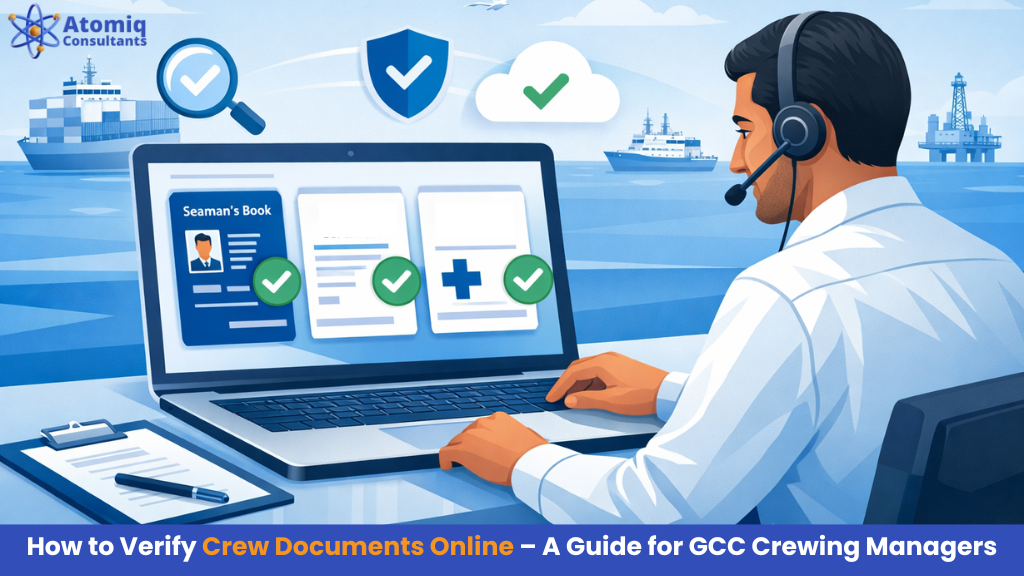
GCC crewing managers handle multinational crews sailing under different flags, so fast and accurate document verification is critical for safety, port clearance, and avoiding detentions under STCW and MLC rules. Online verification tools from flag states and registries now allow managers to confirm authenticity in minutes instead of waiting for email replies or paper confirmations. For high‑turnover fleets in the Gulf, using these systems systematically reduces compliance risk and last‑minute crew change disruptions.
Key documents must be verified.
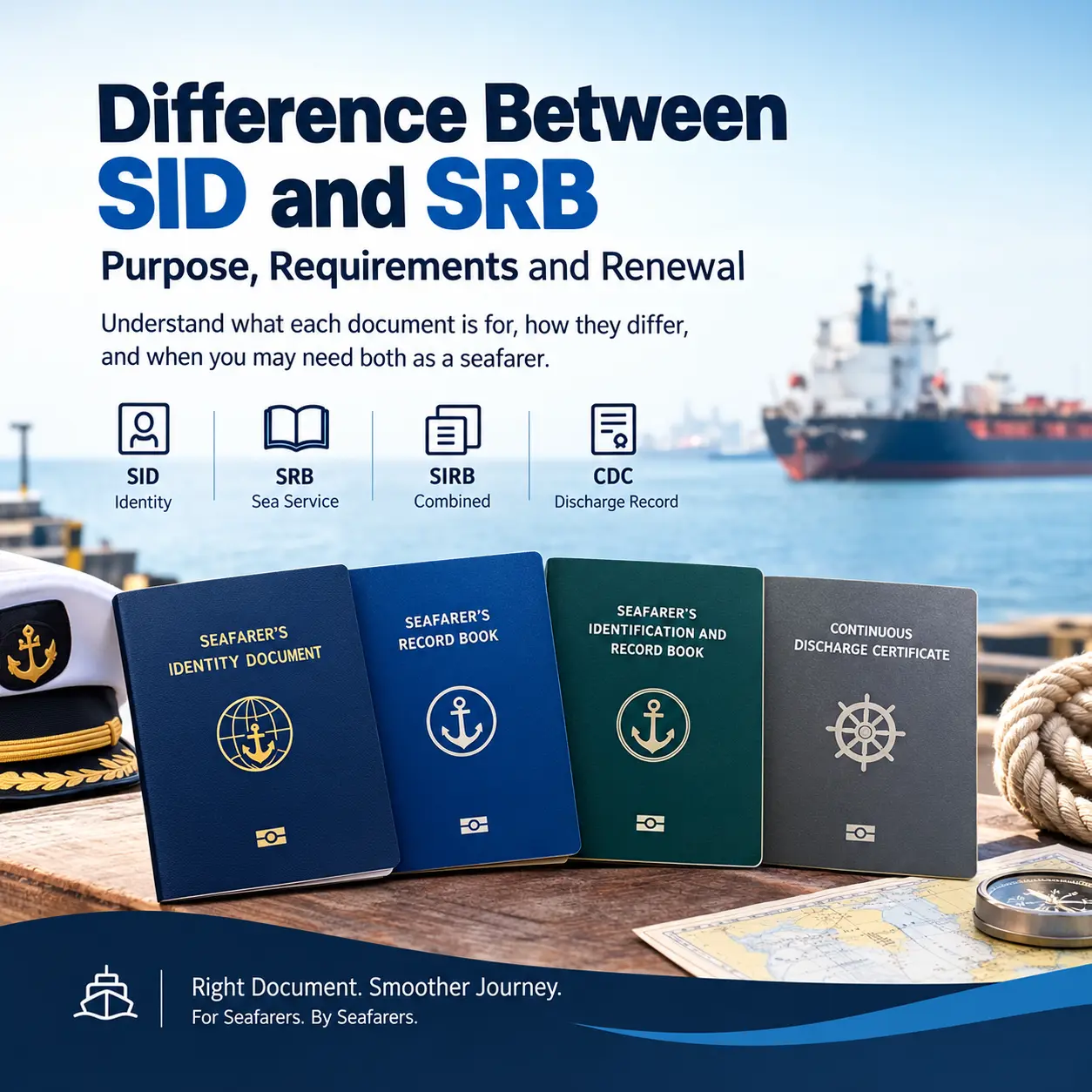
Crewing managers in the GCC typically need to verify three main categories of documents before joining: seafarer identity/CDC or seaman book, STCW and safety training certificates, and medical certificates and other endorsements. Many verification checklists used by ship managers require that CDC or seaman book details, STCW codes, and medical validity are all checked against flag or training center records before a crew member is cleared to travel. For Liberia, Panama, and other major open registries, dedicated online tools exist to check whether the document is genuine and currently valid.
Typical online verification tools
Most large flag administrations now maintain online verification portals where you enter identifiers such as certificate number, TID (tracking ID), seafarer name, or book number to confirm the status of a record. For example, Liberia provides a maritime document verification service and seafarer search tool, while Panama’s maritime authority offers an online verification system specifically for technical and crew certificates. These tools are designed so port state control, crewing managers, and clients can quickly check that a certificate presented onboard matches a record in the official register.
Step‑by‑Step Guide: How to Verify Crew Documents Online
For GCC crewing managers, a practical workflow is to create a pre‑joining checklist where every crew file is checked via the relevant registry portal before tickets or visas are issued. Typically you will collect high‑quality scans of the seaman book/CDC, STCW, and medicals; log into each flag’s verification tool; enter the certificate or tracking number and name; confirm status and expiry; then save a screenshot or PDF of the verification in the crew file. For flags or training centers without public portals, the next best practice is to verify by email directly with the issuing administration or through an authorized documentation partner that already coordinates with those authorities.
Common red flags and compliance risks
During verification, crewing managers should watch for mismatched names or dates of birth, certificates that do not show the correct STCW code for the rank, and validity periods that are already expired or too short for the planned contract. Inconsistent formatting, missing security features, or certificates that do not appear in the registry at all can indicate potential forgery, which can lead to serious consequences in port state inspections or audits. Maintaining an internal “do not use” list for suspicious training centers and using trusted documentation specialists can help GCC ship managers avoid repeat problems.
How Atomiq Group can support GCC managers
For GCC‑based crewing managers handling mixed fleets and multiple flags, Atomiq Group (through Seaman Books) already specializes in coordinating CDC, seaman book, STCW, offshore, and related documentation across jurisdictions. Instead of each crewing office chasing different flag portals and email contacts, Atomiq can centralize document collection, pre‑screen crew files, and manage verification and renewals in bulk so that your onboard teams are always audit‑ready. This type of partnership is particularly valuable when scaling up manning for rigs, offshore projects, or multi‑vessel crew changes in the UAE, Qatar, Saudi Arabia, and the wider GCC.
Frequently Asked Questions
1: Why is online crew document verification important for GCC crewing managers?
Online verification allows GCC crewing managers to quickly confirm the authenticity and validity of seafarer documents under STCW and MLC regulations. This reduces the risk of port state detentions, delays in port clearance, and last-minute crew change disruptions—especially for high-turnover fleets operating across multiple flags.
2: Which crew documents must be verified before joining a vessel?
Crewing managers typically verify three key categories:
- Seafarer identity documents such as CDC or seaman book
- STCW and safety training certificates relevant to the rank
- Medical certificates and flag endorsements
All documents must be valid, correctly coded, and matched against official flag or training center records before travel approval.
3: How do flag state online verification tools work?
Most flag administrations provide online portals where users enter details like certificate number, tracking ID (TID), seafarer name, or book number. The system then confirms whether the document is genuine, valid, and active in the official register, allowing instant verification without email follow-ups.
4: What are common red flags during crew document verification?
Red flags include mismatched names or dates of birth, expired or short-validity certificates, incorrect STCW codes for the assigned rank, and documents that do not appear in the official registry. Such issues may indicate non-compliance or forgery and can lead to serious inspection or audit consequences.
5: How can Atomiq Group support GCC crewing managers with document verification?
Atomiq Group (via Seaman Books) centralizes the collection, pre-screening, verification, and renewal of CDCs, seaman books, STCW, offshore, and related documents across multiple flags. This helps GCC crewing managers stay audit-ready, reduce compliance risk, and manage large-scale crew changes efficiently across the UAE, Qatar, Saudi Arabia, and the wider Gulf region.