Seaman Book for USA seafarers


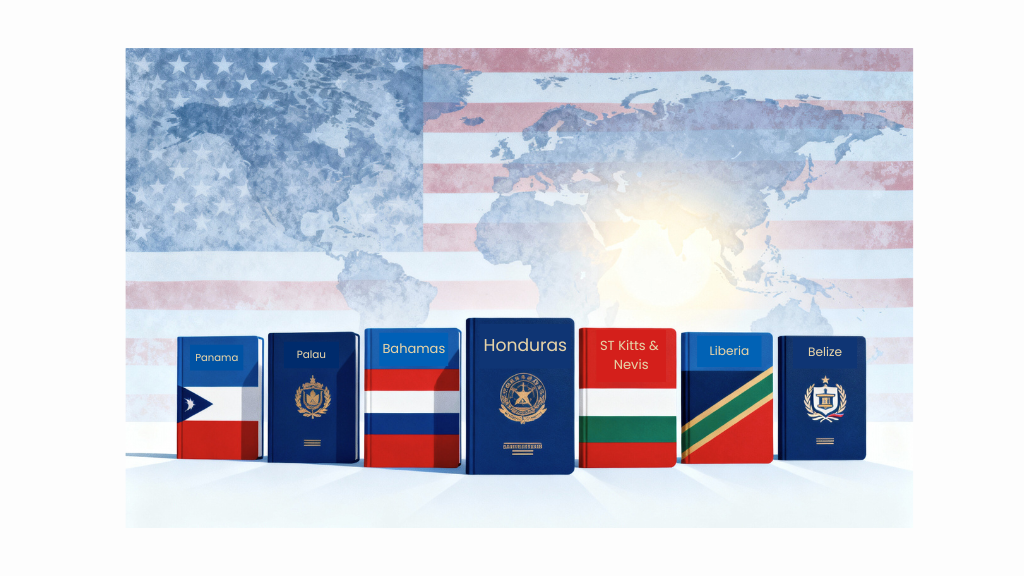
Get your Seaman Book for USA Seafarers—Fast and Trusted
Atomiq Group provides support with the seaman book for USA seafarers living in the United States, helping them apply for an international seaman book without leaving the country. Whether you plan to work on foreign-flag or internationally trading vessels, this service streamlines the process from start to finish. Whether you sail on merchant ships, offshore units, cruise vessels, or yacht fleets, the team prepares and processes your documents with compliant flags such as Panama, Palau, Belize, and Liberia, ensuring a smooth and professional application experience.
US MMC vs Seaman Book: What Each One Lets You Do
A US Merchant Mariner Credential (MMC) is a qualification issued by the US Coast Guard. It is valid for five years (46 U.S.C. § 7302(f)(1)), requires a TWIC before the Coast Guard will issue it (46 CFR § 10.209(f)), and costs USD 140–280 in federal fees depending on the endorsement (46 CFR § 10.219). A flag-state seaman book — Panama, Liberia, the Bahamas, Belize, Palau, Honduras or St Kitts & Nevis — is a different instrument entirely: a record of identity and sea service issued by the administration whose flag your ship flies. Most US mariners who work internationally end up holding both, because the two documents answer different questions. Neither replaces the other.
The distinction that decides everything: qualification vs record
An MMC says what you are qualified to do. It carries your officer or rating endorsements, your STCW endorsements, and the limits on them. It is issued by the United States and it is the document that makes you legally employable on a US-flagged ship.
A flag-state seaman book says who you are and where you have served. It records identity, engagements and discharges, and it is issued by the maritime administration of the state your vessel is registered with — which for most of the world’s merchant tonnage is not the United States.
Asking whether an MMC “replaces” a seaman book is like asking whether a driving licence replaces a logbook. They are not competing versions of the same thing.
The practical consequence, stated plainly:
- US-flagged vessel → you need an MMC. There is no flag-state seaman book that substitutes for it.
- Foreign-flagged vessel → you need documentation the flag accepts. Your MMC may be recognised, but recognition is granted by that flag, not assumed.
- Both, in sequence, over a career → very common. US mariners moving to foreign-flag tonnage, offshore support or yachts routinely hold an MMC and a flag-state record book at the same time.
Why USA Seafarers Need an International Seaman Book
Atomiq Group supports US-based mariners who work on ships registered outside the United States, where a flag-state seaman book (SIRB) is required in addition to national licenses and STCW. An international seaman book helps you prove sea service, rank, and experience when joining new companies, renewing contracts, or applying for visas and port entry clearances.
US MMC vs flag-state seaman book: the decision table
| US Merchant Mariner Credential (MMC) | Flag-state seaman book / CDC | |
|---|---|---|
| Issued by | US Coast Guard, National Maritime Center | The maritime administration of the flag state (AMP Panama, Liberian Registry, BMA, IMMARBE and others) |
| What it proves | Qualification and endorsements | Identity and sea-service record |
| Who can hold it | Officer endorsements: US citizens only, with a narrow exception for OUPV on undocumented vessels. Rating endorsements also open to lawful permanent residents and USMMA enrollees (46 CFR § 10.221) | Varies by flag. Several open registries accept applicants of any nationality |
| Federal / administration cost | USD 140–280 in Coast Guard fees, by endorsement type (46 CFR § 10.219) — full breakdown below. Plus TWIC at USD 128 (reduced rate USD 105.25) | Published by the Bahamas only: Record Book USD 60, digital USD 50, endorsement USD 150 (effective 1 April 2026). The other administrations we file with publish no public schedule |
| Processing time | | Not published by these administrations. See “the two dates” below |
| Validity | 5 years, renewable for further 5-year periods (46 U.S.C. § 7302(f)(1)) | Varies by flag. Liberia publishes five years. The Bahamas Maritime Authority publishes no expiry for its Seafarers’ Record Book |
| Renewal after expiry | Renewable up to 12 months after expiry — but not valid for use after the expiry date, even inside that window (46 CFR § 10.227) | Varies by flag; confirmed at application |
| Acceptance on a US-flagged ship | Required | Does not substitute for an MMC |
| Acceptance on a foreign-flagged ship | Only where that flag recognises and endorses it — recognition is the flag’s decision, not automatic | Accepted by the issuing administration; that is the point of holding one |
Sources: 46 U.S.C. §§ 7302, 8103; 46 CFR §§ 10.209, 10.219, 10.221, 10.227; TSA TWIC fee schedule; Bahamas Maritime Authority MN050 v3.2 (30 March 2026). All retrieved 15 September 2026.
One column this table deliberately leaves blank: processing time. Several sets of turnaround figures are currently live across this site and they do not agree with each other. Until they are reconciled to one, we will not add another. What we will tell you in writing, before you pay, is the two dates that actually matter — below.
What a US MMC actually costs in federal fees
These are the Coast Guard’s own fees under 46 CFR § 10.219. They are not our prices and we do not collect them — they are what the federal government charges, and you should be able to check any quote against them.
| MMC application | Evaluation | Examination | Issuance | Total |
|---|---|---|---|---|
| Officer endorsement, upper level, original | $100 | $110 | $45 | $255 |
| Officer endorsement, lower level, original | $100 | $95 | $45 | $240 |
| Officer endorsement, renewal | $50 | $45 | $45 | $140 |
| Officer endorsement, raise of grade | $100 | $45 | $45 | $190 |
| Rating endorsement, original (non-qualified rating) | $95 | n/a | $45 | $140 |
| Rating endorsement, original (qualified rating) | $95 | $140 | $45 | $280 |
| Rating endorsement, renewal | $50 | $45 | $45 | $140 |
| STCW endorsement, original or renewal | — | — | No fee | $0 |
Add the TWIC. The Coast Guard will not issue an MMC until it has proof you hold a valid TWIC (46 CFR § 10.209(f)). TSA charges USD 128 for a new applicant, or USD 105.25 at the reduced rate, for a card valid five years, and states a goal of responding within 30–45 days of enrolment. Budget the TWIC time before the MMC time, not alongside it.
Two things worth noticing in that table. The STCW endorsement itself is free — if anyone quotes you a Coast Guard fee for it, that fee is not the Coast Guard’s. And renewal is the same $140 whether you are an officer or a rating, which makes letting a credential lapse an expensive mistake rather than a cheap one.
Citizenship: the rule most comparisons get wrong
This is where a foreign seaman book genuinely cannot help you, and it is worth being exact.
Under 46 U.S.C. § 8103, only a citizen or noncitizen national of the United States may serve as master, chief engineer, radio officer, or officer in charge of a deck or engineering watch on a documented US vessel. For unlicensed crew, no more than 25% of the total unlicensed seamen on board may be aliens lawfully admitted for permanent residence.
And under 46 CFR § 10.221, officer endorsements on an MMC are available only to US citizens, with one narrow exception for Operator of Uninspected Passenger Vessels on undocumented vessels. Lawful permanent residents and US Merchant Marine Academy enrollees may qualify for rating endorsements.
So: a Panama or Liberia seaman book does not make a non-US national eligible to sail as an officer on a US-flagged ship. No document from any flag state does. If a service tells you otherwise, that is the point to walk away — and it is the single most common misrepresentation in this category.
What a flag-state book does do is the reverse: it opens the international fleet, which is far larger than the US-flag fleet, to people the US-flag fleet is legally closed to.
Does a US MMC work on a foreign-flagged ship?
Sometimes, and never automatically.
Under the STCW Convention, a certificate issued by one party is recognised on another party’s ships only when that flag state issues its own endorsement attesting recognition. The flag decides. It sets the conditions, and it can decline.
In practice this means a US mariner joining a foreign-flag vessel usually needs three things, not one:
- The MMC and its STCW endorsements — your underlying qualification.
- A recognition endorsement from the vessel’s flag state, where that flag requires one for your rank.
- That flag’s seafarer record book, because engagements and discharges are recorded in the flag’s own instrument.
The third item is the one people discover late, usually at the point of joining. It is also the one we handle.
The two dates, and why any single turnaround number misleads
Date A — when you can legally join the vessel. Several open registries issue a digital instrument first: a temporary certificate, a receipt of application, an interim endorsement. It is real, it is verifiable, it arrives by email, and it is what the master accepts while the book is produced.
Date B — when the printed book reaches your hand. A physical book is produced and couriered. That is measured in weeks on most registries and has nothing to do with whether you can sail.
If a provider quotes you one number without saying which date it is, ask. Every timing we quote runs from the moment complete forms, paid fees and verified documents are in hand — not from your first message.
The same discipline applies on the US side, and it is worth a warning. The National Maritime Center publishes timelines for training-course approvals — a submission entered within 10 business days, then roughly 60–90 days to reach an evaluator. Those are not MMC application processing times, and pages that quote them as such are wrong.
With a recognized seaman book, you can:
- Join Panama, Palau, Belize, Liberia and other foreign-flag vessels that trade to and from US ports
- Maintain a clear, continuous sea-service record to support promotions and license upgrades
- Speed up employer background checks, audits and port-state control inspections
Which should you choose?
The short verdict
If you are a US citizen sailing US-flag: you need the MMC. A flag-state seaman book is not an alternative, and buying one instead will not get you aboard.
If you are a US citizen joining a foreign-flag vessel: you need your MMC and whatever that flag requires — commonly a recognition endorsement and the flag’s own record book. Send us the vessel’s flag and we will tell you which of the two you are missing.
If you are not a US citizen: the MMC route is closed to you for officer positions by statute, and capped for unlicensed positions at 25% of the crew. The international fleet is where your career is, and a flag-state record book is how you enter it.
If you are being told one document does the job of both: ask which administration issues it and under which instrument. Of the seven flag states we file with, not one issues anything that substitutes for a US MMC — and the US Coast Guard does not issue anything that substitutes for a flag-state record book.
Who This USA Service Is For
This dedicated process is built for:
- US citizens and green-card holders joining foreign-flag commercial, offshore, cruise or yacht vessels
- Foreign seafarers living, studying or working in the USA who want to apply using their US address
- Offshore oil and gas crews, rig workers and project technicians travelling from US airports to join international units
Whether you are a cadet, rating, officer, or offshore professional, the documentation route is customized to your experience and preferred flag.
Documents USA Applicants Usually Need
Requirements vary by flag, but most USA-based applicants must provide:
- Passport copy and recent passport-size photograph
- Any existing CDC or national seafarer ID
- STCW Basic Safety Training and other mandatory safety/security certificates
- Medical fitness certificate meeting STCW and flag-state standards
- Sea-service records or experience letters (for experienced crew)
Your file is checked to ensure it matches current flag-state rules before submission, reducing delays and refusals.
What we do, and what we cannot do
We are a documentation consultancy. We prepare, verify and file seafarer documentation with seven flag-state administrations, and we arrange STCW and offshore training with accredited centres.
We do not file MMC applications, and no agency should tell you it can obtain one for you. An MMC is applied for by the mariner with the National Maritime Center, and it is gated on a TWIC that only TSA can issue. What we can do is tell you, before you spend anything, whether the flag-state document you are being sold is the one your vessel actually needs.
What you get in every quote: the flag-state charge and our fee shown separately, and no charge until the eligibility check tells you whether your file qualifies at all. That check is free and answered within 24 hours.
Seaman Book for USA seafarers: Step-by-Step Guide to a Simple Application Process
The process is streamlined into four steps:
- Choose your flag: Select Panama, Palau, Belize, Liberia, or another suitable registry based on vessel type and employer requirements.
- Gather documents: Collect passport, photographs, STCW certificates, medical reports, and sea-service records.
- Submit for verification: Your documents are reviewed for accuracy and submitted to the flag administration.
- Receive your seaman book in the USA: After approval, the seaman book is issued and delivered directly to your US address.
Benefits for USA-Based Seafarers
- Apply from within the USA without visiting embassies or flag offices
- Get guidance on the best flag for your rank and career path
- Reduce risk of rejection through expert document screening
- Maintain a globally accepted sea-service record for future promotions and job opportunities
Frequently asked questions: US MMC vs Seaman Book for USA Seafarers
Is an MMC the same as a seaman book?
No. An MMC is a US Coast Guard credential proving what you are qualified to do, valid five years under 46 U.S.C. § 7302. A flag-state seaman book is a record of identity and sea service issued by the administration your vessel is registered with. They are different instruments and neither replaces the other.
Do I need a seaman book if I already have a US MMC?
If you sail only on US-flagged vessels, no. If you join a foreign-flagged vessel, usually yes — engagements and discharges are recorded in the flag state’s own instrument, and your MMC is recognised on that ship only if the flag issues an endorsement recognising it.
Can a non-US citizen get a Merchant Mariner Credential?
Only in limited form. Officer endorsements are restricted to US citizens under 46 CFR § 10.221, apart from a narrow OUPV exception. Lawful permanent residents and USMMA enrollees may hold rating endorsements. A foreign seaman book does not change this.
How much does a US MMC cost?
Coast Guard fees run from USD 140 for a renewal to USD 280 for an original qualified rating endorsement, set by 46 CFR § 10.219. STCW endorsements carry no fee. Add a TWIC at USD 128, or USD 105.25 at the reduced rate, which the Coast Guard requires before it will issue the credential.
How long is a US MMC valid?
Five years, renewable for further five-year periods (46 U.S.C. § 7302(f)(1)). It may be renewed up to 12 months after expiry, but it is not valid for use after the expiry date — including during that renewal window (46 CFR § 10.227).
Which flag-state seaman book is best for a US mariner?
Usually the one your vessel flies. Where the choice is genuinely yours — you are not yet contracted, or you work across operators on several flags — choose on acceptance and verifiability rather than price. The administration fees differ by tens of dollars; a document a port state questions costs you a contract.
Can I apply for a foreign-flag seaman book while living in the USA?
Yes, Many seafarers in the USA apply for seaman books from flags like Panama, Palau, Belize, and Liberia using their US address. Applications can be processed remotely as long as your documents meet the requirements.
Do I still need STCW certificates if I already have experience?
Yes. Valid STCW certificates are mandatory for most flags and employers. If yours have expired, you may need refresher courses.
How long does it take to receive the seaman book in the USA?
Timeframes depend on the flag administration and document readiness, but well-prepared applications are usually processed efficiently.
Can I use the same seaman book for different companies and countries?
Yes. A recognized seaman book can be used across multiple employers and routes, as long as you meet each vessel’s certification and visa requirements.
Does an international seaman book replace my visa?
No. A seaman book does not replace immigration documents or crew visas such as C1/D. You may still need the appropriate visa depending on your travel and vessel joining point.
Tell us the vessel’s flag and your rank. We will tell you which document you are missing — free, answered within 24 hours.
WhatsApp our Dubai documents team: +971 55 458 3416 · Office: #903 Regal Tower, Business Bay, Dubai

