Training Required for Offshore Vessels Work
Offshore crew generally need two layers of training: mandatory STCW basic safety training for all seafarers, plus offshore-specific survival training for oil-and-gas fields. Getting these right is where many applications stall.
1. STCW Basic Safety Training (mandatory for all seafarers)
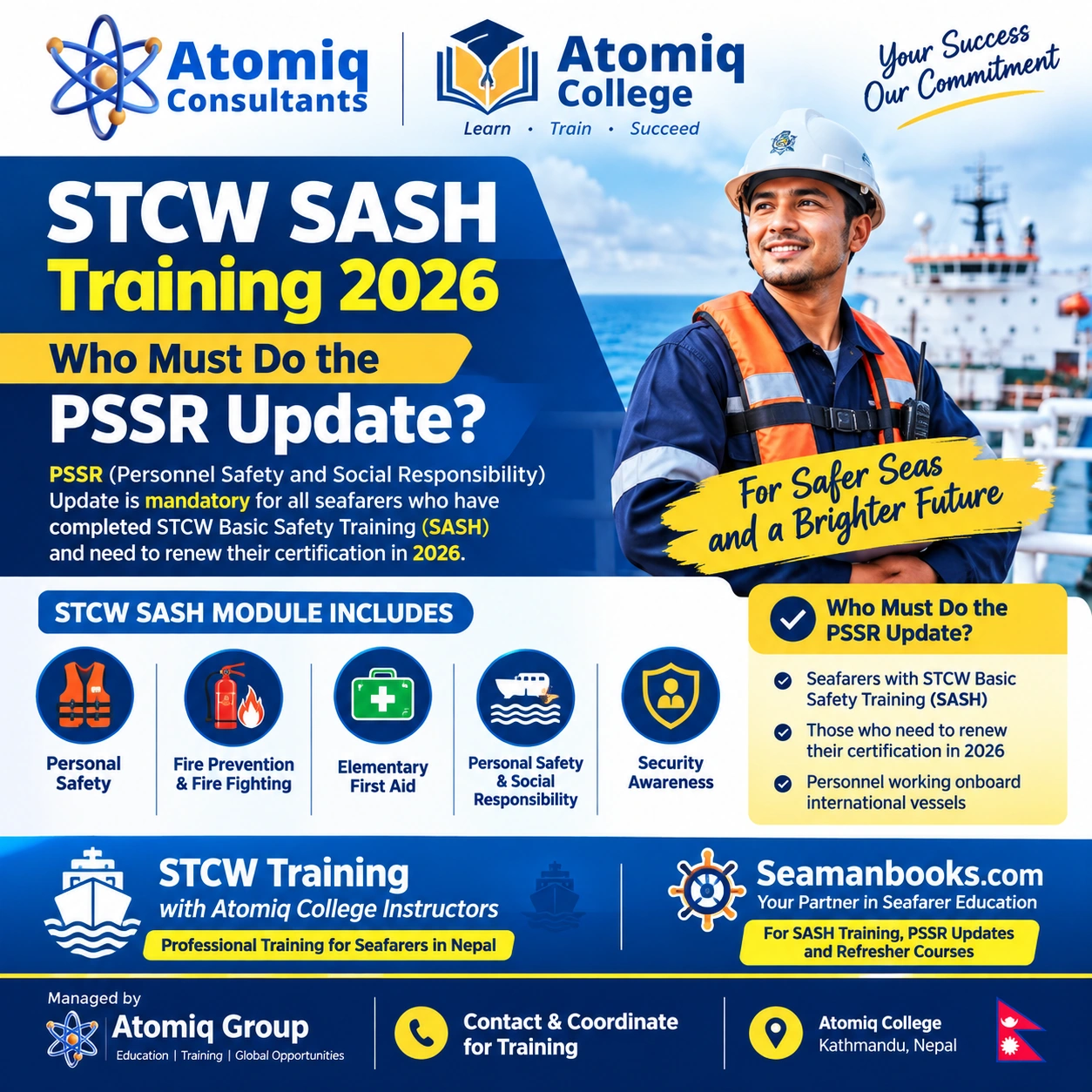
Under the STCW Convention (Standards of Training, Certification and Watchkeeping), every seafarer needs Basic Safety Training before serving at sea. This bundle usually includes:
- Personal Survival Techniques (PST)
- Fire Prevention and Fire Fighting (FPFF)
- Elementary First Aid (EFA)
- Personal Safety and Social Responsibilities (PSSR)
- Security awareness / Proficiency in Security Awareness (PSA)
2. Offshore-Specific Survival Training (for oil & gas support work)
For crew heading to offshore oil-and-gas installations and the vessels that service them, operators typically require standardized offshore safety training such as:
- BOSIET — Basic Offshore Safety Induction and Emergency Training
- HUET — Helicopter Underwater Escape Training
- FOET — Further Offshore Emergency Training (the refresher)
3. Rank and vessel-specific competency
Depending on your position, you may also need Certificates of Competency (CoC), Dynamic Positioning (DP) certification, crane operator tickets, or advanced firefighting. Our Offshore Vessels Course and Offshore Vessels Training guidance map exactly which certificates your target flag state and employer expect, so you don’t pay for courses you don’t need.
Not sure which training you’re missing? Send us your current certificates and target vessel type — we’ll return a one-page gap list, free.
Seaman Book & CDC Requirements for Offshore Vessels
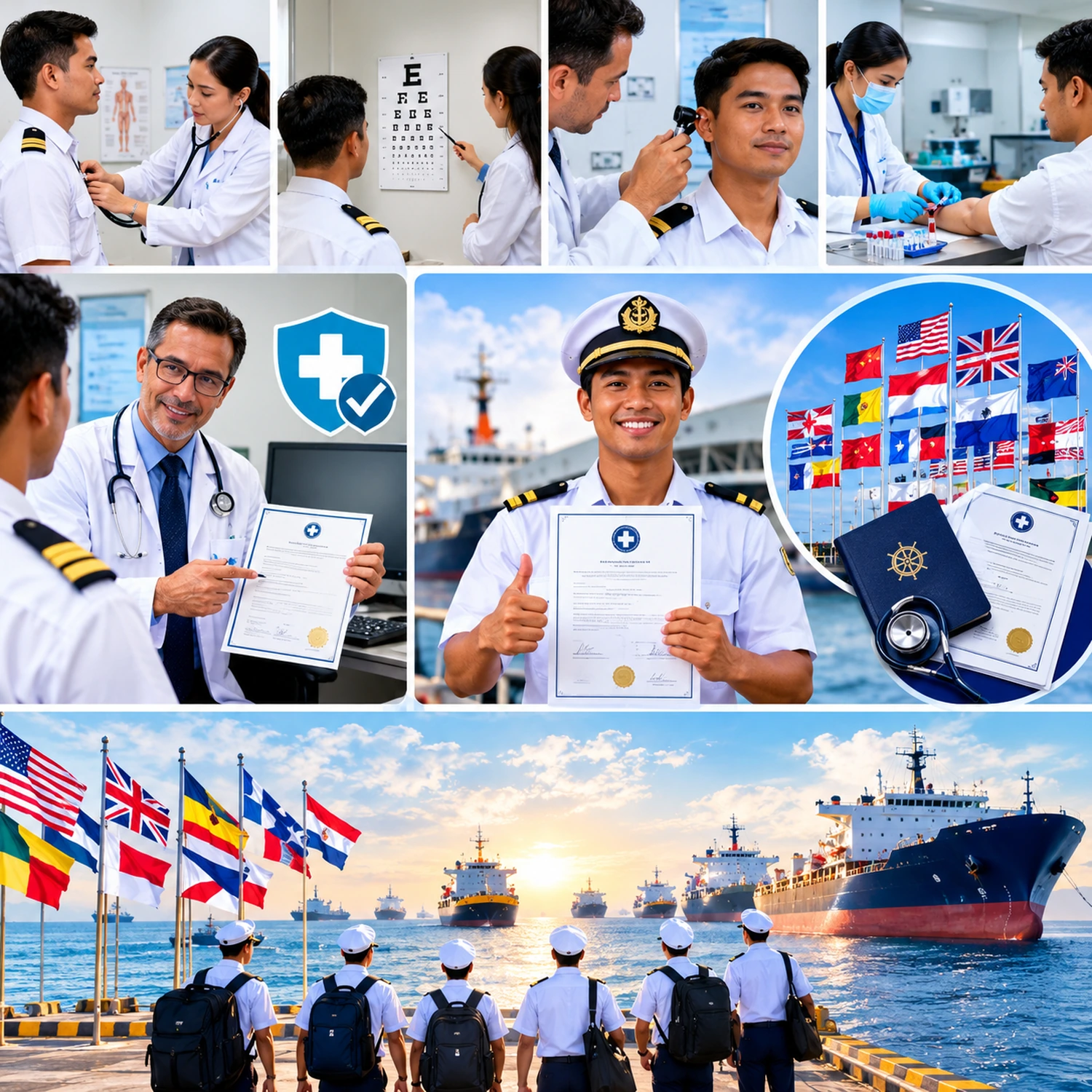
To apply for an offshore vessels seaman book, you typically need a valid passport, passport-sized photos, proof of STCW basic safety training, a medical fitness certificate (ENG1 or equivalent), and — for a CDC — evidence of sea service or a training/employment reference. Exact requirements vary by flag state, but the core file is consistent:
Requirement | Application (First Issue) | Renewal | Replacement (Lost/Damaged) |
Valid passport | Required | Required | Required |
Passport photos (recent) | Required | Required | Required |
STCW basic safety certificates | Required | Verify still valid | Required |
Medical fitness (ENG1 / equivalent) | Required | Usually required | Recommended |
Existing/expired seaman book | Not applicable | Required | Police report + affidavit (if lost) |
Sea service record | For CDC issue | To update service pages | To reconstruct history |
Employer / agency reference | Often helpful | Optional | Helpful |
We prepare, check and submit the full file for you, flagging problems before they reach the registry — which is where most delays and rejections happen.
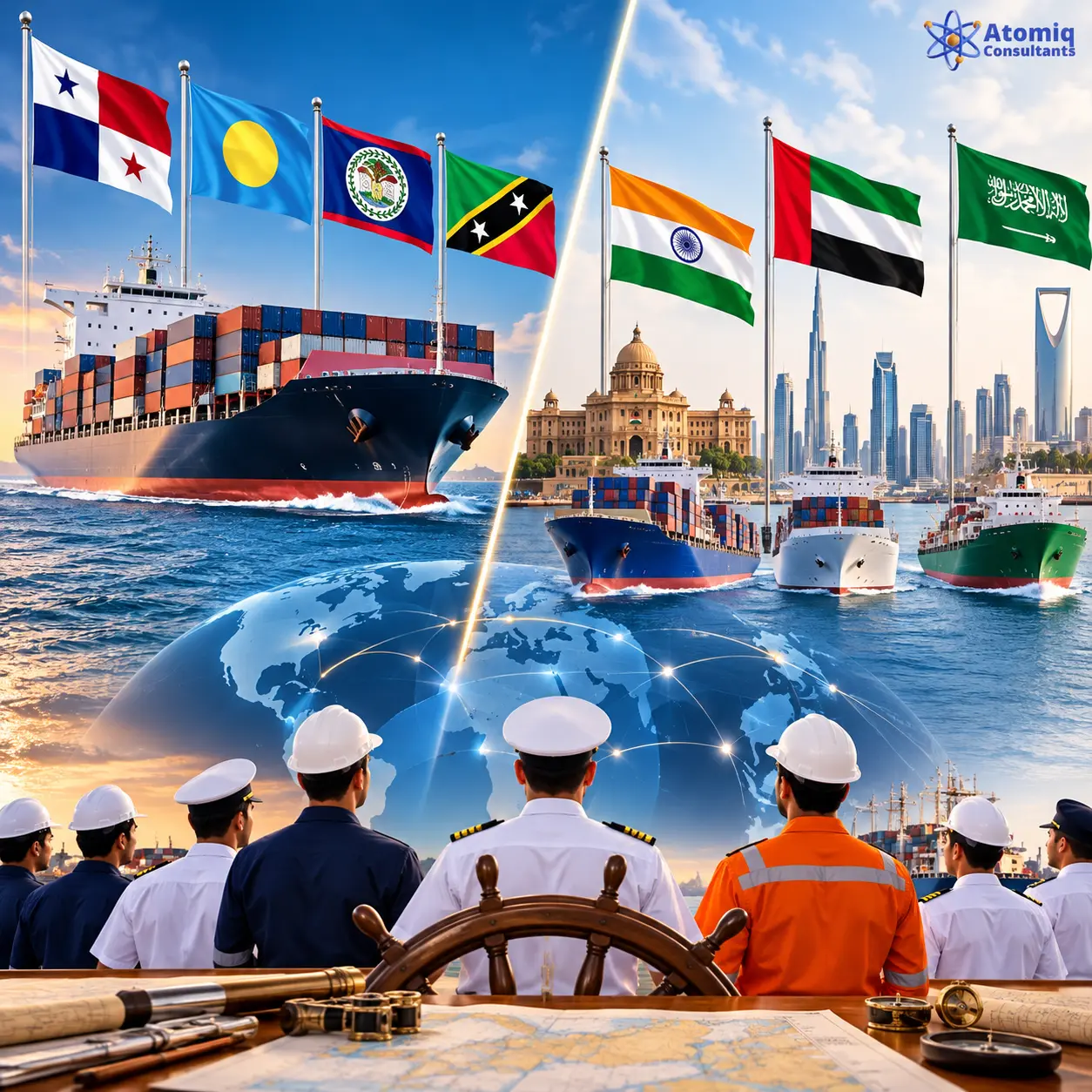
Flag State Options: Panama, Palau, Belize, Marshall Islands, Bahamas, Europe, USA & the Gulf
The right flag state depends on where your vessel is registered, where it operates, and which registry your employer accepts. Open registries like Panama, Palau, Belize, Marshall Islands and the Bahamas are popular with offshore operators because they combine international recognition with efficient processing. Below is an honest, at-a-glance comparison.
Flag State Offshore supply vessels comparison
Flag State | Type | Typical Offshore Use | Global Recognition | Why Crews Choose It |
Panama | Open registry | One of the largest global fleets; widely used offshore | Very high | Broad acceptance, deep vessel pool, familiar to manning agents |
Palau | Open registry | Growing OSV and support presence | High | Straightforward processing, friendly for new entrants |
Belize | Open registry | Common on support and utility vessels | High | Practical option for fast documentation |
Marshall Islands | Open registry | Major offshore & OSV flag | Very high | Strong reputation with oil-and-gas operators |
Bahamas | Open registry | Offshore, cruise and support tonnage | Very high | Respected quality registry, strong Gulf/Atlantic use |
Europe (EU/UK) | National registries | North Sea offshore, wind, and support | Very high | Preferred for North Sea and EU-controlled projects |
USA (USCG MMC) | National registry | US OCS and Gulf of Mexico operations | High (US-focused) | Required for many US Outer Continental Shelf jobs |
Saudi Arabia / Gulf (GCC) | Regional operations | Aramco-linked and Gulf offshore fields | Regional | Access to high-demand Gulf offshore contracts |
Europe (including UK North Sea projects) and the USA (USCG Merchant Mariner Credential for US Gulf of Mexico / Outer Continental Shelf work) run national systems with their own rules, while Saudi Arabia and the wider Gulf drive enormous offshore demand around fields serviced from ports like Dammam, Jubail and beyond. We match your document to the market you want to work in — not just the one that’s quickest to issue.
Explore our dedicated Panama, Palau and Belize flag state seaman book pages for country-specific detail, or see the full Seafarers Service page for every registry we support.
Seaman Book Application, Renewal and Replacement — How We Beat the Competition
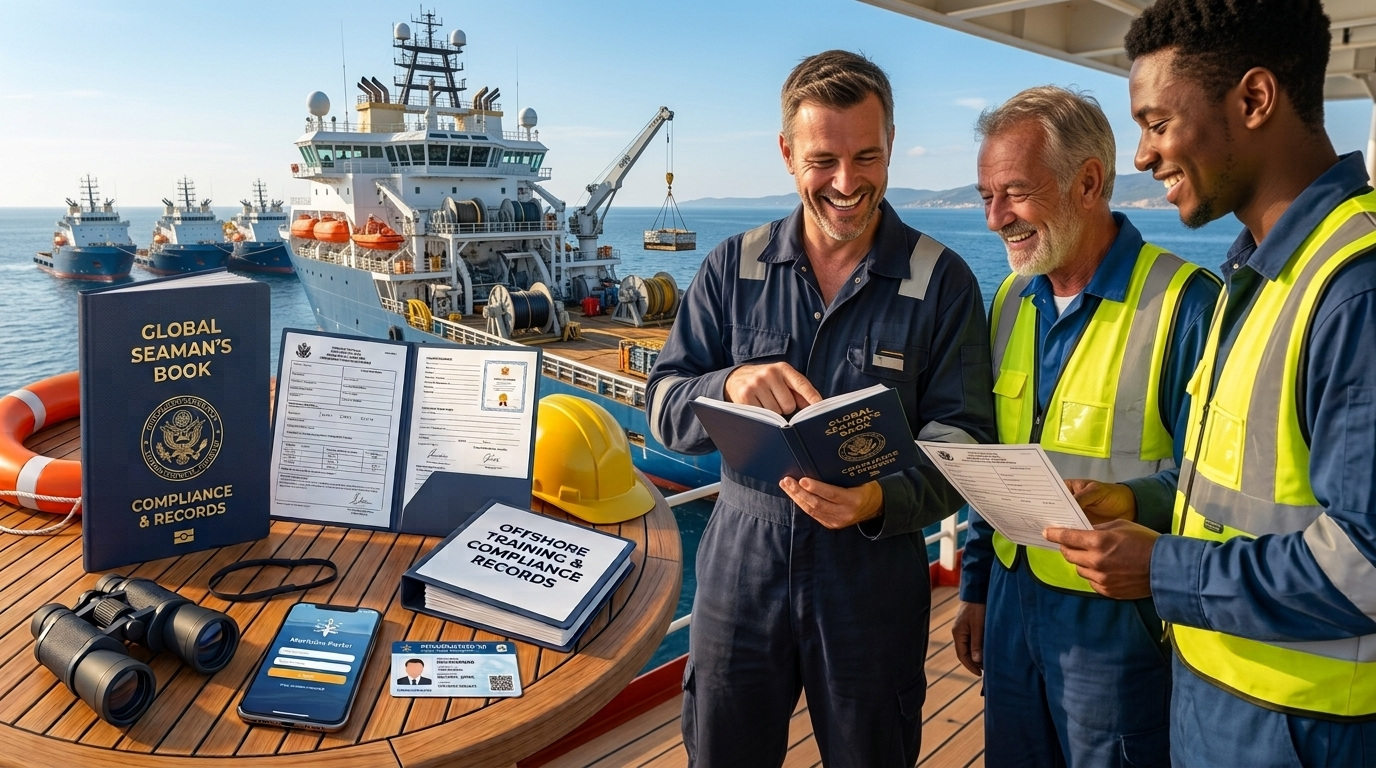
Most providers do one thing: submit a form. We manage the whole lifecycle of your offshore documentation, and we do it faster and with fewer rejections.
Seaman Book New Application
We assemble your complete file, verify every STCW and offshore certificate, confirm your target flag state accepts your profile, and submit — with a pre-submission check that catches errors before the registry does.
Seaman Book Renewal
Expired or expiring books cost you contracts. We track validity, update sea-service pages, and renew ahead of deadlines so you’re never grounded between assignments.
Seaman Book Replacement (Lost, Stolen or Damaged Offshore)
Lost your book mid-rotation? We handle the affidavit, police report and reissue process and coordinate with the flag state so you can get back to work — no small thing when you’re offshore and your next crew change depends on it.
Why crews and manning agents choose Seamanbooks.com:
- Multi-flag coverage — Panama, Palau, Belize, Marshall Islands, Bahamas, Europe, USA and the Gulf from one desk.
- Offshore specialization — we understand OSV/PSV/AHTS crewing and BOSIET/HUET requirements, not just merchant shipping.
- Faster turnaround — pre-checked files mean fewer registry rejections and less waiting.
- Human support — real people who answer, managed by Atomiq Group Consultants.
Start Offshore Vessels Application today, or Contact Us to check your exact requirements first.
Frequently Asked Questions
Do offshore vessel workers really need a seaman book?
Yes. A valid Seaman Book/CDC is required to board, to be employed, and to satisfy port state control and maritime labour compliance on offshore support vessels.
What’s the difference between a seaman book and a CDC?
A seaman book is the broad term for a seafarer’s identity and service document. A CDC (Continuous Discharge Certificate) is the version that continuously records your sea service — each sign-on and sign-off. In practice, most flag states issue one document covering both purposes.
Can I get a seaman book without sea experience?
Yes. First-time seafarers can get an initial issue once they hold STCW basic safety training and a medical fitness certificate. Sea service is then recorded as you gain it. We help new entrants get their first book issued correctly.
Which flag state is best for offshore work — Panama, Palau or Belize?
It depends on your vessel’s registry and where you want to work. Panama and Marshall Islands have the broadest global acceptance; Palau and Belize are efficient, practical options often favored by new entrants. Tell us your target market and we’ll recommend the right one.
What training do I need beyond STCW for offshore oil and gas?
Most offshore oil-and-gas operators require offshore survival training such as BOSIET, with HUET for helicopter transfers and FOET as the refresher — on top of your mandatory STCW basic safety training.
How long does an offshore seaman book application or renewal take?
Turnaround depends on the flag state and how complete your file is. Because we pre-check every document before submission, we minimize the rejections that cause most delays. Contact us for a current estimate for your chosen registry.
My seaman book was lost or damaged offshore — what do I do?
Report it, then contact us. We handle the affidavit, any required police report, and the reissue process with the flag state so you can return to work with minimal downtime.
Do you handle European and US (USCG) documentation too?
Yes. Alongside open registries, we support European (EU/UK) national registries for North Sea work and USCG Merchant Mariner Credential requirements for US Gulf of Mexico and Outer Continental Shelf operations.
Do you cover Gulf and Saudi offshore requirements?
Yes. We support crew targeting Saudi Arabia and the wider GCC offshore market, aligning your documentation with the registries and operators active in the region.
Ready to sail with the right paperwork?
Whether you’re joining your first OSV or renewing before your next Gulf or North Sea rotation, get your documentation done right the first time.
- Offshore Vessels Seaman Book Requirements — see exactly what your flag state needs
- Start Offshore Vessels Application — begin now
- Offshore Vessels Training — map your STCW and offshore courses
- Contact Us — talk to a real specialist
Seamanbooks.com — Offshore vessel seaman book, CDC and maritime compliance support. Managed by Atomiq Group Consultants.