Seaman Book Turkey: Which Open Registry Flag Should You Choose?
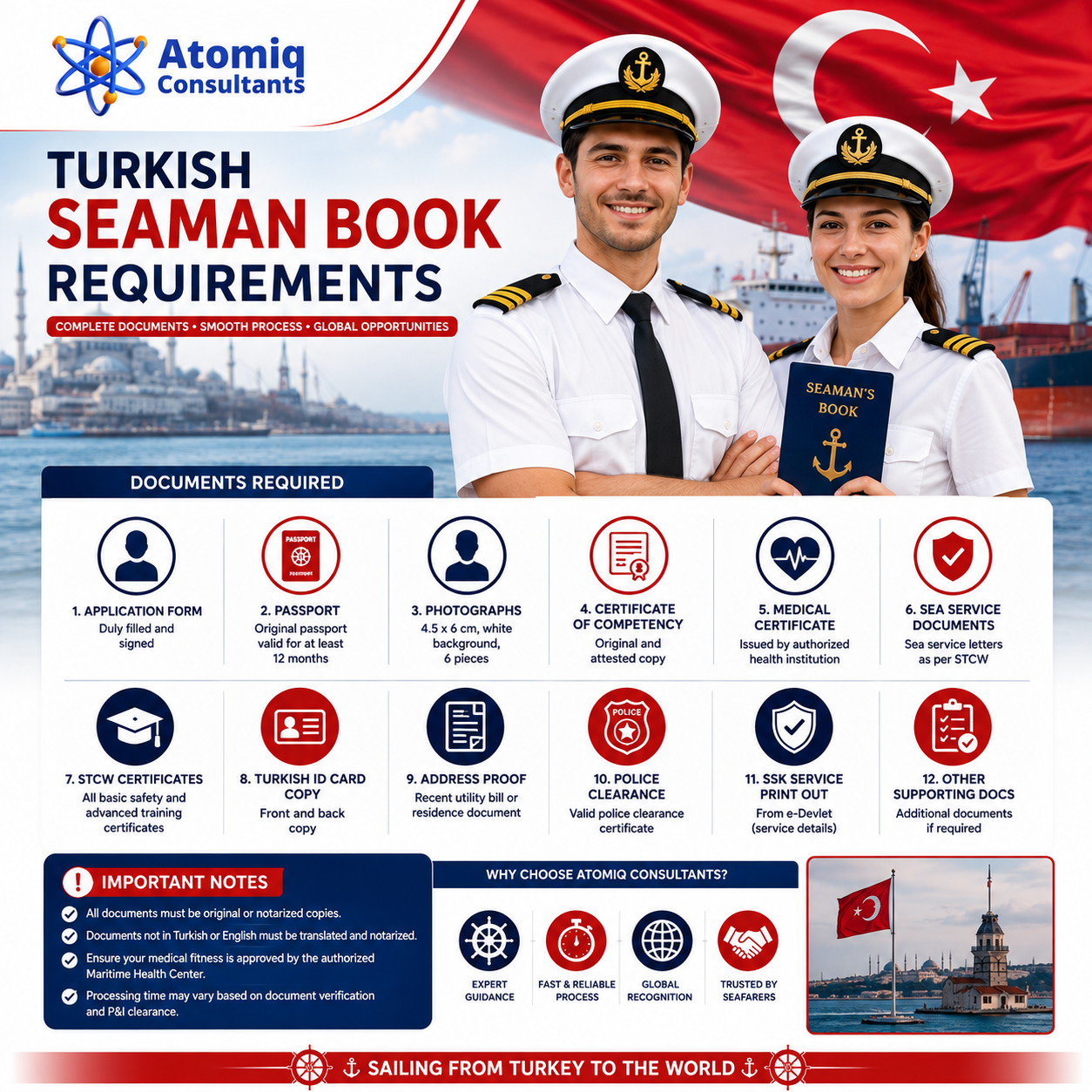
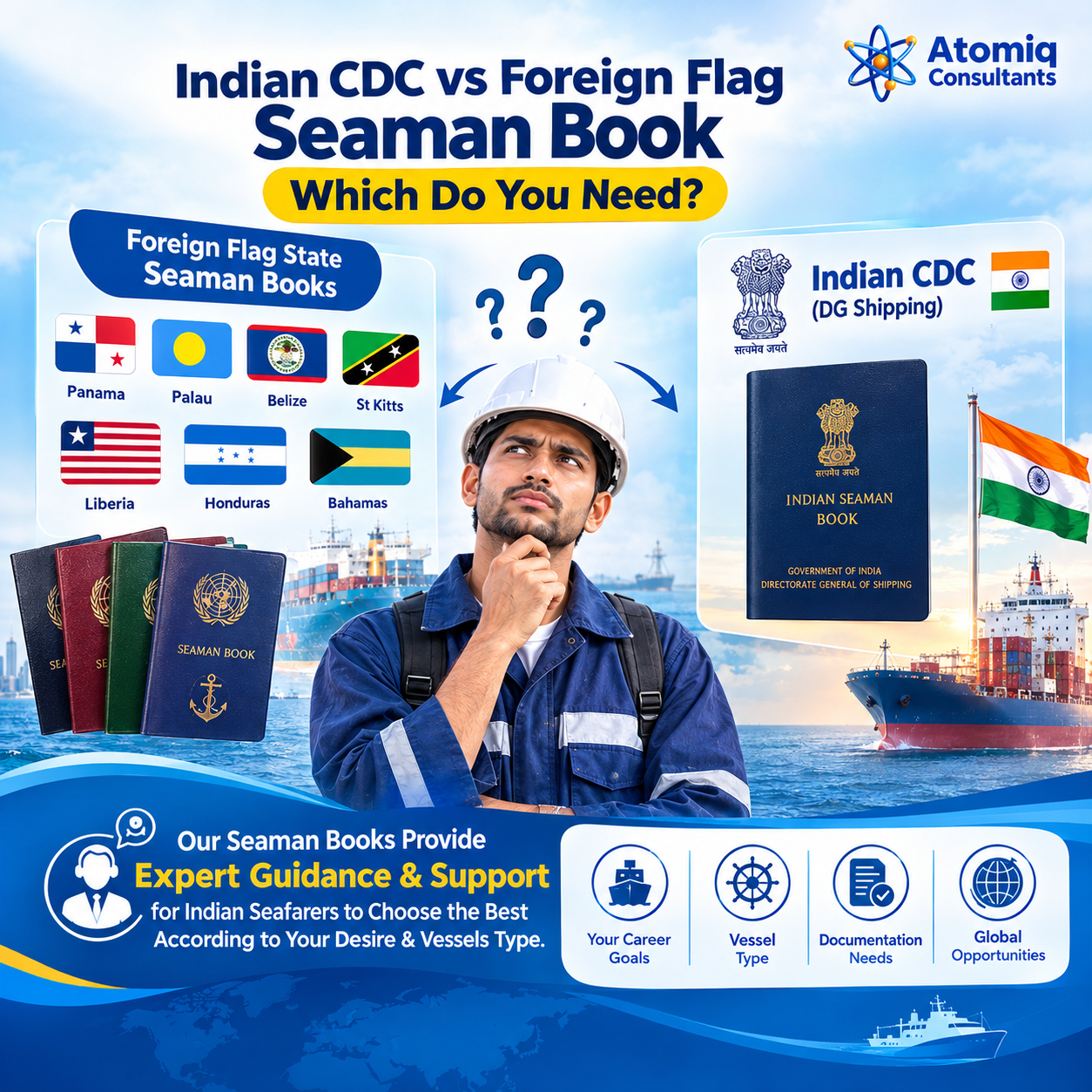
If you hold a Turkish gemiadamı cüzdanı and you are about to sign onto a foreign-flag vessel, you have probably been told you need a second seaman book. You are not being upsold. A seaman book from Turkey and a seaman book from Panama or Liberia do two different jobs, and most Turkish seafarers working internationally end up carrying both.
This guide explains what each document actually is, why open registry flags dominate the conversation, and how to pick one without wasting money on a flag your employer will not accept.
What a seaman book is — and what Türkiye already gives you
A seaman book is a seafarer’s identity and sea-service document. It records who you are, your rank, and your service history, and it lets you cross borders for shore leave, joining, and repatriation without a standard tourist visa. The International Labour Organization created the framework in 1958 with the Seafarers’ Identity Documents Convention (No. 108), later revised as Convention No. 185 in 2003 (ILO).
What is a seaman book for Turkish seafarers?
A seaman book is a seafarer’s identity and sea-service document. Turkish seafarers hold a national gemiadamı cüzdanı issued through their port authority, and often add an open registry book from Panama, Liberia or Palau to serve on foreign-flag vessels. The two documents work together, not as substitutes.
Türkiye has ratified Convention No. 108, not No. 185 (ILO list of conventions ratified by Türkiye). In practice that means your Turkish gemiadamı cüzdanı, issued through your Liman Başkanlığı and verifiable on the Ministry’s gemiadami.uab.gov.tr portal, is already a recognised seafarer identity document for shore leave purposes.
So why do Turkish crew still apply for a Panama or Liberia book? Because the two documents answer different questions. Your Turkish book answers who you are. A flag-state book answers whether that flag administration has accepted you as crew on its ships.
Why open registry flags are so popular
Three registries carry an outsized share of the world fleet. As of 1 January 2025, Liberia, Panama and the Marshall Islands together accounted for 46.5% of total world capacity in deadweight tons (UNCTAD Review of Maritime Transport, reported by SAFETY4SEA). Almost half the tonnage afloat flies one of three flags.
For a Turkish seafarer, the consequences are simple:
- Job supply follows tonnage. Most foreign-flag vacancies reaching Turkish crewing offices are on open registry ships, so open registry documents are the ones employers ask for.
- Nationality is not a barrier. Under Convention No. 108, a member state may issue a seafarer document to crew serving on ships registered in its territory, not only to its own nationals. That is the legal basis on which Panama, Liberia and similar registries issue books to Turkish applicants.
- Processing is remote-friendly. Panama accepts applications through its consulates and authorised offices abroad, with the photo and signature captured in person only if you attend an office directly (Panama Maritime Authority requirements).
- Administrative fees are modest. AMP’s published requirements list a USD 8 processing charge at its head office, plus USD 10 handling per process at consulates and authorised offices. (Measured — AMP requirements form v.02. This covers listed administrative charges only, not issuance, courier or agency fees.)
Flag comparison at a glance
Flag | Typically chosen by | Strong points | Watch for |
Panama | Merchant, offshore, yacht crew | Second-largest registry by DWT with a dense consular network; well-understood by Turkish crewing offices | Requirements differ by rank and vessel type — read the correct AMP form |
Liberia | Tanker, LNG and quality-tonnage crew | Largest registry by DWT as of 1 January 2025; strong owner base that also employs Turkish officers | Tends to be stricter on document verification |
Palau | Small merchant, offshore support | Fast turnaround; flexible for ratings | Narrower employer recognition than the big three |
Belize / St Kitts & Nevis / Honduras | Coastal trade, small craft, yachts | Low cost, quick issuance | Some owners and port states scrutinise these more closely |
Bahamas | Cruise and passenger vessels | Very strong cruise-sector recognition | Cruise operators often specify the flag for you |
Estimated — sector patterns based on registry positioning and typical employer requirements, not on published statistics. Confirm the flag your employer requires before applying.

What Turkish applicants are usually asked for
Requirements vary by flag and rank, but the common core across registries is:
- Valid passport (original or certified copy) and a recent white-background photo.
- Medical fitness certificate meeting STCW Regulation I/9 and MLC 2006 standards.
- STCW certificates — Basic Safety Training as a minimum, plus rank-specific courses. If yours have lapsed, refreshers come before the application, not after. See our STCW certification support.
- Sea service records or an employment letter naming the position you are applying for.
- Your Turkish gemiadamı cüzdanı, where you already hold one — it corroborates your service history.


Officers need one more piece: a flag-state endorsement (CoC endorsement) recognising your Turkish Certificate of Competency under STCW Regulation I/10. A seaman book alone does not authorise you to serve in a licensed rank on that flag.
The honest limits — read this before you pay anyone
An open registry seaman book is a flag-state document. It is not:
- a replacement for your Turkish gemiadamı cüzdanı,
- a visa or a work permit,
- a substitute for STCW certificates or a valid CoC,
- proof of employment on its own.
Any provider telling you otherwise is a provider to walk away from. A legitimate book is issued by the flag administration itself and is verifiable in that administration’s own database. Ask your agent which authority issues it and how the employer verifies it — a straight answer takes ten seconds.
How to choose your flag
Work backwards from the job, not from the price list:
- You have an offer already. Apply for the flag of that vessel. Nothing else matters.
- You are job-hunting in tankers or gas. Liberia and the Marshall Islands are the safer bets.
- You are job-hunting in general cargo, offshore or yachts. Panama gives you the widest opening.
- You are a rating starting out. Panama or Palau balance cost against recognition.
- You are targeting cruise lines. Wait for the operator to specify — Bahamas is common, but the company decides.
Timelines depend far more on how complete your file is than on the flag. Our flag-by-flag processing time comparison sets realistic expectations.
What Turkish applicants are usually asked for
Requirements vary by flag and rank, but the common core across registries is:
- Valid passport (original or certified copy) and a recent white-background photo.
- Medical fitness certificate meeting STCW Regulation I/9 and MLC 2006 standards.
- STCW certificates — Basic Safety Training as a minimum, plus rank-specific courses. If yours have lapsed, refreshers come before the application, not after. See our STCW certification support.
- Sea service records or an employment letter naming the position you are applying for.
- Your Turkish gemiadamı cüzdanı, where you already hold one — it corroborates your service history.
Officers need one more piece: a flag-state endorsement (CoC endorsement) recognising your Turkish Certificate of Competency under STCW Regulation I/10. A seaman book alone does not authorise you to serve in a licensed rank on that flag.
The honest limits — read this before you pay anyone
An open registry seaman book is a flag-state document. It is not:
- a replacement for your Turkish gemiadamı cüzdanı,
- a visa or a work permit,
- a substitute for STCW certificates or a valid CoC,
- proof of employment on its own.
Any provider telling you otherwise is a provider to walk away from. A legitimate book is issued by the flag administration itself and is verifiable in that administration’s own database. Ask your agent which authority issues it and how the employer verifies it — a straight answer takes ten seconds.
How to choose your flag
Work backwards from the job, not from the price list:
- You have an offer already. Apply for the flag of that vessel. Nothing else matters.
- You are job-hunting in tankers or gas. Liberia and the Marshall Islands are the safer bets.
- You are job-hunting in general cargo, offshore or yachts. Panama gives you the widest opening.
- You are a rating starting out. Panama or Palau balance cost against recognition.
- You are targeting cruise lines. Wait for the operator to specify — Bahamas is common, but the company decides.
Timelines depend far more on how complete your file is than on the flag. Our flag-by-flag processing time comparison sets realistic expectations.
Frequently asked questions
Can I get a Panama seaman book while living in Türkiye?
Yes. Panama accepts applications through its consulates and authorised offices abroad, so Turkish nationals and residents can apply without travelling to Panama. Your file must still meet AMP’s requirements for your rank, including a valid passport and an STCW-compliant medical certificate.
Do I still need my Turkish gemiadamı cüzdanı?
Yes. The Turkish book is your national seafarer identity document, issued through your Liman Başkanlığı and verifiable on gemiadami.uab.gov.tr. A flag-state book supplements it for service on that flag’s vessels; it never replaces it.
Is an open registry seaman book legal?
Yes, when it is issued by the flag administration. Under ILO Convention No. 108, a state may issue seafarer documents to crew serving on ships registered in its territory, including foreign nationals. Books sold outside that process, with no verifiable issuing authority, are not.
How many flags should I hold at once?
Usually one, plus your Turkish book. Collecting three or four rarely widens your options and multiplies renewal costs. Add a second flag only when a confirmed employer requires it.
What if my seaman book is lost while abroad?
Report it to the local authority, obtain a police report, and apply for a duplicate through the issuing administration — Panama, for example, requires a letter stating the cause plus the police complaint or a company letter. Do this before your next joining date.