Best Seaman Book Options for USA Seafarers (2026 Buyer’s Guide)
You hold a Merchant Mariner Credential and a TWIC. Then a crewing manager emails you about a berth on a Panama-flagged offshore support vessel and asks for your seaman book — and suddenly the US maritime document set you have spent years building does not cover the job in front of you.
This is the single most common documentation gap for a seaman book USA seafarers face when they move from the US-flag fleet to internationally trading tonnage. It is not a gap in your competence, and it is not something the Coast Guard can fix. It is a flag-state issue, and it is solved by obtaining a seafarer’s identity and record book from the registry your next vessel flies.
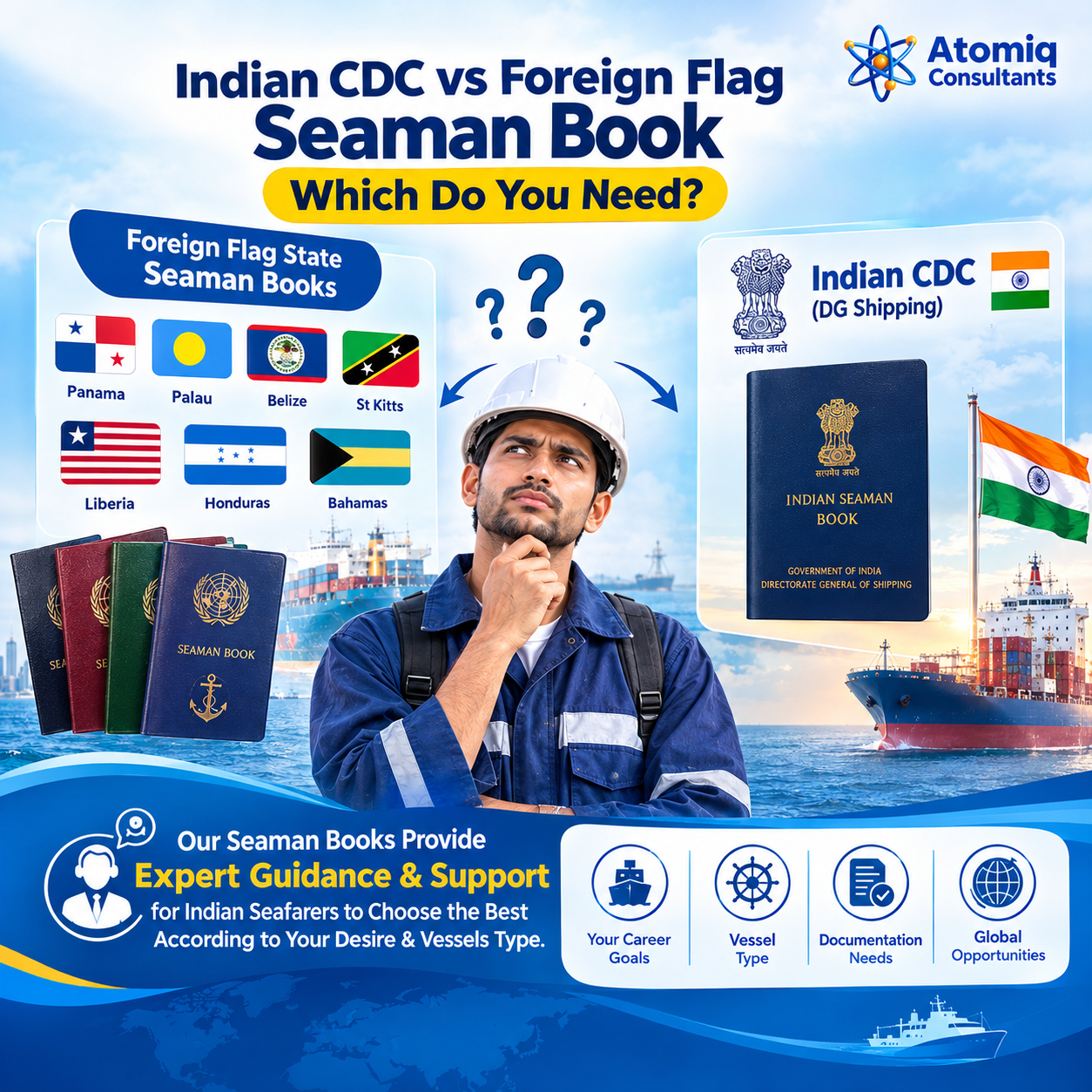
This guide covers what a seaman book actually is, why your MMC does not substitute for one, and how the four registries most used by US-based mariners — Belize, Palau, St. Kitts & Nevis and Panama — compare on processing speed, recognition and long-term reliability.
What is a seaman book?
A seaman book is a flag-state issued identity and sea-service record document, also called a Seafarer’s Identity and Record Book (SIRB) or Continuous Discharge Certificate (CDC). It records your name, nationality, rank and photograph alongside a continuous log of every vessel you have served on. Flag administrations issue it; employers and port authorities rely on it to verify sea time.
Two things distinguish it from a national licensed. First, it is issued by the flag state of the ship, not the country of the seafarer — which is why a US citizen can and often must hold a Panamanian or Belizean book. Second, it is a running record, stamped on sign-on and sign-off, rather than a snapshot of qualifications.
Why your MMC is not a substitute
The Merchant Mariner Credential, issued by the US Coast Guard’s National Maritime Center, consolidated the old Merchant Mariner’s Document, license, Certificate of Registry and STCW certificate into a single five-year credential. Paired with a TWIC, it is the complete US maritime document set for service aboard US-flag vessels.
It does not, however, do the job of a flag-state seaman book, for three reasons.
It is a US-flag credential.
A Panamanian, Belizean or Palauan vessel is governed by that flag’s manning rules. Those rules require crew to hold that administration’s own seafarer documentation — either its seaman book or, for officers, its Certificate of Endorsement recognizing your STCW ticket. The MMC is evidence of your qualifications; it is not evidence of standing under another flag.
It no longer looks like a travel document.
Since 1 March 2024 the MMC has been issued as a single sheet of waterproof, tear-resistant synthetic paper rather than the familiar maroon booklet. Passport-style MMCs remain valid until the last one expires on 30 April 2029, but the format change matters in practice: immigration officers, agents and crewing offices outside the US recognize a stamped booklet far more readily than a folded certificate. (USCG NMC credential format announcement)
It carries no continuous sea-service log.
The MMC lists endorsements. It has no pages for a master to stamp your sign-on and sign-off dates, which is precisely the evidence a foreign employer, a flag administration or a promotion board wants to see.
There is a genuine nuance here worth stating plainly: the data page of the old passport-style MMC was built to the ICAO Doc 9303 machine-readable travel document specification and does function as a seafarer’s identity document in the technical sense. But the United States has not ratified the ILO’s Seafarers’ Identity Documents Convention (No. 185), so the MMC is not a C185-compliant SID and does not carry the shore-leave and transit facilitation rights that convention was written to provide. (ILO NORMLEX C185 ratifications)
Who needs a flag-state seaman book
You almost certainly need one if you are:
- A US citizen or green-card holder joining a foreign-flag commercial, offshore, cruise or yacht vessel
- An offshore oil and gas worker, rig crew member or project technician flying from a US airport to join an international unit
- A cadet or entry-level rating trying to break into international shipping, where a seaman book is often the minimum admission ticket to a crewing agency’s database
- A foreign national living, studying or working in the USA who wants to apply using a US address
You probably do not need one if your entire career sits inside the Jones Act trades on US-flag vessels. In that case the MMC and TWIC are sufficient, and adding a foreign book is an expense without a return.
The four flag states Seaman Book US seafarers use most
Flag state | Administration | Typical issuance window | Best suited to | Recognition profile |
Belize | IMMARBE | Fast — days, not weeks | Entry-level ratings, cadets, first-time applicants, budget-conscious crew | Broad acceptance across general cargo, tugs and offshore; less common on tier-one owners’ fleets |
Palau | Palau Ship Registry | Fast — days, not weeks | Yacht and superyacht crew, offshore technicians, seafarers needing a book before a fixed join date | Fully digital registry, strong in yachting and specialist offshore |
St. Kitts & Nevis | SKANReg | Fast — days, not weeks | Caribbean-trading vessels, yacht crew, seafarers needing a fast second book | Well established in the yacht and small-commercial sector |
Panama | Autoridad Marítima de Panamá (AMP) | Slower — allow roughly one month | Career officers and ratings who want one book that will not be questioned anywhere | The widest recognition of any open registry; Panama runs the world’s largest fleet |
Processing windows are Atomiq Group’s operational estimates based on complete, correctly prepared files. They are not guarantees — every administration sets its own queue, and an incomplete file resets the clock.
Belize (IMMARBE)
The International Merchant Marine Registry of Belize is the statutory maritime administration of Belize and issues seafarer documentation on a short turnaround. It is the most common first book for US-based cadets and ratings: the documentary threshold is manageable, the cost sits at the lower end, and the book is accepted across a wide slice of the general cargo, tug and offshore market. If you are trying to get into international shipping rather than move within it, the Belize seaman book is usually the efficient starting point.
Palau
The Palau Ship Registry operates as a fully digital administration, which is exactly why it suits seafarers working against a deadline. Applications are handled electronically end to end, and the registry has built a strong position in yachting and specialist offshore work. If a captain has given you a join date three weeks out, a Palau seaman book is one of the more dependable fast routes.
St. Kitts & Nevis
The St. Kitts & Nevis registry issues both the seaman’s book and the CDC booklet, and it is a familiar name to anyone working Caribbean routes or in the yacht sector. Turnaround is quick and the requirements are proportionate. For US mariners on the East Coast and Gulf who work yachts and small commercial tonnage, the St. Kitts & Nevis seaman book is often the most natural fit.
Panama
Panama is the recognition benchmark. It runs the largest ship registry in the world, and a Panamanian CDC is the book least likely to be questioned by a crewing office, a port state control officer or an immigration desk anywhere you sail. The trade-off is time: expect roughly a month from a complete submission, sometimes longer if the Autoridad Marítima de Panamá is working through a backlog.
That is the honest calculation. If you have a contract starting in ten days, Panama is the wrong choice for this job. If you are building a career and want one document that will still be doing its work in five years, the Panama seaman book is worth planning around.
Fast processing or long-term recognition — how to decide
Most US seafarers are choosing between two things they cannot have simultaneously. A simple way to resolve it:
Choose a fast flag — Belize, Palau or St. Kitts & Nevis — when you have a confirmed join date inside four weeks, you are at cadet or rating level and building initial sea time, you need a book to get onto a crewing agency’s books at all, or your employer has already named an acceptable registry.
Choose Panama when you are an officer or senior rating planning several years ahead, you expect to sail for multiple owners across multiple trades, you want maximum acceptance at unfamiliar ports, or you simply have no immediate deadline.
Ask your employer first. This is the step most seafarers skip. Many owners and managers specify the flag, and a book from the wrong registry is money spent twice. One email to the crewing manager before you apply saves more than any comparison table can.
There is also a legitimate middle path: apply for a fast flag now to take the contract in front of you, and start a Panama application in parallel. Holding two seaman books is normal and entirely permissible — they are flag-state documents, not exclusive national licences.
Seaman Book Documents US applicants usually need
Requirements vary by registry, but nearly every file from a US applicant includes:
- Clear copy of your valid passport, with at least six months’ validity remaining
- Recent passport-size photograph meeting the flag’s specification
- Any existing CDC, seaman book or national seafarer ID
- Your MMC and TWIC, where held — these strengthen the file even though they do not replace the book
- STCW Basic Safety Training and any other mandatory safety or security certificates
- Medical fitness certificate meeting STCW and flag-state standards
- Sea-service records, discharge entries or company experience letters, if you are not a first-time applicant
The single largest cause of delay is not the administration — it is an incomplete or inconsistent file. A name spelled differently across your passport and your STCW certificates, a medical that expired last month, or a missing sign-off entry will each add weeks. Every file is checked against current flag-state rules before submission for exactly this reason.
How the process works from the United States
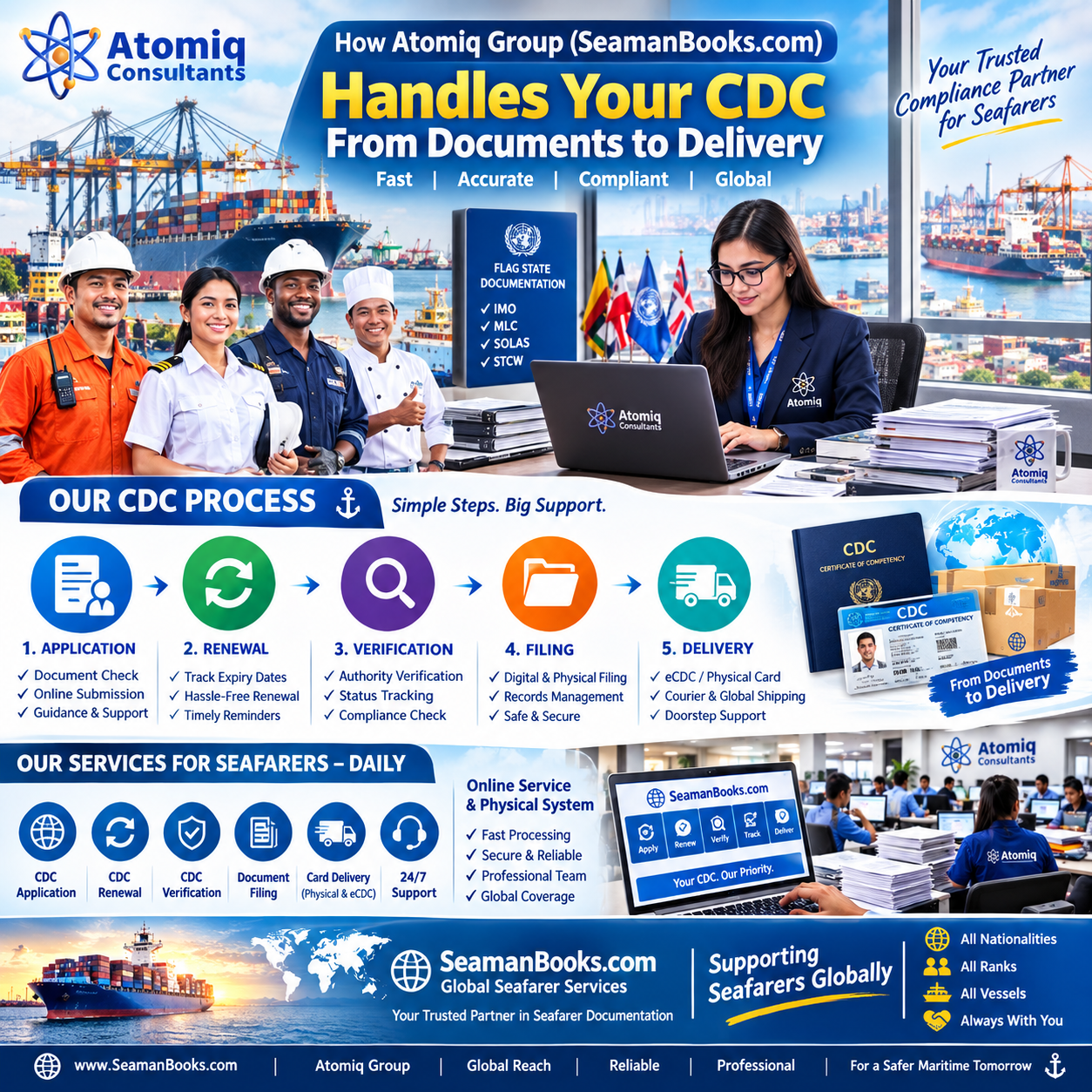
You do not need to travel. The application runs remotely from your US address in four stages.
- Confirm the flag. Check your employer’s requirement, then match it against your timeline and rank.
- Assemble and verify the file. Passport, photographs, STCW certificates, medical and sea-service evidence are collected and cross-checked for consistency before anything is submitted.
- Submit to the administration. The file goes to the flag state through the appropriate channel, with follow-up handled directly with the registry.
- Receive the book at your US address. Once approved, the seaman book is issued and couriered to you in the United States.
Three things to check before you pay anyone
The seaman book market has a genuine fraud problem, and US seafarers — often unfamiliar with open registries — are a soft target. Before you send money:
Verify the book is issued by the administration, not printed by the agent. A real seaman book is produced by the flag state. Legitimate registries such as IMMARBE publish online verification tools; ask how your document will be verifiable after issue.
Be sceptical of guaranteed same-day issuance for Panama. Panama takes about a month. Anyone promising a Panamanian CDC in 48 hours is either selling something else or selling nothing.
Check the agency is a real, traceable entity. Registered company, physical address, verifiable track record. Seaman Books is managed by Atomiq Management Consultancies, an ISO 9001:2015-certified maritime consultancy established in 2011 and headquartered in Dubai.
A fraudulent seaman book does not just waste your fee. It can end a career — detection at port state control or during an employer audit follows you through every future background check.
Frequently asked questions
Can I apply for a foreign-flag seaman book while living in the USA?
Yes. US-based seafarers routinely obtain seaman books from Belize, Palau, St. Kitts & Nevis, Panama and other registries without leaving the country. The application is handled remotely using your US address, and the issued book is couriered to you once the flag administration approves the file.
Does a seaman book replace my MMC or TWIC?
No. They serve different purposes. Your MMC and TWIC govern service on US-flag vessels and access to secure US port facilities. A flag-state seaman book establishes your identity and sea-service record under the flag of a foreign vessel. Most US seafarers working internationally hold both sets.
How long does a seaman book take to process?
Belize, Palau and St. Kitts & Nevis typically issue within days when the file is complete and correctly prepared. Panama takes roughly a month. These are operational estimates, not guarantees — administrations set their own queues, and an incomplete application restarts the clock.
Do I still need STCW certificates if I already have sea experience?
Yes. Valid STCW certification is mandatory for most flags and virtually all employers, regardless of how much sea time you hold. If your Basic Safety Training or other certificates have lapsed, you will need refresher training before your seaman book application can proceed.
Does a seaman book replace a visa?
No. A seaman book is not an immigration document. Depending on where you join the vessel, you may still need a C1/D crew visa or the equivalent for the joining country. Check visa requirements separately for every contract, particularly for crew changes outside the US.
Can I hold seaman books from more than one flag?
Yes, and many career seafarers do. Because seaman books are flag-state documents rather than exclusive national licences, holding a fast-issue book alongside a Panamanian CDC is common — one covers the immediate contract, the other supports long-term career mobility.
Getting started
For most US seafarers the decision reduces to one question: how soon do you sail? A confirmed join date inside a month points to Belize, Palau or St. Kitts & Nevis. A longer horizon and a career built across multiple owners points to Panama, and to planning a month ahead so the timeline is never the obstacle.
Whichever way that falls, the failure mode is the same — an incomplete file. Get the documents right the first time and the flag state is rarely the bottleneck.
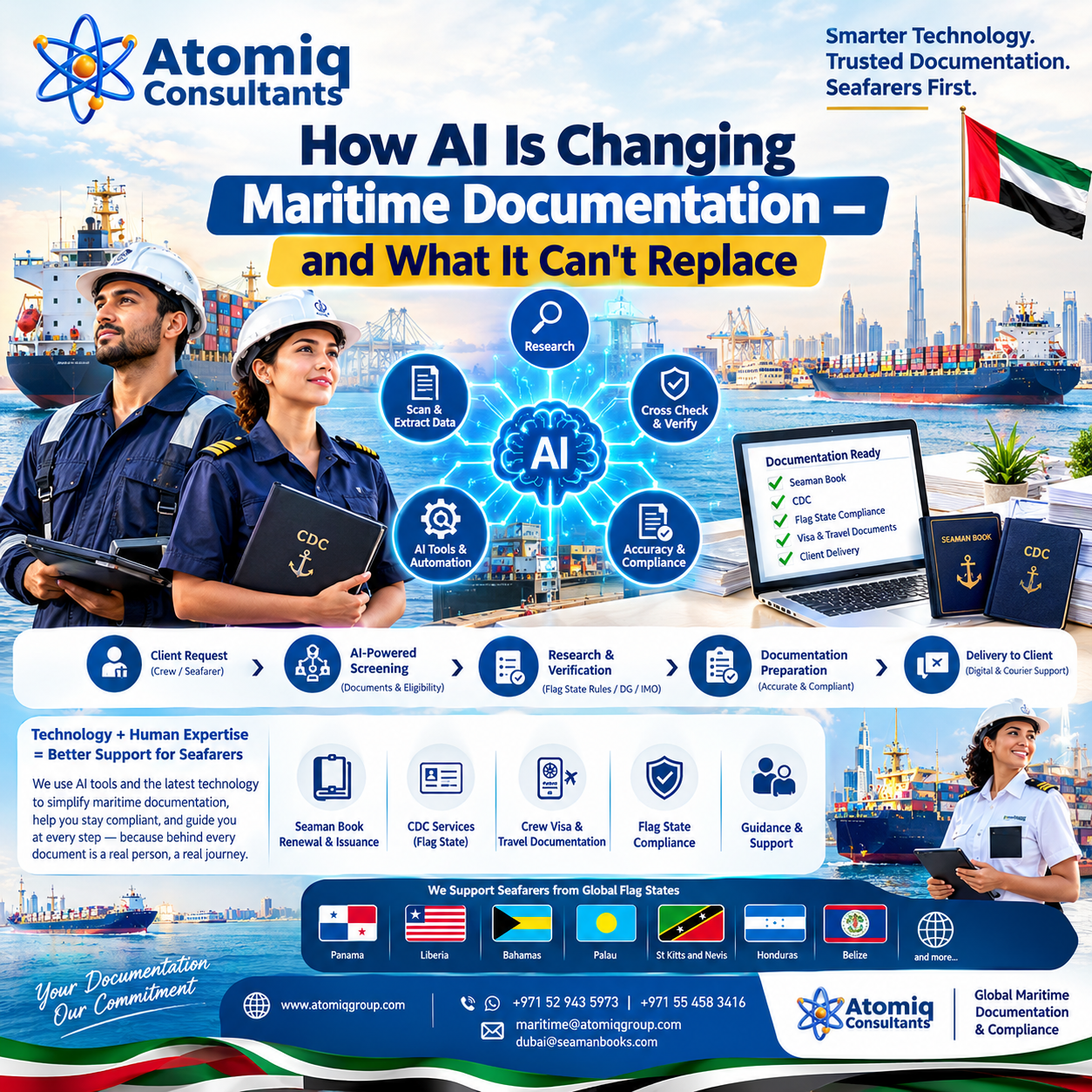
Atomiq Group’s seaman book service for USA seafarers screens your documents against current flag-state rules, submits to the administration and delivers the approved book to your US address. Contact the team with your rank, timeline and vessel type for a flag recommendation.