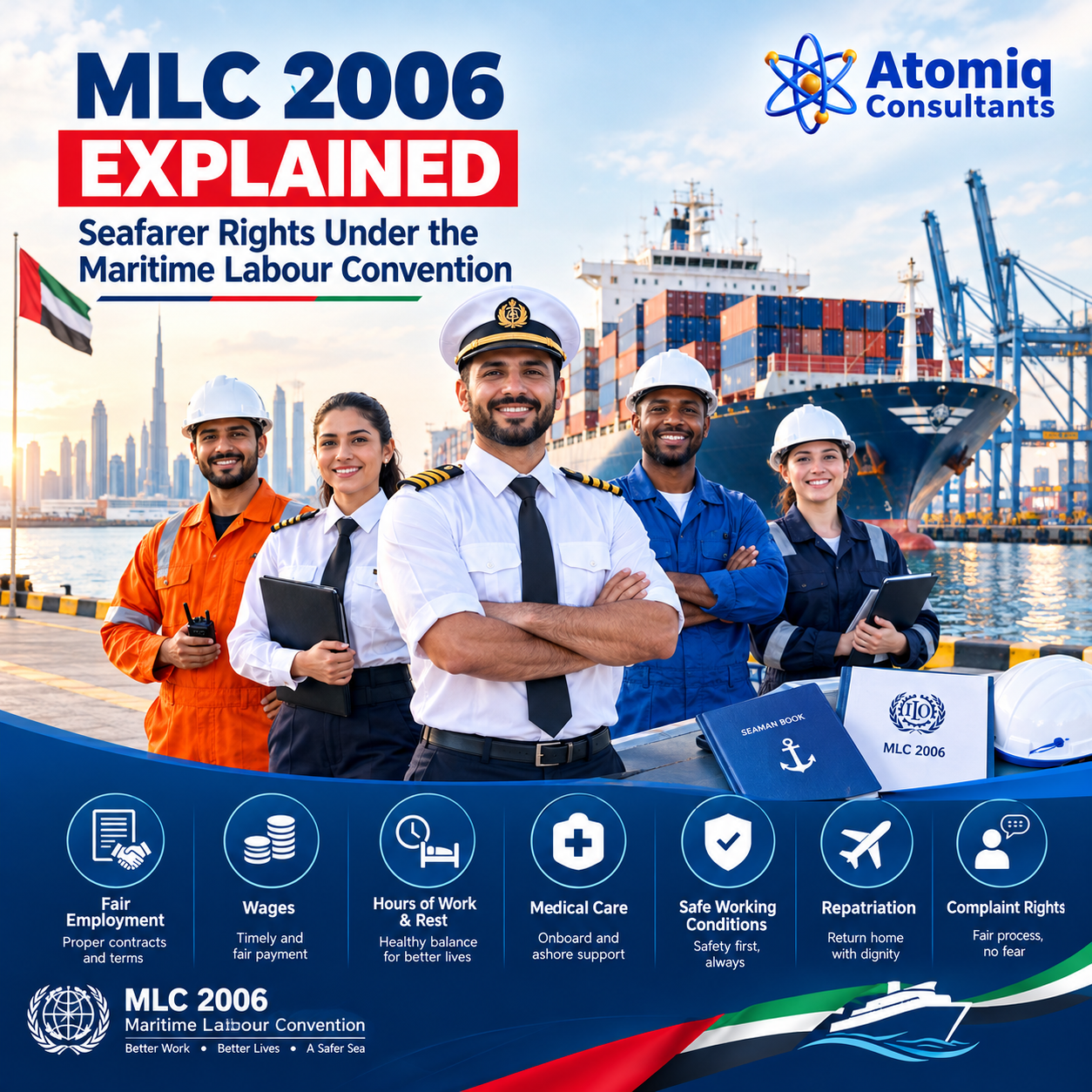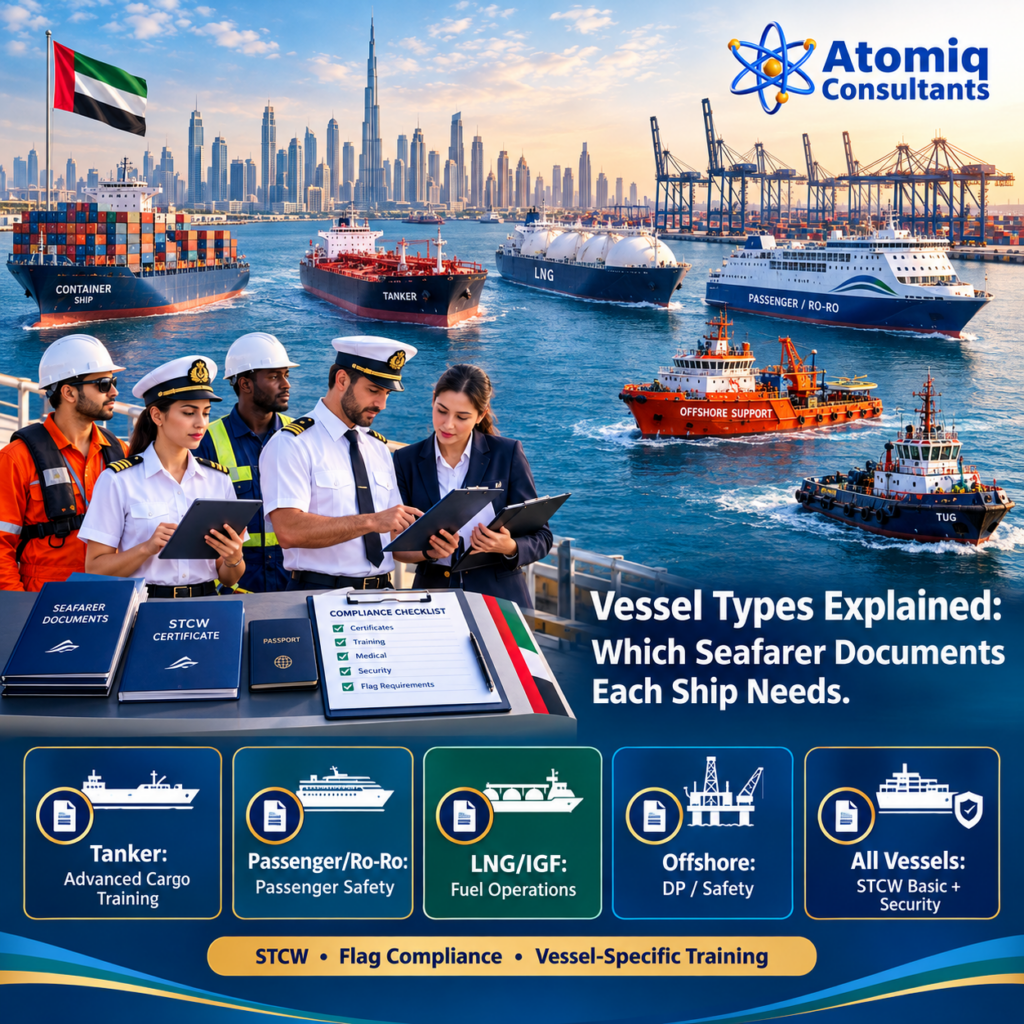
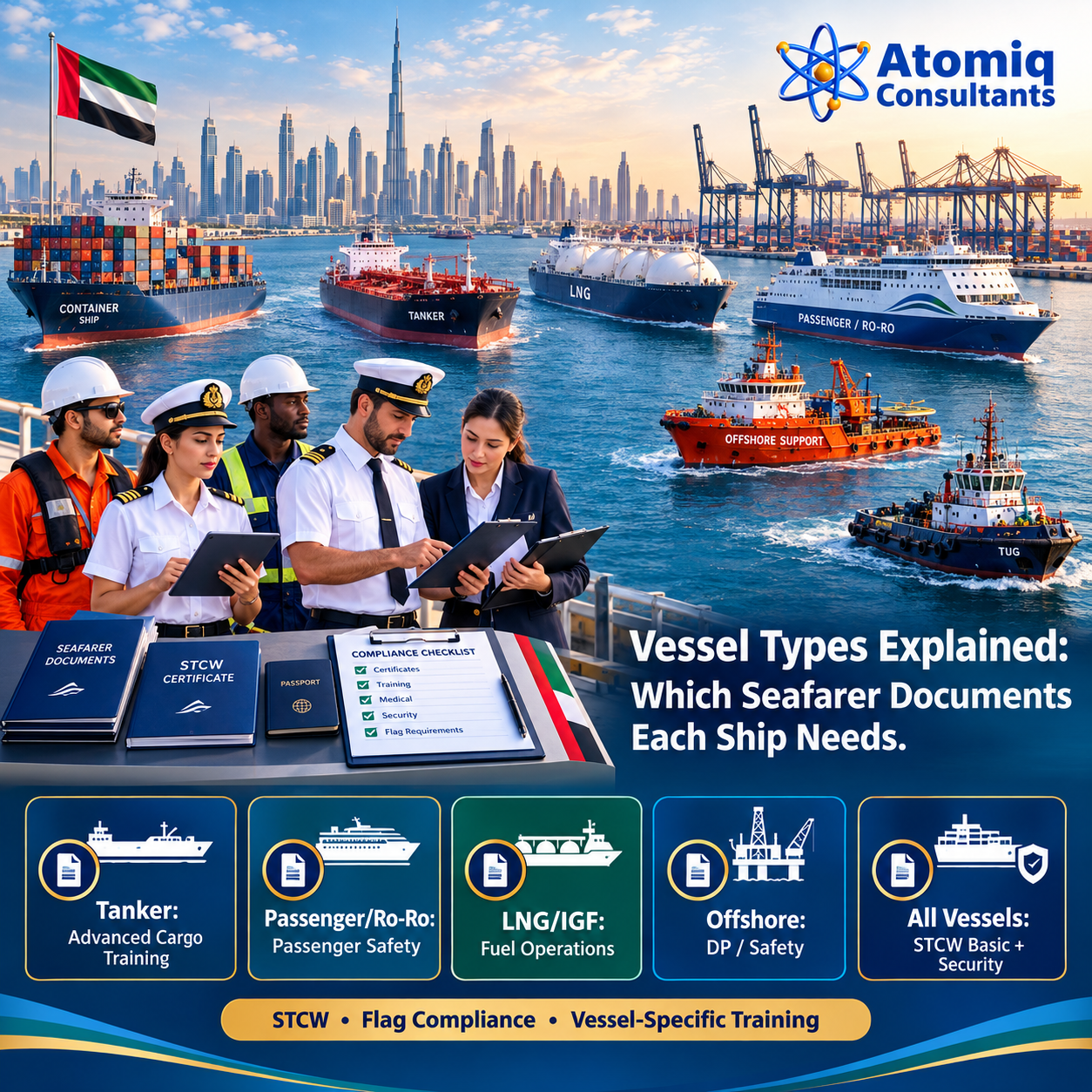
Vessel Types Explained: Which Seafarer Documents Each Ship Needs

خدمات

 
Posted on Google Google
Andy Fitriansyah profile picture
Andy Fitriansyah
Google star 1Google star 2Google star 3Google star 4Google star 5Trustindex verifies that the original source of the review is Google.
Trust agency and fast respon
Posted on Google Google
Zameel Kapat profile picture
Zameel Kapat
Google star 1Google star 2Google star 3Google star 4Google star 5Trustindex verifies that the original source of the review is Google.
Quality and Quick service
Posted on Google Google
Dody Pambudhi profile picture
Dody Pambudhi
Google star 1Google star 2Google star 3Google star 4Google star 5Trustindex verifies that the original source of the review is Google.
Fast and trusted. Very recommended 👍
Posted on Google Google
ahmed abouzid profile picture
ahmed abouzid
Google star 1Google star 2Google star 3Google star 4Google star 5Trustindex verifies that the original source of the review is Google.
Helpful and professionals Thanks Atomiq Consultant
Posted on Google Google
Leo Worrall profile picture
Leo Worrall
Google star 1Google star 2Google star 3Google star 4Google star 5Trustindex verifies that the original source of the review is Google.
Very fast application process and good service. Palau seaman’s book was dispatched to me by courier within 48 hours of payment. Would definitely recommend
Posted on Google Google
Olga Poltavtseva profile picture
Olga Poltavtseva
Google star 1Google star 2Google star 3Google star 4Google star 5Trustindex verifies that the original source of the review is Google.
Thanks Gyanvi, thanks Karunesh you made our day. We were very happy to receive such a quick response and excellent communication from the team. They work efficiently and fast, and the delivery service was also excellent! We received the seaman’s book for our sailor without any issues. Highly recommended! Thank you again, and have a great day!
Posted on Google Google
Wael Farouk profile picture
Wael Farouk
Google star 1Google star 2Google star 3Google star 4Google star 5Trustindex verifies that the original source of the review is Google.
It was a wonderful , fast and easy experience, thank you for your efforts and support
Verified by Trustindex
Trustindex verified badge is the Universal Symbol of Trust. Only the greatest companies can get the verified badge who has a review score above 4.5, based on customer reviews over the past 12 months. Read more
Vessel Types Explained: Which Seafarer Documents Each Ship Needs

Every seafarer needs the same three core documents whatever the ship: a valid passport, a flag-state seafarer’s identity and record book (a seaman’s book, CDC or SIRB), and STCW Basic Safety Training. Vessel type adds a fourth layer on top of that set, and only for some ships. Oil, chemical and gas tankers add certificates of proficiency in cargo operations. Passenger and cruise ships add crowd-, crisis- and passenger-safety training. Ships burning low-flashpoint fuel add IGF Code training. Offshore installations add BOSIET or HUET — which are industry standards imposed by operators, not IMO requirements. Bulk carriers and container ships add no vessel-specific STCW certificate at all, which is why they are the usual entry point for a first contract.

The one table: what each vessel type adds

The first three columns are the same for every seafarer on earth. The fourth is where vessel type starts to matter.

Vessel typeCore set (same for all)Vessel-specific requirementInstrumentRealistic for a first contract?
Bulk carrierPassport + seaman’s book + STCW Basic Safety TrainingNone specific to the ship typeYes — the most common entry route
Container shipSameNone specific to the ship typeYes
General cargo / multipurposeSameNone specific to the ship typeYes
Oil tankerSameBasic training for oil and chemical tanker cargo operations; advanced training for cargo-responsible officersSTCW reg. V/1-1Only with the basic certificate in hand
Chemical tankerSameAs oil tanker, plus advanced chemical tanker cargo operations for cargo-responsible officersSTCW reg. V/1-1Rarely
LNG / LPG carrier (gas carrier)SameBasic training for liquefied gas tanker cargo operations; advanced for cargo-responsible officersSTCW reg. V/1-2 No — an experienced-seafarer route
Passenger ship / cruise shipSameCrowd management, crisis management and human behaviour, passenger safety and safety training for personnel serving passengers directlySTCW reg. V/2Yes, including for hotel and service roles
Ships using gas or low-flashpoint fuelSameIGF Code basic or advanced training, depending on dutiesSTCW reg. V/3 No
Offshore rig, platform, OSVSameBOSIET or HUET, plus an offshore medicalOPITO industry standard — not IMOYes, with the training completed first
Ships in polar watersSameBasic or advanced polar waters training for masters and deck officersSTCW reg. V/4 No

Why bulk carriers and container ships are the usual first contract

Nothing in STCW singles out a bulk carrier or a container ship for extra crew training. The cargo codes that govern them — the IMSBC Code for solid bulk cargoes, the CSS and CTU guidance for containers — place duties on the ship and the company, not certificate requirements on the individual seafarer.

The practical consequence is straightforward. A first-time seafarer with a passport, a flag-state seaman’s book and STCW Basic Safety Training is, on paper, employable on a bulk carrier or a box ship on the day those three documents are in hand. On a tanker they are not, because the basic cargo-operations certificate is a separate course. On a gas carrier they are not, and no amount of certification substitutes for the sea time operators want.

This is the single most useful thing to know when planning a first contract: the shortest path to sea is the ship type that adds nothing to your document set. Specialise afterwards, when someone else is paying for the courses.

Check whether your documents already qualify you →

Tankers: oil and chemical

Tankers are where the document set genuinely changes, and where the industry’s pay premium comes from.

Two tiers apply

Basic training for oil and chemical tanker cargo operations. Required for officers and ratings assigned specific duties relating to cargo or cargo equipment. This is the entry certificate — the one that makes a tanker contract possible at all.

Advanced training for oil tanker cargo operations (and separately, advanced chemical tanker cargo operations). Required for masters, chief engineers, chief mates, second engineers and anyone with immediate responsibility for loading, discharging, care in transit, handling of cargo, tank cleaning or other cargo-related operations. Advanced training carries a seagoing-service prerequisite that basic training does not.

The distinction matters commercially because crewing agents advertise “tanker experience” as a single thing when it is in fact two certificates with different prerequisites and different course lengths. A seafarer told they need “the tanker course” should establish which tier the position actually requires before paying for either.

For the detailed tanker certification requirements and documentation route, see the full tanker certificate route. This section covers the essentials; the dedicated tanker documentation page provides the full process.

LNG and LPG: gas carriers

Gas carriers sit under a separate regulation from oil and chemical tankers — regulation V/1-2 rather than V/1-1 — with its own basic and advanced certificates in liquefied gas tanker cargo operations.

It is worth being blunt about the career reality: this is not a sector that recruits from a standing start. Gas carriers are among the best-paid berths in merchant shipping, and operators compete for people who already hold the certificates and the sea time. The document route is open to anyone; the job market behind it is not.

One certificate that is frequently confused with this one: IGF Code training under regulation V/3 is about the ship’s own fuel, not its cargo . A container ship burning LNG as fuel needs IGF-trained crew. It is not a gas carrier. The two requirements are separate and a seafarer can need either, both, or neither.

Please visit — the LNG / gas carrier documentation page — when it publishes. Anchor: "gas carrier certification in detail".

Passenger and cruise ships

Passenger ships add training oriented around people rather than cargo: crowd management, crisis management and human behavior, passenger safety, and safety training for personnel providing direct service to passengers in passenger spaces .

The point most often missed: these requirements reach hotel, catering, retail and entertainment staff, not just the deck and engine departments. A spa therapist or a bar supervisor on a cruise ship is a seafarer for documentation purposes and needs the seaman’s book and the STCW set like anyone else on board.

Cruise documentation is covered in full on the dedicated page — seaman’s book and STCW for cruise ship staff — including which roles need which element.

Offshore: rigs, platforms and support vessels

Offshore is the exception to everything above, because the governing requirements are not IMO’s.

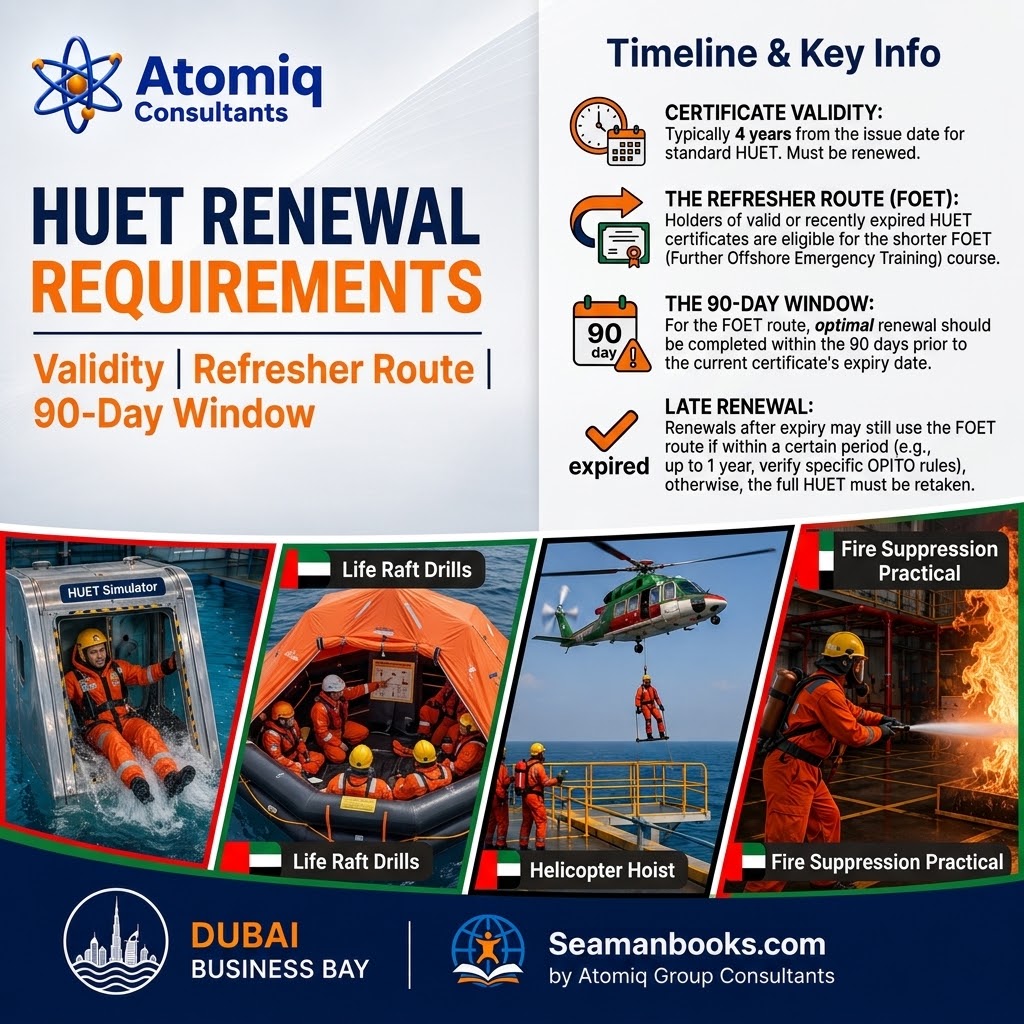
BOSIET and HUET are OPITO industry standards, required by operators and contractors as a condition of mobilization, not by the STCW Convention . An offshore medical certificate is usually required alongside them, again by the operator. A seafarer moving from merchant shipping to offshore work therefore adds training that their STCW record does not contain and cannot substitute for.

Which course, and in what combination, depends on the installation and the region. That comparison is covered in full: BOSIET vs HUET — which offshore course do you need, and the document set for GCC offshore work is set out in the three documents every offshore worker in the GCC must carry.

What does not change with vessel type

Three things are constant, and it is worth stating them plainly because a great deal of online advice implies otherwise.

Your seaman’s book. A flag-state seafarer’s identity and record book is not issued per vessel type. The same book records service on a bulk carrier, a tanker and a cruise ship. Flag choice is driven by your employer, the ship’s registry and your own nationality — not by the type of ship.
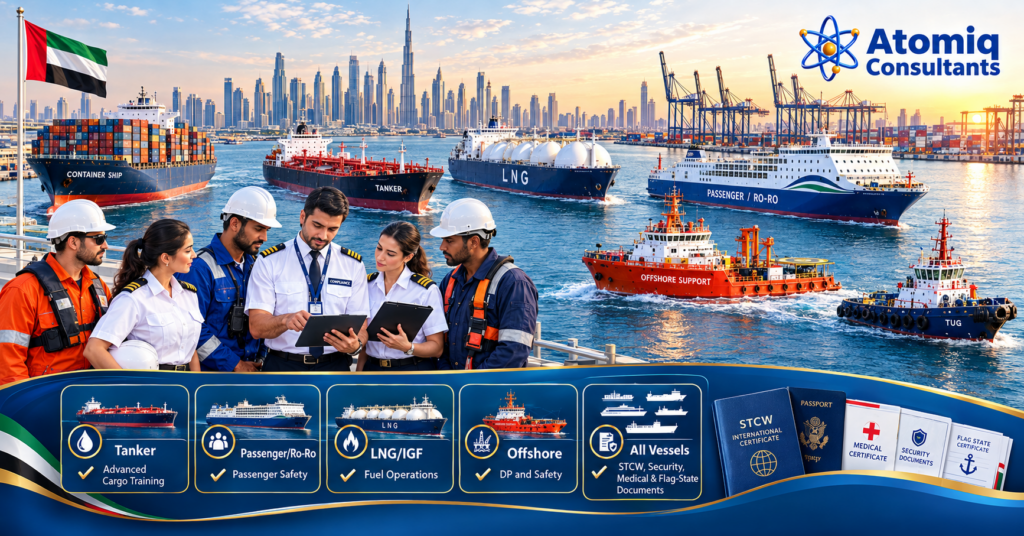
vessel types seafarer

STCW Basic Safety Training. The four basic modules — personal survival techniques, fire prevention and fire fighting, elementary first aid, personal safety and social responsibilities — are required on every ship regardless of type.

Your medical fitness certificate. Required for all seafarers. Offshore work commonly adds a second, separate offshore medical; it does not replace the seafarer medical.

 STCW regulation VI/1 and section A-VI/1, and the refresher requirements for survival craft and fire fighting under Chapter VI.

How to decide which vessel type to target

A short, honest sequence rather than a recommendation:

  1. Count what you already hold. Passport, seaman’s book, STCW basic, medical. If all four are current, you are employable on bulk, container and general cargo today.
  2. Decide whether you are buying time or buying money. Bulk and container get you to sea fastest. Tanker and gas pay more and cost more to enter.
  3. Check who pays. Many operators fund vessel-specific training for crew they intend to keep. Paying for an advanced tanker course before anyone has offered you a tanker contract is a common and expensive mistake.
  4. Confirm the flag before you apply for anything. The seaman’s book is a flag-state document, and switching flags later means a new application, not an amendment.

Frequently asked questions

Do I need a different seaman’s book for each type of ship?

No. A flag-state seafarer’s identity and record book covers service on any vessel type. The same book records sea time on a bulk carrier, a tanker and a passenger ship. What changes by vessel type is the set of STCW certificates of proficiency you hold alongside it.

Which ship type is easiest to join as a first-time seafarer?

Bulk carriers and container ships, because neither adds a vessel-specific STCW certificate to the core document set. With a passport, a valid seaman’s book, STCW Basic Safety Training and a medical certificate, you meet the documentary requirements for both.

Do I need tanker training before I can apply for a tanker job?

For roles with duties relating to cargo or cargo equipment, yes — basic training for oil and chemical tanker cargo operations is the entry certificate, and officers with cargo responsibility need the advanced certificate as well. Some operators fund the training for crew they are recruiting; confirm before you pay.

Is BOSIET or HUET required by STCW?

No. Both are OPITO industry standards required by offshore operators and contractors as a condition of going offshore, not requirements of the STCW Convention . Your STCW certificates do not substitute for them, and they do not substitute for STCW.

Do cruise ship hotel and service staff need a seaman’s book?

Yes. Anyone employed on board a passenger ship is a seafarer for documentation purposes, including hotel, catering, retail and entertainment personnel, and needs the seaman’s book, STCW training and a medical certificate like any other crew member.

What is the difference between an LNG carrier and an LNG-fuelled ship?

An LNG carrier transports liquefied gas as cargo, and crew with cargo duties need certificates under STCW regulation V/1-2. An LNG-fuelled ship of any type burns gas as its own fuel, and crew with relevant duties need IGF Code training under regulation V/3 . A ship can be one, the other, or both.

Does vessel type affect which flag I should apply to?

No. Flag choice is driven by your employer, the ship’s registry and your nationality — not by the type of ship you intend to work on. The same flag-state book is valid across vessel types.

Find out which documents you already qualify for

Send your rank or target role, the vessel type you are aiming for, and the documents you currently hold. We will tell you what is missing and what the flag administration will require — before you commit to anything.

Free eligibility check: check your eligibility WhatsApp: +971 55 458 3416 · dubai@seamanbooks.com · #903 Regal Tower, Business Bay, Dubai

Seaman Books is a documentation consultancy. We prepare and verify seafarer documentation and coordinate with flag-state administrations, and we arrange STCW and offshore training with accredited centres. We do not issue documents and we do not deliver training — the flag administration and the approved centre do.
Written By

Picture of Dipak Paudel

Dipak Paudel

Dipak is an experienced maritime documentation and content professional with experience since 2021, specializing in seaman books, crew documentation, maritime compliance, and visa-related documentation solutions through SeamanBooks.com and Atomiq Consulting.

نموذج الاتصال

آخر مشاركة