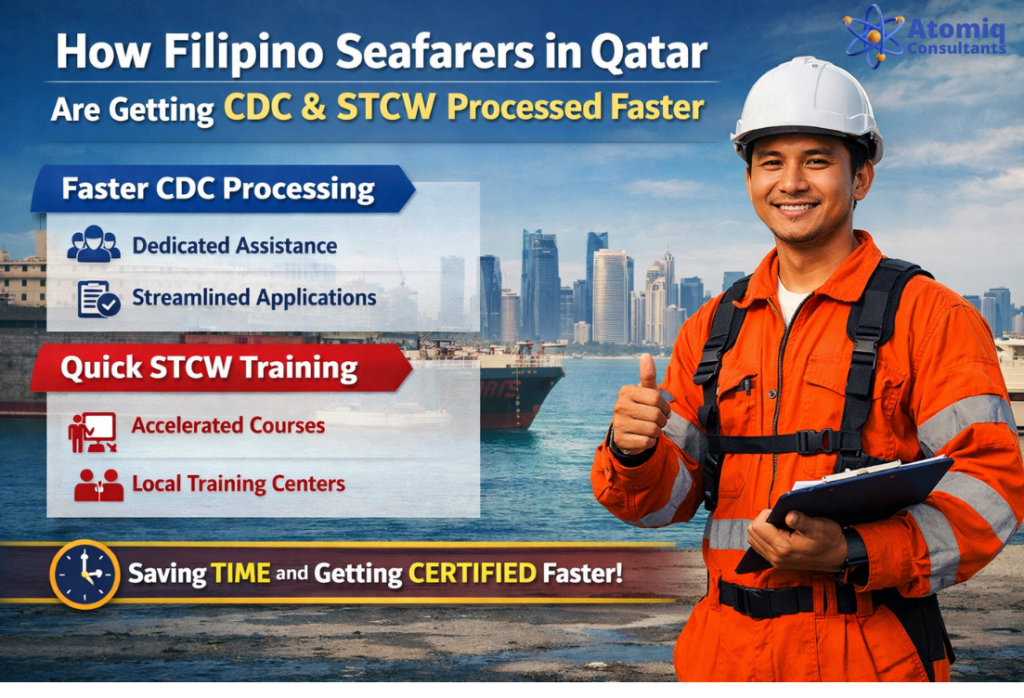
Filipino seafarers in Qatar are getting their CDC and STCW processed faster by partnering with specialized maritime documentation consultants like Atomiq Group (Seaman Books), who streamline requirements, guide flag selection, and fast‑track applications for Gulf-based crew. This reduces waiting time, avoids rejected applications, and helps them stay employable in a highly competitive offshore and maritime job market.
Why CDC & STCW Matter for Filipinos in Qatar
For any Filipino seafarer working out of Qatar, a valid Continuous Discharge Certificate (CDC) and updated STCW certifications are non‑negotiable for joining vessels, renewing contracts, or moving to better opportunities. These documents prove identity, sea service, and compliance with international safety and training standards required by global shipping and offshore companies.
Without an updated CDC or STCW, even experienced Filipino seafarers can face contract delays, off‑signing issues, or missed deployment opportunities, especially when joining foreign‑flag vessels from Doha or other Gulf ports. This is why many Filipino crew based in Qatar look for faster, error‑free processing through trusted service providers rather than struggling with paperwork alone.
Common Challenges Filipino Seafarers Face in Qatar
Filipino seafarers in Qatar often juggle demanding work schedules, short shore leaves, and tight vessel joining dates, which makes managing documentation very difficult. Coordinating requirements between Philippine regulations, flag‑state standards, and employer expectations can be confusing, especially when dealing with multiple courses, renewals, and endorsements.
Many also lose time due to incomplete applications, missing documents, or choosing the wrong flag for their role or vessel type, leading to rejections or long back‑and‑forth with authorities. In a market where crew changes and mobilizations are time‑bound, these delays can mean lost income, cancelled contracts, or missed promotion chances.
How Atomiq Group Speeds Up CDC & STCW
Atomiq Group, through Seaman Books, specializes in maritime documentation for seafarers across the GCC, including those based in Qatar. The team pre‑screens all documents, checks compliance with flag‑state rules, and ensures every application is complete before submission so that Filipino seafarers avoid unnecessary delays.
Because the consultancy works daily with multiple registries and maritime authorities, it can guide candidates toward flags known for faster processing times, such as popular open registries used by Gulf‑based fleets. This combination of expert guidance and established relationships helps many Qatar‑based Filipinos get their CDC and STCW processed within days instead of weeks, depending on the flag and case.
Services Tailored to Filipino Seafarers in Qatar
Filipino seafarers in Qatar benefit from end‑to‑end assistance, starting from document checks all the way through to receiving their approved CDC or STCW certificates. Services typically include support for Seaman Book (CDC/SIRB) issuance or renewal, basic and advanced STCW courses, and offshore safety training required by oil and gas operators.
The consultancy also helps with flag‑specific CDCs (such as Panama, Palau, Belize, Liberia, Bahamas, and others frequently used in Gulf operations), aligning the choice with the seafarer’s vessel type and career plans. For Filipinos transferring from one company to another in Qatar or moving from near‑coastal to international vessels, this guidance makes documentation transitions smoother and quicker.
Faster Processing for Experienced Crew & Offshore Workers
Experienced Filipino officers, ratings, and offshore technicians in Qatar often need urgent renewals because their CDC or STCW is close to expiry while they are still onboard or on short leave. Atomiq Group’s fast‑track handling and document prioritization are designed precisely for these time‑sensitive cases, minimizing downtime between contracts.
By keeping track of expiry dates and helping crew update essential STCW modules such as basic safety, firefighting, survival craft, and security training, the service ensures they remain compliant with the STCW Convention and employer standards. This proactive approach is particularly valuable for Filipino crew in Qatar’s offshore oil and gas sector, where safety and certification audits are strict.
Support for Crewing Managers and Bulk Processing
Many Filipino seafarers in Qatar are deployed through crewing managers and manning agencies that handle large pools of officers and ratings. Atomiq Group provides dedicated bulk‑processing solutions, managing multiple CDCs and STCW renewals at once so that manning teams can keep entire crews compliant without disrupting vessel schedules.
This includes centralized tracking of documentation, coordination with flag states, and standardized processing workflows that cut down administrative workload for crewing departments in Doha and the wider GCC. For Filipino crew, this translates into fewer last‑minute scrambles and a higher chance of sailing on time with all certificates in order.
Why Filipino Seafarers in Qatar Prefer Seaman Books
Filipino seafarers across Qatar and the Gulf increasingly choose specialized consultants because they want reliability, transparency, and speed in handling their maritime documents. Seaman Books, backed by Atomiq Group in Dubai, has built a reputation for fast, accurate processing of Seaman Books, STCW certificates, and related maritime documents for seafarers worldwide.
With clear communication, guidance on the right flag, and support for both individual seafarers and crewing managers, the service helps Filipino mariners in Qatar focus on their careers instead of paperwork. For anyone in Qatar looking to start, continue, or upgrade a maritime career, partnering with a dedicated maritime documentation specialist is one of the most effective ways to get CDC and STCW processed faster and stay always ready to sail.
Frequently Asked Questions
- How can Filipino seafarers in Qatar get their CDC processed faster?
Filipino seafarers in Qatar can speed up their CDC processing by working with a dedicated maritime documentation service like Atomiq Group (Seaman Books), which pre‑screens documents, selects the right flag, and submits complete applications on their behalf. This reduces rejection risks and shortens overall processing time for Gulf‑based applicants. - What are the basic requirements for a CDC application from Qatar?
Typical CDC requirements for GCC residents include a valid passport, STCW Basic Safety Training certificates, a medical fitness certificate, passport‑size photographs, and valid residence/ID (such as a Qatar ID). Exact requirements can vary by flag state, so seafarers are advised to confirm with their documentation provider before applying. - How long does it take to get a CDC if I am based in Qatar?
Processing time depends on the chosen flag state and the completeness of the documents, but many CDC applications from GCC countries are processed in roughly 5–20 working days when everything is in order. Using a specialist like Atomiq Group helps ensure applications are complete, which prevents extra delays. - Why is STCW training important for Filipino seafarers in Qatar?
STCW training is mandatory under the International Convention on Standards of Training, Certification and Watchkeeping, and proves that seafarers are properly trained for safety, survival, firefighting, and security duties at sea. Without valid STCW certificates, most shipowners and offshore operators will not allow crew deployment from Qatar or other Gulf ports. - Can I renew my STCW and CDC while working in Qatar?
Yes, many Filipino seafarers renew their STCW and CDC while based in Qatar, coordinating with approved training centers and documentation consultants that support GCC residents. Services like Seaman Books help plan renewals around contract dates so seafarers remain compliant and avoid last‑minute certificate issues.
