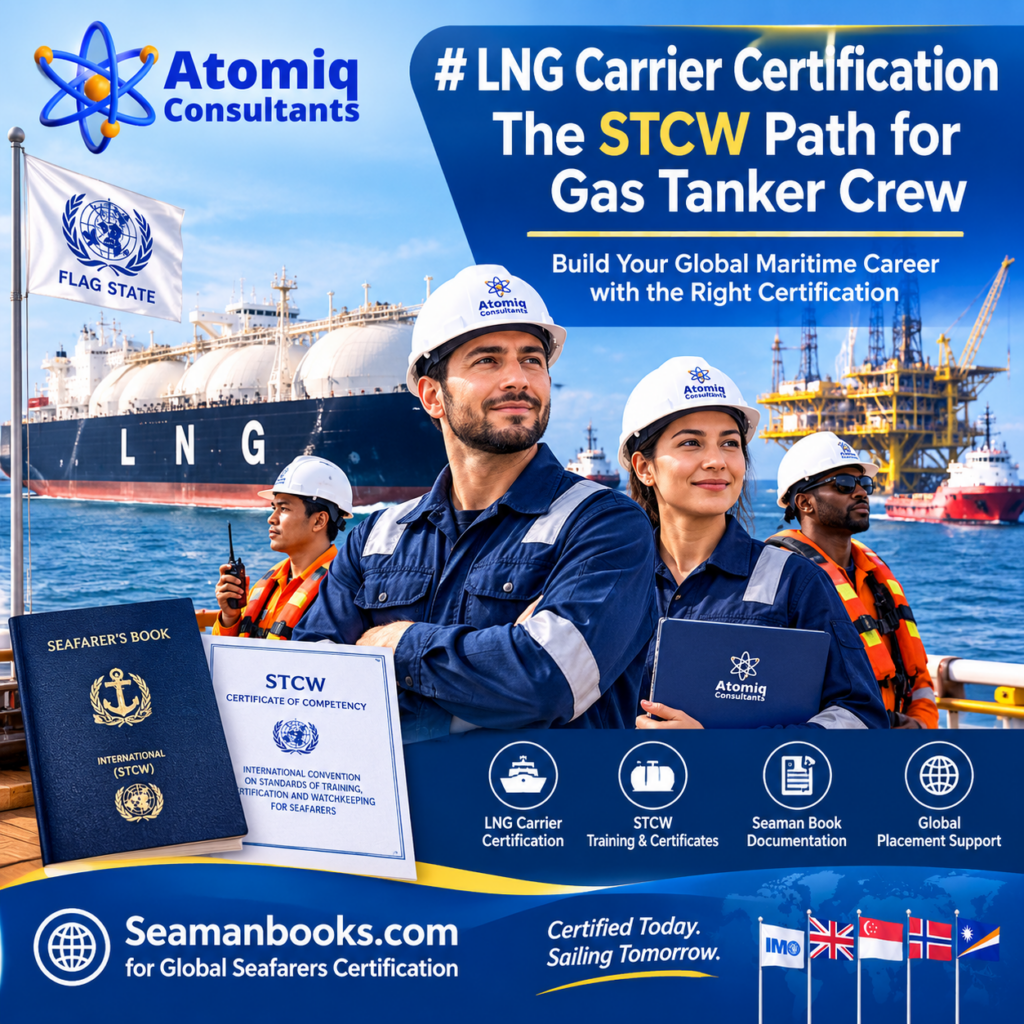
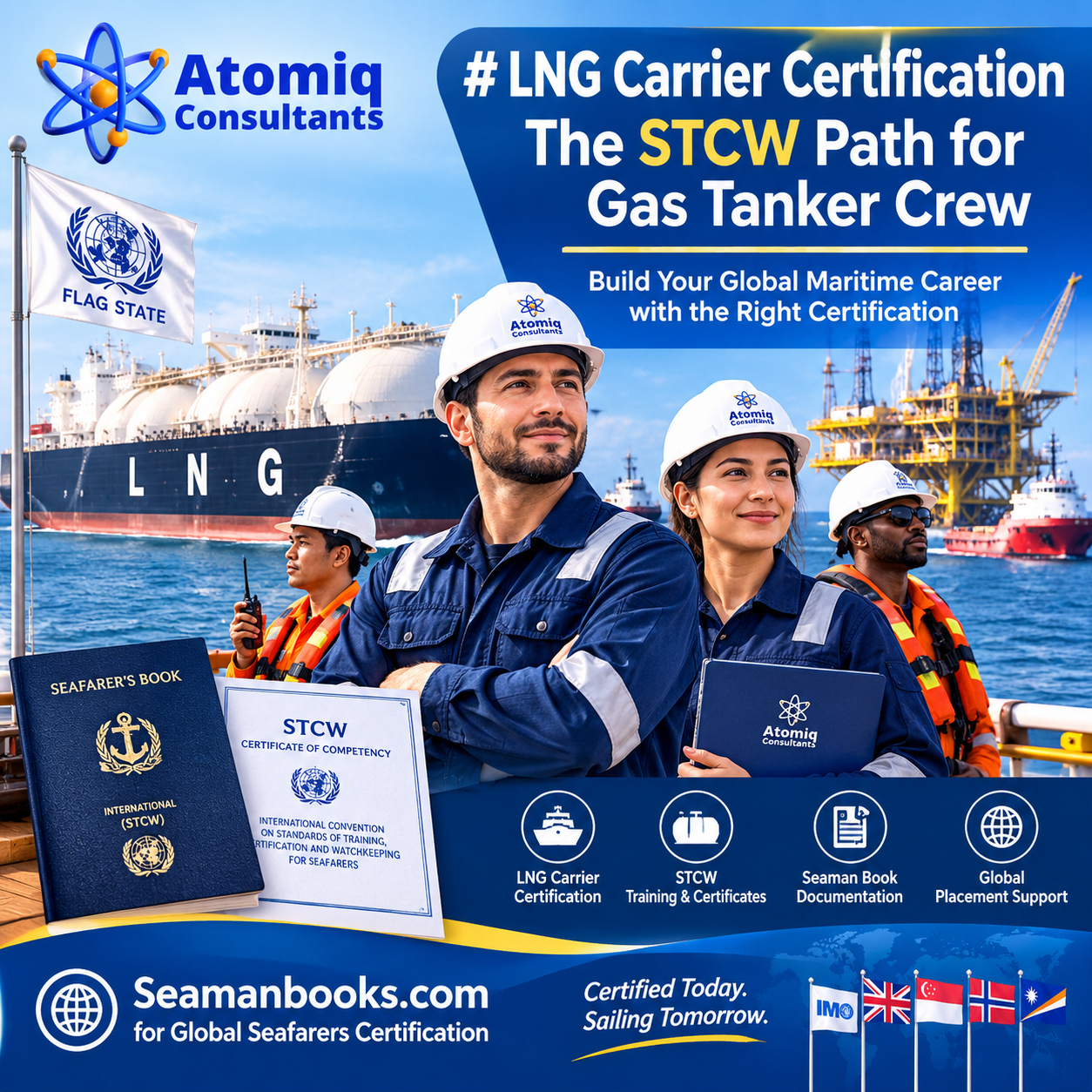
LNG Carrier Certification: The STCW Path for Gas Tanker Crew

Services

 
Posted on Google Google
Andy Fitriansyah profile picture
Andy Fitriansyah
Google star 1Google star 2Google star 3Google star 4Google star 5Trustindex verifies that the original source of the review is Google.
Trust agency and fast respon
Posted on Google Google
Zameel Kapat profile picture
Zameel Kapat
Google star 1Google star 2Google star 3Google star 4Google star 5Trustindex verifies that the original source of the review is Google.
Quality and Quick service
Posted on Google Google
Dody Pambudhi profile picture
Dody Pambudhi
Google star 1Google star 2Google star 3Google star 4Google star 5Trustindex verifies that the original source of the review is Google.
Fast and trusted. Very recommended 👍
Posted on Google Google
ahmed abouzid profile picture
ahmed abouzid
Google star 1Google star 2Google star 3Google star 4Google star 5Trustindex verifies that the original source of the review is Google.
Helpful and professionals Thanks Atomiq Consultant
Posted on Google Google
Leo Worrall profile picture
Leo Worrall
Google star 1Google star 2Google star 3Google star 4Google star 5Trustindex verifies that the original source of the review is Google.
Very fast application process and good service. Palau seaman’s book was dispatched to me by courier within 48 hours of payment. Would definitely recommend
Posted on Google Google
Olga Poltavtseva profile picture
Olga Poltavtseva
Google star 1Google star 2Google star 3Google star 4Google star 5Trustindex verifies that the original source of the review is Google.
Thanks Gyanvi, thanks Karunesh you made our day. We were very happy to receive such a quick response and excellent communication from the team. They work efficiently and fast, and the delivery service was also excellent! We received the seaman’s book for our sailor without any issues. Highly recommended! Thank you again, and have a great day!
Posted on Google Google
Wael Farouk profile picture
Wael Farouk
Google star 1Google star 2Google star 3Google star 4Google star 5Trustindex verifies that the original source of the review is Google.
It was a wonderful , fast and easy experience, thank you for your efforts and support
Verified by Trustindex
Trustindex verified badge is the Universal Symbol of Trust. Only the greatest companies can get the verified badge who has a review score above 4.5, based on customer reviews over the past 12 months. Read more
LNG Carrier Certification The STCW Path for Gas Tanker Crew

LNG carrier certification is two STCW certificates of proficiency under Regulation V/1-2: Basic Training for Liquefied Gas Tanker Cargo Operations for crew with cargo duties, and Advanced Training for Liquefied Gas Tanker Cargo Operations for masters, chief engineers, chief mates, second engineers and anyone directly responsible for cargo. Advanced certification needs the basic certificate plus gas-tanker sea time: either three months of seagoing service, or one month of supervised onboard training that includes at least three loading and three unloading operations. Both certificates must be revalidated at least every five years. The same rules apply to LPG carriers.

ClauseVerification
STCW Regulation V/1-2(2) — basic LNG-tanker training requires either 3 months approved seagoing service on liquefied-gas tankers or approved basic trainingConfirmed. (EUR-Lex)
V/1-2(3) — masters, chief engineer officers, chief mates, second engineer officers and persons with immediate cargo responsibility require advanced trainingConfirmed. (EUR-Lex)
V/1-2(4.2.1) — advanced qualification can be based on 3 months approved seagoing serviceConfirmed. (EUR-Lex)
V/1-2(4.2.2) — alternative is at least 1 month onboard training in a supernumerary capacity, including at least 3 loading and 3 unloading operations, documented in an approved training record bookConfirmed. (EUR-Lex)
46 CFR §13.607(a)(3) — U.S. advanced LNG endorsement requires 90 days’ service on liquefied-gas tankersConfirmed. (GovInfo)
46 CFR §13.607(c) — alternative onboard program is at least 1 month, with 3 loading and 3 discharge operationsConfirmed. (GovInfo)
46 CFR §13.120(a) — renewal of an Advanced LNG endorsement requires 90 days during the preceding 5 years plus two liquid-cargo transfers, or an approved courseConfirmed, but note the additional two-transfer requirement. (Legal Information Institute)
STCW Regulation I/11 — revalidation/continued professional competenceConfirmed. Regulation I/11 requires revalidation at intervals not exceeding five years and continued professional competence; tanker competence is addressed specifically in paragraph 3. (KustCodex)

Check which certificates you already hold — WhatsApp +971 55 458 3416 · or use the form below.

The two certificates at a glance

 Basic training — liquefied gas tanker cargo operationsAdvanced training — liquefied gas tanker cargo operations
Who needs itOfficers and ratings with specific duties and responsibilities for cargo or cargo equipment on a gas tankerMasters, chief engineer officers, chief mates, second engineer officers, and anyone with immediate responsibility for loading, discharging, care in transit, handling of cargo, tank cleaning or other cargo-related operations
PrerequisiteSTCW basic safety training (Regulation VI/1)The basic gas-tanker certificate
Route inApproved basic gas-tanker course, or at least three months of approved seagoing service on liquefied gas tankersApproved advanced gas-tanker course plus at least three months of seagoing service on gas tankers, or at least one month of approved onboard training as a supernumerary with at least three loading and three unloading operations, recorded in a training record book
Competence standardSTCW Code Table A-V/1-2-1STCW Code Table A-V/1-2-2
RevalidationEvery five years: three months of tanker service in the last five years, or an approved courseSame
Issued byThe approved training institute and/or the administration, depending on the countrySame

Issued by: Competent Administration or an Administration-approved/recognized training institution, as applicable under the relevant flag State’s certification arrangements.

LNG and LPG: one regulation, two cargoes

Every ship carrying liquefied gas in bulk falls under the same STCW regulation. That covers LNG carriers, LPG carriers and ethylene and ammonia carriers. There is no separate “LNG certificate” and “LPG certificate” at STCW level. What changes between them is the cargo containment system, the temperatures and the operator’s own type-specific training, not the certificate of proficiency.

The ship itself is built and equipped under the IMO’s IGC Code (the International Code for the Construction and Equipment of Ships Carrying Liquefied Gases in Bulk). The IGC Code governs the ship. STCW V/1-2 governs the crew.

Sea time: the part you cannot buy

The basic certificate can be earned in a classroom. The advanced certificate cannot. It needs time on a gas tanker, and that time has to be served while you already hold the basic certificate.

That creates the circular problem every new gas-tanker seafarer runs into. You need gas-tanker sea time to qualify as a cargo officer, and you need a berth on a gas tanker to get that sea time. Operators break the circle in two ways:

  • Supernumerary onboard training. At least one month on a gas tanker, outside the crew complement, with at least three loading and three unloading operations recorded in an approved training record book. This is the faster route, but it only exists if an operator is willing to carry you.
  • Serving in a non-cargo-responsible role first. For example, a junior officer or rating holding the basic certificate completes three months of service, then does the advanced course.

“while qualified for certification in basic training” and the supernumerary-training conditions are expressly required by STCW Regulation V/1-2(4.2), particularly 4.2.2. The one-month supernumerary program and three loading/three discharge operations are also reflected in 46 CFR §13.607(d); however, the specific “approved training record book” wording comes from STCW V/1-2(4.2.2), not §13.607(d).

The honest career reality

Gas carriers are one of the hardest sectors in merchant shipping to enter from scratch. Operators recruit officers who already have the certificates and gas-tanker sea time, and many run their own type-specific training on top of STCW. A certificate alone does not get you hired.

The practical implications:

  1. Don’t pay for the advanced course before anyone has offered you gas-tanker service. The certificate needs sea time you cannot arrange yourself, so buying it first does not help you.
  2. The basic course makes sense earlier if you are already sailing on oil or chemical tankers and your company runs gas tonnage. Ask your company first. Many fund it for crew they intend to transfer.
  3. Oil or chemical tanker experience helps but does not transfer automatically. A different certificate under a different regulation applies (V/1-1 rather than V/1-2).

Not the same certificate: IGF Code training

An LNG carrier carries gas as cargo. An LNG-fuelled ship burns gas as fuel. They are separate requirements under separate regulations:

 LNG / gas carrierLNG-fuelled ship (any type)
What the gas isCargoThe ship’s own fuel
Crew regulationSTCW V/1-2STCW V/3
Ship codeIGC CodeIGF Code
CertificatesBasic / Advanced liquefied gas tanker cargo operationsBasic / Advanced training for ships subject to the IGF Code
Typical shipsLNG, LPG, ethylene and ammonia carriersContainer ships, car carriers, cruise ships, ferries and tankers on LNG or other low-flashpoint fuels

One overlap works in your favour: STCW treats seafarers who hold the basic liquefied gas tanker certificate as meeting the basic IGF Code training requirement. Do not assume the same for the advanced tier until you have checked the regulation.

Note: B1 — Regulation V/3 and Section A-V/3. V/3(6) expressly provides equivalence from qualifying V/1-2 liquefied-gas-tanker certification to basic IGF training. V/3(9) also provides a conditional equivalence from the V/1-2 advanced competence standard to advanced IGF training, subject to the requirements stated there. The IGF training amendments entered into force on 1 January 2017.

Keeping it valid

Tanker certificates of proficiency are not issued for life. To keep serving on gas tankers, you must show, at intervals not exceeding five years, either:

  • at least three months of approved seagoing service on tankers, performing duties appropriate to the certificate, within the preceding five years; or
  • successful completion of an approved relevant training course.

Track the date. A tanker CoP that lapses mid-contract is a port state control finding, and the renewal course usually has to be booked around your rotation.

Check: STCW Regulation I/11(3), read with Section A-I/11(3). Continued tanker competence may be established by at least 3 months (90 days) of approved tanker service during the preceding five years, or successful completion of an approved relevant training course or courses. Corroborated for U.S. tanker endorsements by 46 CFR §13.120; advanced endorsements additionally require two qualifying liquid-cargo transfers when using the service route.

LNG Carrier Certification In Dubai

Track every expiry date in one place with the crew certificate template →

Where the flag state comes in

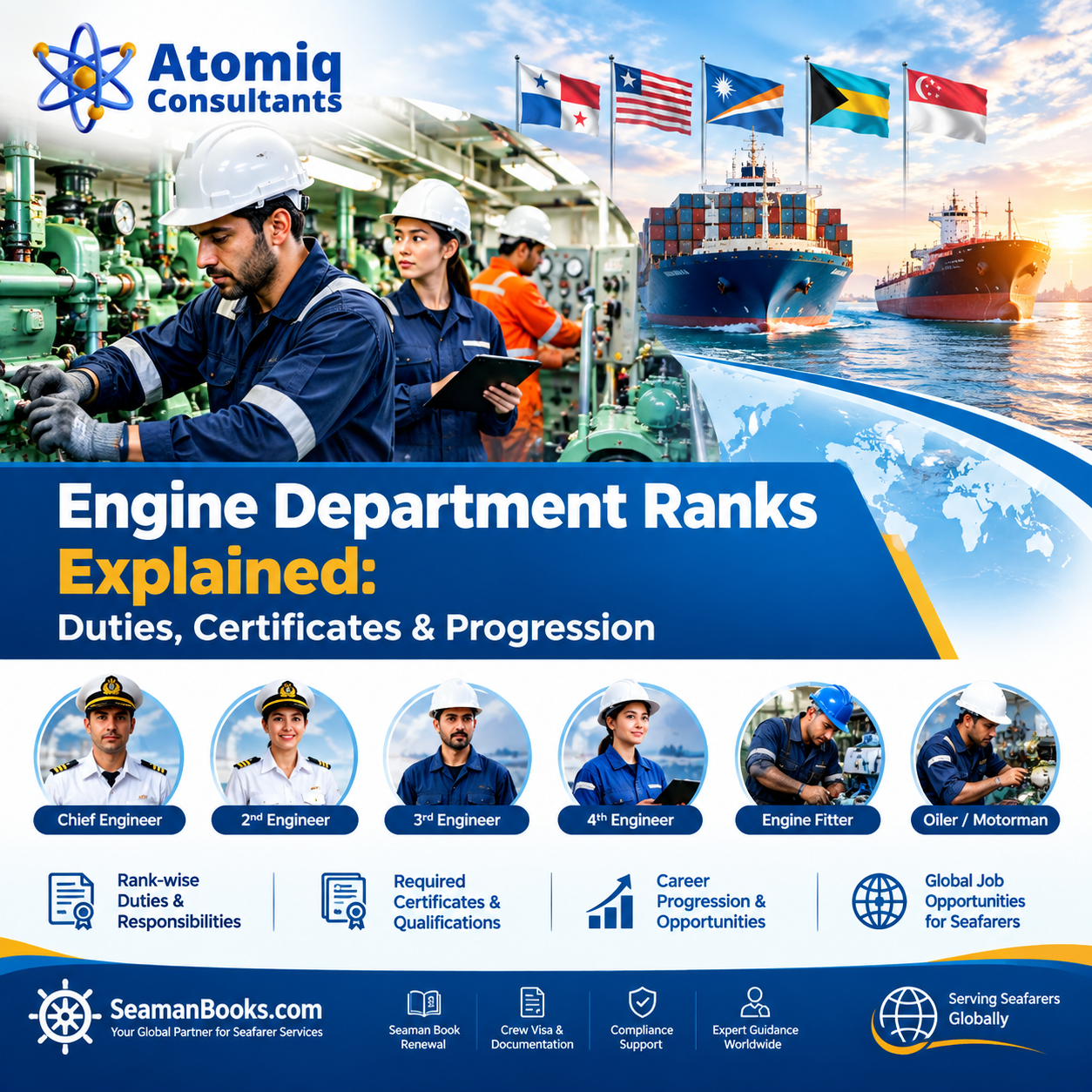
Your training certificate shows that you completed the course. The flag of the ship you join decides whether that certificate is enough on its own, or whether the flag administration must endorse or recognise it before you can serve. That flag-state step, together with the seaman’s book for that flag, is what Seaman Books prepares and files.

What we do for gas-tanker crew:

  • Check your certificate set against the vessel’s flag before you sign, so a missing endorsement is found in Dubai rather than at the gangway.
  • Prepare and file the flag-state seaman’s book and endorsement or recognition applications with Panama, Palau, Liberia, Bahamas, Belize, Honduras or St Kitts & Nevis.
  • Verify your existing certificates for authenticity and expiry before filing.

Note: per flag, whether a V/1-2 CoP issued by another Administration requires flag recognition/endorsement, a special qualification certificate, or no additional action. Panama expressly requires an endorsement of recognition under STCW Regulation I/10 for V/1-2 CoPs. Liberia's current RLM-118 treats liquefied-gas tanker qualifications as Liberian Tankerman certifications/SQCs and states that official Liberian CoPs are issued by the Liberian Registry. Do not generalize from one flag; verify each flag's current implementing rule before publication.]

We do not currently file with the Marshall Islands administration. If your vessel is Marshall Islands-flagged, the company or its manning agent normally handles the RMI documents, and we can still check the rest of your certificate set.

Seaman Books does not deliver gas-tanker training, But Our Atomiq College provide It. Courses are run by approved maritime training institutes. Tell us your rank, your current certificates and the vessel you are joining, and we will tell you which gas-tanker certificate the role requires before you pay for any course.

Frequently asked questions

What certificates do I need to work on an LNG carrier?

Beyond the standard set (passport, seaman’s book, STCW basic safety training and a medical certificate), crew with cargo duties need Basic Training for Liquefied Gas Tanker Cargo Operations under STCW Regulation V/1-2. Masters, chief engineers, chief mates, second engineers and anyone directly responsible for cargo also need the advanced certificate.

Can I get an advanced gas tanker certificate without sea time?

No. The advanced certificate requires the basic certificate plus either three months of seagoing service on liquefied gas tankers, or at least one month of approved supernumerary onboard training that includes a minimum of three loading and three unloading operations. A shore course on its own is not enough.

Is the LNG carrier certificate different from the LPG carrier certificate?

No. STCW has one set of certificates for all liquefied gas tankers: Basic and Advanced Training for Liquefied Gas Tanker Cargo Operations under Regulation V/1-2. LNG and LPG carriers differ in cargo systems and in operator-specific training, not in the STCW certificate of proficiency.

What is the difference between IGC and IGF Code training?

The IGC Code covers ships that carry liquefied gas as cargo, and their crew train under STCW V/1-2. The IGF Code covers ships that burn gas or other low-flashpoint fuels, and their crew train under STCW V/3. A container ship running on LNG needs IGF-trained crew but is not a gas carrier.

How long is a gas tanker certificate valid?

Tanker certificates must be revalidated at intervals of no more than five years. To revalidate, you show either at least three months of approved tanker service within the previous five years, or completion of an approved relevant training course. Check your flag administration’s own renewal procedure as well.

Do oil tanker certificates count for gas tankers?

No. Oil and chemical tanker certificates fall under STCW Regulation V/1-1, and gas tanker certificates under V/1-2. Tanker experience helps with recruitment, but you still need the liquefied gas tanker certificates for cargo duties on a gas carrier.

Does Seaman Books issue gas tanker certificates?

No. Approved training institutes deliver the courses, and flag administrations issue or recognise the certificates. Seaman Books is a documentation consultancy in Dubai: we check your certificates against the vessel’s flag and prepare the seaman’s book and flag-state endorsement applications.

Joining a gas carrier? Check your documents first

Send your rank, the vessel’s flag and the certificates you hold now. We will tell you what the flag will require, what is missing and what it costs before you commit to anything.

WhatsApp: +971 55 458 3416 · dubai@seamanbooks.com · #903 Regal Tower, Business Bay, Dubai

Seaman Books (Atomiq Management Consultancies EST.) is a documentation consultancy. We prepare and verify seafarer documentation and coordinate with flag-state administrations. We do not issue certificates, we are not a flag state, and we cannot guarantee any administration’s decision.
Written By

Picture of Dipak Paudel

Dipak Paudel

Dipak is an experienced maritime documentation and content professional with experience since 2021, specializing in seaman books, crew documentation, maritime compliance, and visa-related documentation solutions through SeamanBooks.com and Atomiq Consulting.

Contact Form

Recent Post