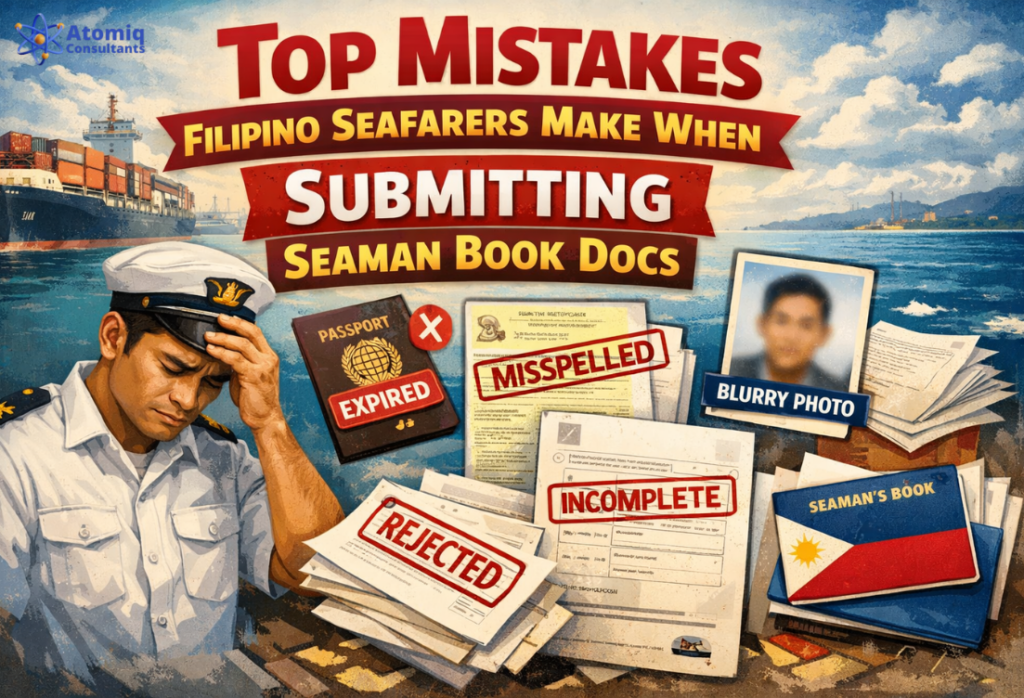
For Filipino seafarers, obtaining a Seaman Book is one of the most important steps toward working on international vessels. This document acts as an official record of a seafarer’s identity, qualifications, and sea service history. Shipping companies and maritime authorities rely on this document to verify that a seafarer is eligible to work onboard ships operating under different flag states.
However, many applicants experience delays or rejections because of simple mistakes made while submitting their documents. These issues are usually not complicated, but they can slow down the entire application process. Understanding the most common errors can help Filipino seafarers prepare their documents correctly and avoid unnecessary problems during verification.
Why Accurate Documentation Is Important for Seafarers
The maritime industry follows strict international standards when it comes to crew documentation. Authorities carefully review every detail to ensure that the seafarer meets safety and regulatory requirements before allowing them to work on vessels.
Because of this strict verification process, even small errors in submitted documents can lead to delays. When documents are incomplete, unclear, or inconsistent, the application may need to be resubmitted or corrected. For seafarers who are preparing for deployment, this can mean losing valuable time and sometimes even missing job opportunities.
That is why proper preparation and careful document submission are essential for a smooth seaman’s book application process.
Incomplete Documentation Is a Common Problem
One of the most common mistakes Filipino seafarers make is submitting incomplete documentation. Many applicants assume they have prepared everything required, only to discover later that a key document is missing. Since maritime authorities require specific paperwork to verify identity and qualifications, missing even one document can delay the entire process.
Typically, a seaman’s book application may require several supporting documents, including:
- Valid passport
- Birth certificate or identification documents
- Basic Safety Training certificates
- Passport-size photographs
- Educational or maritime training records
When any of these documents are missing, the application cannot move forward until the applicant submits the remaining requirements. Preparing a checklist before submission can help prevent this problem.
Poor Quality Scans or Unclear Documents
Another frequent issue occurs when applicants submit documents that are difficult to read. In many cases, seafarers upload photos taken from mobile phones that are blurry, poorly lit, or partially cropped.
Verification teams must clearly see every detail in the documents. If the text is not readable or if important information is hidden, the document may be rejected. This means the applicant will have to upload new copies, which delays the processing time.
To avoid this issue, documents should always be scanned clearly and saved in high resolution. Ensuring that all corners of the document are visible and the text is sharp can significantly improve approval speed.
Incorrect Personal Information
Consistency in personal details is extremely important for maritime documentation. Unfortunately, some applications contain small errors such as misspelled names or incorrect birth dates. These mistakes may appear minor, but they can cause major complications during verification.
For example, if the name on the application form does not exactly match the passport, the application may be flagged for correction. Maritime authorities must ensure that the seafarer’s identity matches all official records before issuing documentation.
Because of this, applicants should carefully review all personal information before submitting their documents. Ensuring that details match official records can prevent unnecessary corrections later.
Expired Certificates and Documents
Another mistake that often delays applications is submitting expired certificates. Maritime authorities require that all training and identification documents remain valid at the time of application.
Some of the documents that must always be current include:
- Passport
- Medical fitness certificate
- Basic Safety Training certificates
- Other STCW training records
If any of these documents have expired, the applicant may need to renew them before the application can proceed. Checking expiration dates in advance can help avoid delays.
Photo Requirement Errors
Photographs may seem like a simple requirement, but they are another area where many applications encounter problems. Authorities typically require specific photo standards for official documentation.
Common issues include photos with incorrect backgrounds, improper lighting, or images where the applicant is wearing accessories like hats or sunglasses. When photos do not meet official standards, applicants must submit new ones before the application can continue.
Using professional passport-style photos that follow official guidelines is the safest option.
Choosing the Wrong Flag-State Documentation
Many Filipino seafarers work on vessels registered under international flag states. Each flag state has its own documentation requirements, and selecting the wrong documentation process can cause confusion and delays.
Seafarers sometimes apply for documentation without fully understanding which flag state their employer requires. This can lead to submitting incorrect paperwork or missing additional requirements specific to that registry.
Professional maritime documentation services such as Atomiq Group often assist seafarers in choosing the correct flag-state documentation and preparing the necessary documents correctly.
Conclusion
Applying for a seaman’s book is an important step for Filipino seafarers who want to build a successful international maritime career. While the process itself is straightforward, small documentation mistakes can lead to unnecessary delays and complications.
Carefully preparing documents, verifying personal details, and ensuring that all certificates are valid and clearly scanned can help avoid most of these issues. Taking the time to review everything before submission can help ensure that the application process goes smoothly.
With proper preparation and attention to detail, Filipino seafarers can complete their documentation successfully and focus on the next stage of their maritime journey.
Frequently Asked Questions
1. What is a seaman’s book for Filipino seafarers?
A seaman’s book is an official document that records a seafarer’s identity, qualifications, and sea service history. It is required for Filipino seafarers who want to work on international vessels and serves as proof of maritime employment.
2. What documents are required to apply for a seaman’s book?
Most seaman’s book applications require several documents, including a valid passport, passport-size photographs, basic safety training certificates, educational documents, and identity verification records. The exact requirements may vary depending on the flag state issuing the Seaman Book.
3. Why do seaman book applications get rejected?
Seaman book applications are usually rejected due to incomplete documentation, incorrect personal information, expired certificates, or unclear scanned documents. Carefully reviewing all requirements before submission can help avoid rejection.
4. Can blurry or low-quality documents delay the seaman Book process?
Yes, submitting blurry or poorly scanned documents is a common reason for delays. Maritime authorities must clearly read every detail during verification, so unclear documents may require resubmission.
5. Do Filipino seafarers need STCW training for a seaman’s book?
Yes, most maritime authorities require seafarers to complete STCW basic safety training before issuing a seaman’s book. This training ensures that seafarers meet international maritime safety standards.
6. How long does it take to process a seaman’s book?
Processing time can vary depending on the flag state and the completeness of the submitted documents. Often, applications are processed faster when all documents are correct and properly verified.
7. Can incorrect personal details affect a seaman Book approval?
Yes, incorrect details such as misspelled names or mismatched passport information can delay or stop the approval process. All personal information must match official documents exactly.
8. What photo requirements are needed for Seaman Book applications?
Seaman Book applications typically require passport-style photographs with a plain background, proper lighting, and clear facial visibility. Photos that do not meet official standards may be rejected.
9. Why do Filipino seafarers choose different flag-state seaman’s books?
Many international vessels operate under different flag states, such as Panama or Palau. Filipino seafarers often obtain these seaman’s books to increase job opportunities and work legally on foreign-flag ships.
10. How can Filipino seafarers avoid mistakes when applying for a seaman’s book?
Seafarers can avoid mistakes by preparing a complete document checklist, verifying personal information, ensuring certificates are valid, and submitting clear scanned copies of all required documents.
