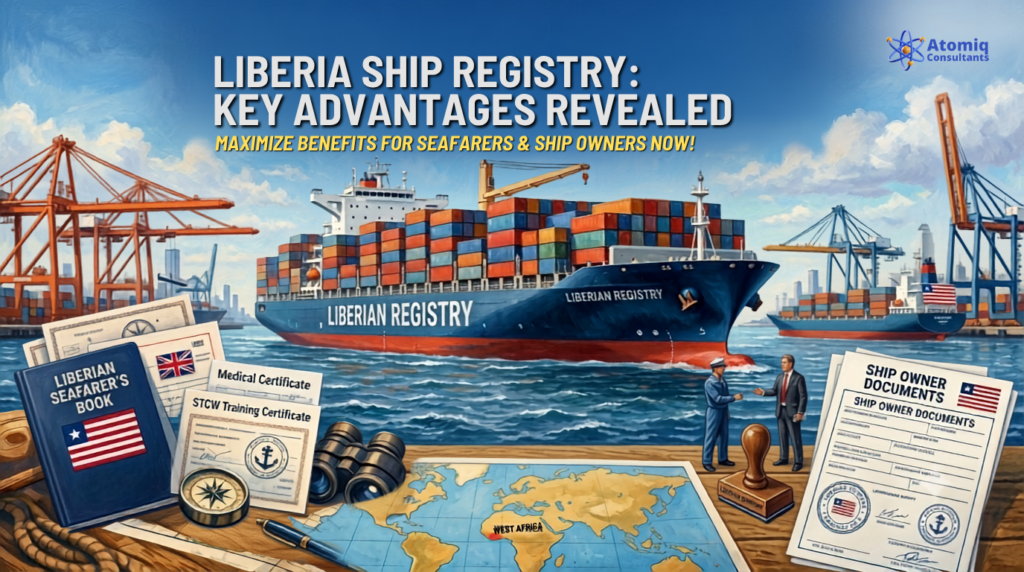
The Liberia ship registry is the largest flag state in the world, covering more than 300 million gross tons — roughly 17% of the global ocean-going fleet. For ship owners, it means fast registration, competitive fees, and a strong port state control record. For seafarers, it means globally recognized certification, online document processing, and strong protection under the Maritime Labour Convention (MLC, 2006).
That’s the short answer. Here’s why nearly one in five commercial vessels worldwide sails under the Liberian flag — and what that means for you, whether you own the ship or work on it.
What Is the Liberia Ship Registry?
The Liberia ship registry (officially the Liberian Registry) is an open registry established in 1948, allowing ship owners of any nationality to flag their vessels under Liberia. It is administered by LISCR, LLC (the Liberian International Ship & Corporate Registry), headquartered in the USA, with support offices across Asia, Europe, the Middle East, and the Americas.
An “open registry” — often called a flag of convenience — simply means the owner doesn’t need to be a Liberian citizen or company. What sets Liberia apart from lower-tier open registries is its quality record: the registry is whitelisted by both the Paris MoU and Tokyo MoU and holds Category A membership on the IMO Council.
Liberia Flag State at a Glance (2026)
|
Metric |
Figure |
|
Global ranking |
#1 largest ship registry worldwide |
|
Fleet size |
300+ million gross tons |
|
World fleet share |
~17% |
|
Container ship share |
~24% of the world’s container fleet (largest) |
|
Oil tanker share |
~15% of world tanker gross tonnage |
|
Newbuilding share |
~25% of the world’s newbuilding fleet |
|
PSC standing |
Paris MoU & Tokyo MoU whitelisted |
|
IMO status |
Council Category A member |
Sources: Clarksons WFR and IHS data, April 2026, via the Liberian Registry.
Liberia ship registry Advantages for Ship Owners
1. Fast, Flexible Vessel Registration
Liberia processes registrations quickly — including newbuildings, flag transfers, bareboat charters (in and out), and vessels under construction. Registration can be completed through any of its worldwide offices, in most cases within a day once documentation is in order. There are no nationality restrictions on ownership or crew.
2. Competitive Costs and Tax Neutrality
Liberian-flagged (Liberian ship registry ) vessels owned by non-resident entities pay no Liberian tax on international shipping income — only registration fees and annual tonnage taxes. Combined block fee agreements (C-BFA) let fleet owners bundle annual safety inspections, ISM/ISPS audits, and MLC inspections into one predictable fee.
3. Strong Port State Control Record
A flag’s PSC performance directly affects how often your vessels get inspected and detained. Liberia’s whitelisting under the Paris and Tokyo MoUs means fewer targeted inspections, less port delay, and lower operating friction — a practical advantage that cheaper, lower-ranked flags can’t offer.
4. Recognized by Financiers and Insurers
Liberia’s ship mortgage framework is well-tested and trusted by international banks, making vessel financing smoother. Mortgages can be recorded electronically, and Liberian corporate structures (corporations, LLCs, foreign maritime entities) are widely accepted by lenders and P&I clubs.
5. Global 24/7 Support and Digital Services
The registry operates duty officers around the clock and has invested heavily in digital tools — electronic certificates, online payment, harmonized audit scheduling, and fleet management portals. For technically advanced tonnage (LNG, LPG, dual-fuel newbuildings), Liberia has become the default flag: about a quarter of the world’s newbuilding fleet is Liberian-flagged.
Liberia ship registry Advantages for Seafarers
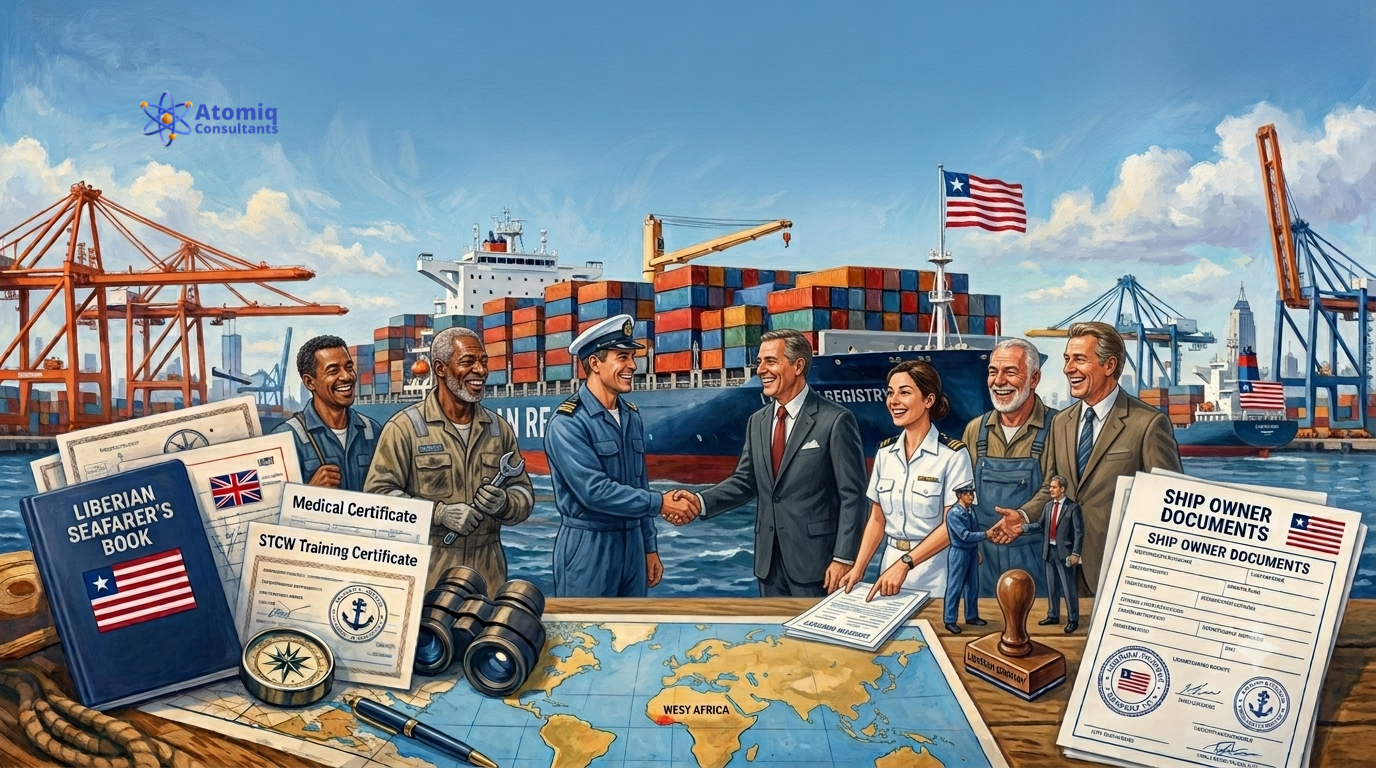
So why do seafarers choose the Liberia flag registry? Because working on a Liberian-flagged vessel comes with practical, career-level benefits:
Globally Recognized Certification
Liberian seafarer certificates and the Liberian Seaman’s Book (CDC) are STCW-compliant and accepted on vessels trading worldwide. Because the Liberian fleet is the largest on earth, holding Liberian documents opens doors to more than 5,000 vessels across container, tanker, gas, bulk, and offshore sectors.
Fast, Online Document Processing
Liberia runs dedicated online portals for seafarer certification applications, exams, and medical certificates. A Certificate of Receipt of Application (CRA) can be issued quickly, letting you join a vessel while your full document is processed — a real advantage when a contract starts next week, not next quarter.
No Nationality Barriers
Liberia places no nationality restrictions on crew. Officers and ratings from India, the Philippines, Eastern Europe, Africa, or anywhere else qualify on equal terms, provided they meet STCW training and medical standards through Liberian-approved training centers and doctors.
MLC Protection and Complaint Resolution
Liberia was an early ratifier of the MLC, 2006 and operates a formal seafarer complaint resolution system. Crew on Liberian vessels have a direct channel to the flag state for wage disputes, repatriation issues, or working-condition complaints — with the registry’s global duty officer network behind it.
Liberia vs. Other Major Flag States
|
Factor |
Liberia |
Panama |
Marshall Islands |
|
Fleet rank (GT) |
1st |
2nd |
3rd |
|
Paris/Tokyo MoU whitelist |
Yes |
Yes (historically more detentions) |
Yes |
|
Registration speed |
Same-day possible |
Fast |
Fast |
|
Digital seafarer services |
Extensive online portals |
Improving |
Strong |
|
Newbuilding market share |
~25% (largest) |
Lower |
Moderate |
Each registry has merits — but Liberia currently leads on fleet growth, newbuilding share, and digital infrastructure, which is exactly why top container lines, oil majors, and gas carrier owners keep choosing it.
How to Get a Liberian Seaman’s Book
If you’re a seafarer looking to work on Liberian-flagged vessels, you’ll need a Liberian Seaman’s Identification and Record Book (SIRB/CDC) and, for officers, the relevant Certificates of Competency endorsements. The process requires a valid passport, STCW certificates, an approved medical certificate, and sea service records where applicable.
Want it handled without the paperwork headache? Our team processes Liberian Seaman Book applications end to end — document checks, application filing, and follow-up until your CDC is in hand. Get in touch for a free eligibility check.
Also Read: Working on International Ships? Essential Documents Every Greek Seafarers Must Carry (2026 Guide)
Liberian Ship Registry FAQ
Is the Liberian flag a flag of convenience?
Yes, Liberia is an open registry, which is what “flag of convenience” means. But unlike low-standard flags, Liberia is whitelisted by the Paris and Tokyo MoUs and sits on the IMO Council — it’s a quality flag that happens to be open to all nationalities.
Why is the Liberia ship registry so popular?
Three reasons: cost efficiency (no tax on non-resident shipping income), speed (same-day registration possible worldwide), and reputation (fewer port state control detentions than most open registries). Its ~24% share of the world’s container fleet and ~25% of newbuildings reflect that trust.
Is a Liberian Seaman’s Book valid worldwide?
Yes. The Liberian CDC/SIRB is issued under STCW standards and accepted globally on Liberian-flagged vessels, which make up the largest fleet in the world.
How long does Liberian seafarer document processing take? Applications are processed through Liberia’s online seafarer portals, and a Certificate of Receipt of Application (CRA) can bridge the gap so you can join a vessel while the full document is issued. Typical processing runs days to a few weeks depending on document readiness.
Which is bigger — Liberia or Panama ship registry?
Liberia. It overtook Panama in gross tonnage and now holds the #1 position with over 300 million GT and roughly 17% of the world fleet (Clarksons, 2026).
Do seafarers pay Liberian tax on wages earned aboard Liberian ships?
Liberia does not tax non-resident seafarers’ wages; your tax obligations depend on your country of residence. Check with a tax adviser in your home country.
Ready to sail under the world’s largest flag?
Whether you need vessel registration guidance or a Liberian Seaman Book processed fast, we can help — contact us today.