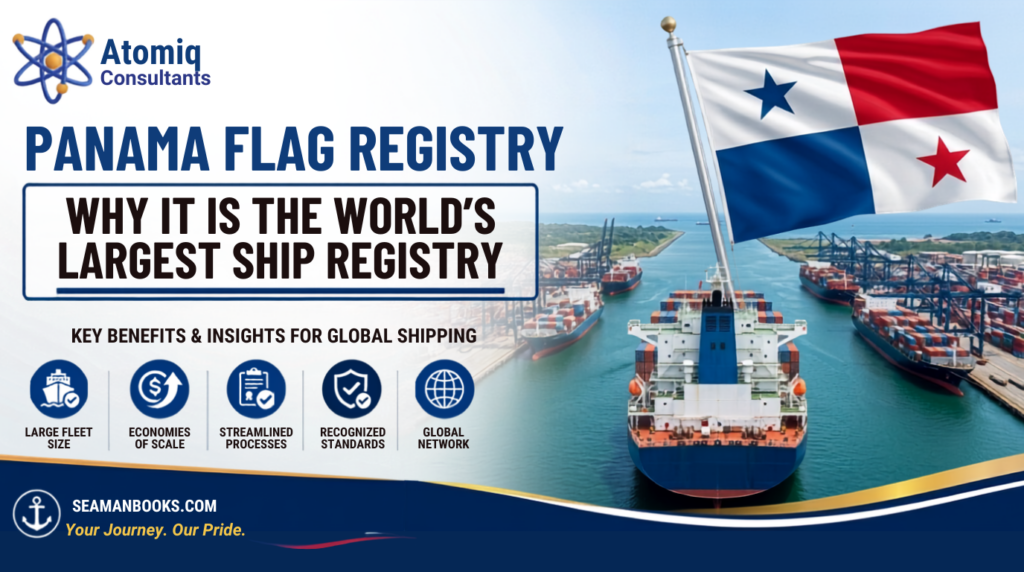
Panama Flag Registry: Why It Is the World’s Largest Ship Registry

panama flag registry

The Panama flag registry is the largest ship registry in the world, with more than 8,000 registered vessels representing roughly 16% of the global merchant fleet by tonnage — more than any single maritime nation, including China, Liberia, or the Marshall Islands. Walk any major port from Jebel Ali to Rotterdam, Mumbai to Manila, and you will see it again and again on the stern: Panama.

If you are a seafarer, a maritime professional, or a shipowner, understanding the Panama ship registry is not trivia — it directly affects where you can work, which documents you need (like the Panama Seaman Book), and how your vessel is regulated. This guide explains what the registry is, why Panama became number one, and what it means for your career at sea.

What Is the Panama Flag Registry?

 The Panama flag registry is an open ship registry operated by the Panama Maritime Authority (AMP) that allows shipowners of any nationality to register vessels under the Panamanian flag. Registered ships follow Panamanian maritime law and the international conventions Panama has ratified, including SOLAS, MARPOL, STCW, and MLC 2006.

Unlike a “closed” national registry (such as the USA or India, which generally require domestic ownership), Panama operates an open registry — often called a “flag of convenience.” Ownership nationality does not matter; compliance does.

A Century of Maritime History

Panama opened its registry to foreign-owned vessels in the early 20th century, with foreign registrations dating back to 1919–1925. Early adopters included American owners seeking operational flexibility. Over the following decades — helped by the strategic position of the Panama Canal — the registry grew steadily, overtaking traditional maritime flags by the 1990s. Today it is administered by the Panama Maritime Authority (Autoridad Marítima de Panamá, AMP), established in 1998, with a global network of consulates and technical offices that can process registrations in as little as a few days.

Why Is Panama the Largest Ship Registry in the World?
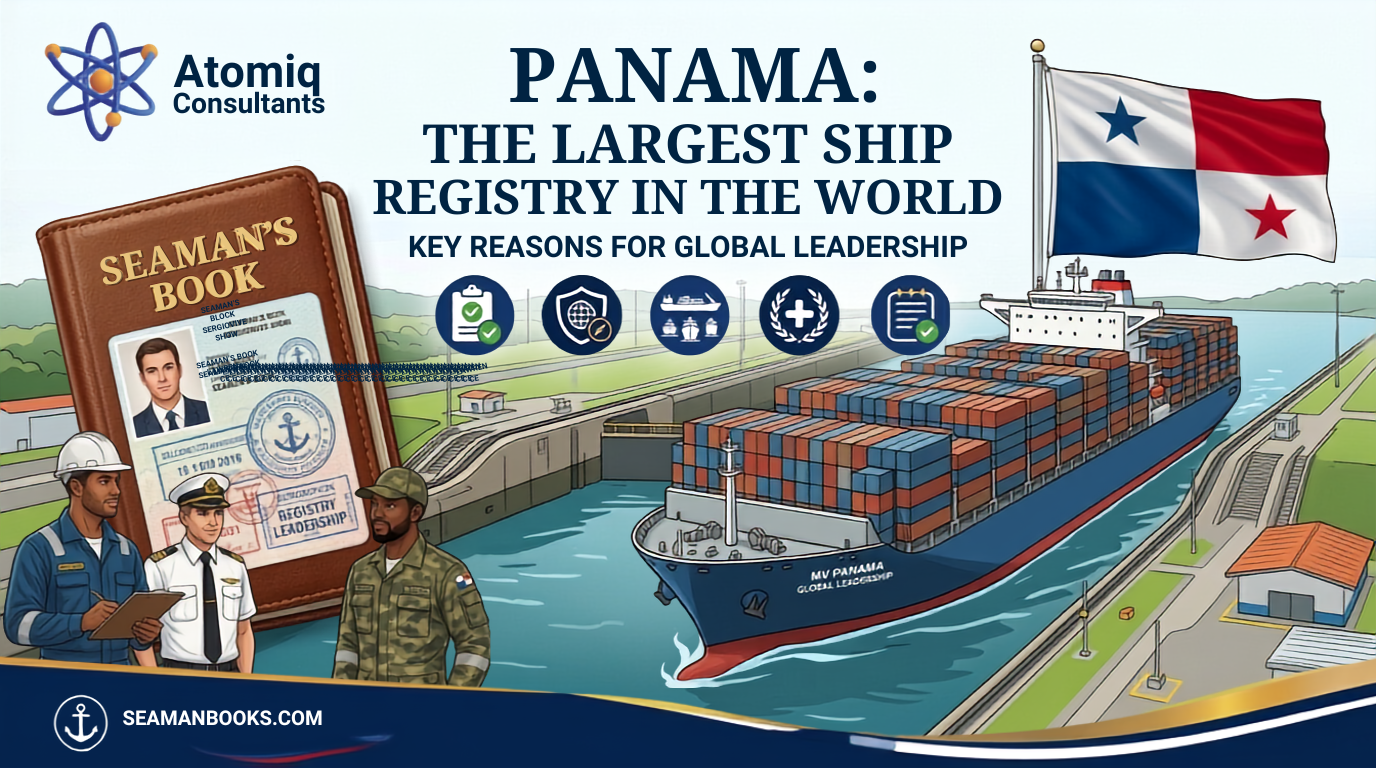
Why Is Panama the Largest Ship Registry in the World?

Panama leads because it combines low registration costs, zero income tax on international shipping earnings, no crew-nationality restrictions, fast 24/7 worldwide processing, and full compliance with IMO conventions — a package no competing flag state has matched at Panama’s scale.

Breaking that down:

  1. Tax efficiency. Income earned from international maritime commerce by Panama-flagged vessels is exempt from Panamanian income tax. Owners pay predictable annual tonnage fees instead.
  2. Open crewing policy. Owners may employ officers and ratings of any nationality — a major reason Filipino, Indian, and Eastern European seafarers dominate Panama-flagged crews.
  3. Speed and accessibility. Provisional registration can often be completed within days through Panamanian consulates worldwide, with no requirement to visit Panama.
  4. No age or ownership barriers that closed registries impose (subject to survey and class requirements).
  5. Legal and financing infrastructure. Panama’s ship-mortgage recording system is trusted by international banks, making vessel financing smoother.
  6. International standing. Panama has ratified the major IMO and ILO instruments (SOLAS, MARPOL, STCW, MLC 2006) and works to maintain white-list status with Port State Control regimes such as the Paris MoU and Tokyo MoU.

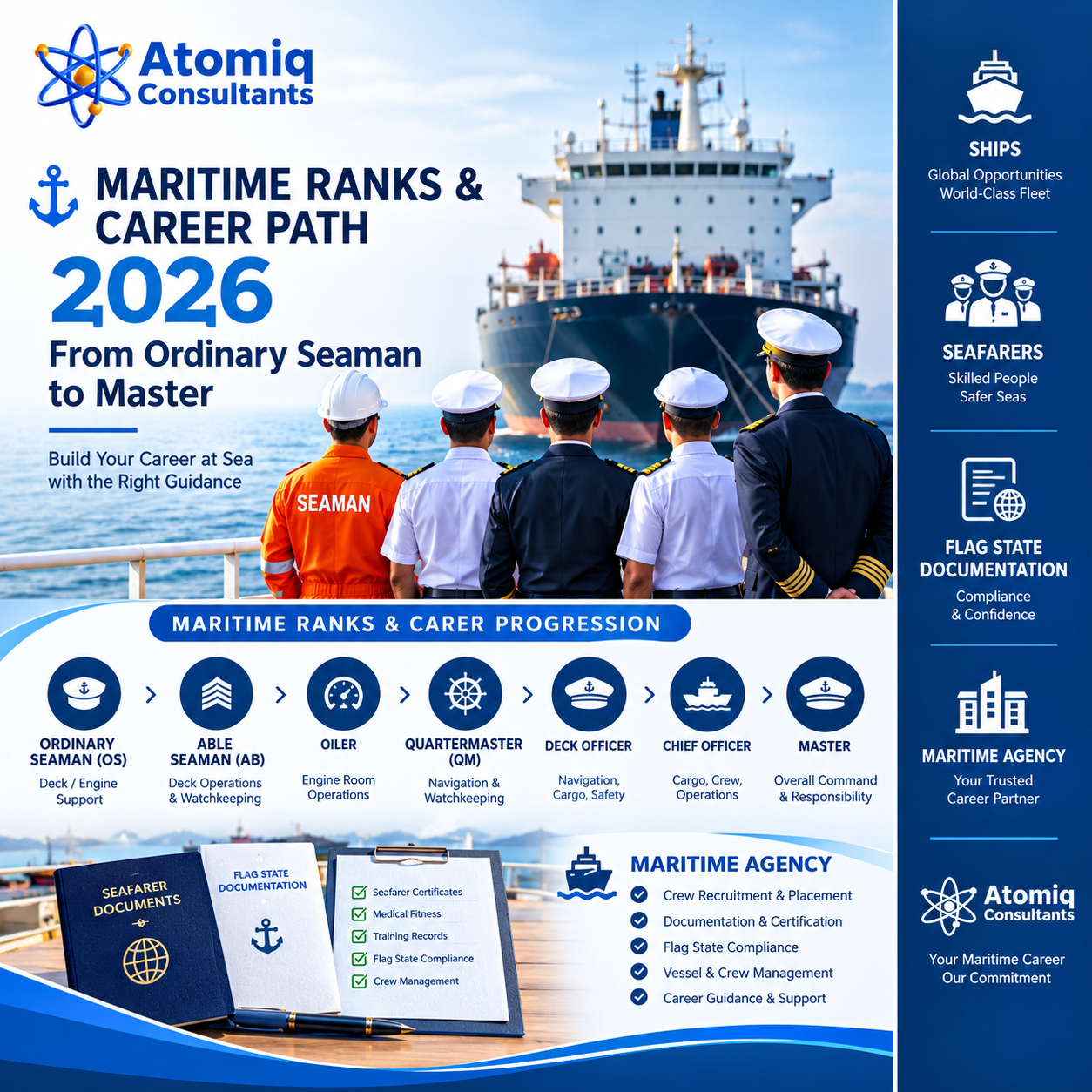
What the Panama Flag Means for Seafarers

Here is the part most competitor articles skip — and the part that matters most to crew:

  • You need Panamanian documents to serve on a Panama-flagged ship. Every seafarer working aboard must hold a Panama Seaman Book (Libreta de Marino) and, for officers, a Panamanian endorsement (COC/COP recognition) of their national STCW certificate.
  • Your rights are protected under MLC 2006, which Panama has ratified — covering wages, repatriation, hours of rest, and onboard conditions.
  • More job opportunities. Because Panama flags the largest share of the world fleet, it is statistically the flag you are most likely to sail under, whether you are recruited in Manila, Mumbai, Dubai, or Odesa.

👉 Ready to sail under the Panama flag? Get your Panama Seaman Book processed quickly and correctly — a mandatory document for every crew member on a Panamanian vessel.

Common Criticisms — An Honest View 

No credible guide should hide this: open registries have faced criticism over the years regarding oversight of sub-standard operators and “flags of convenience” labor concerns raised by the ITF. Panama has responded with fleet-cleanup programs, deregistering vessels linked to sanctions evasion, and tightening inspection regimes. For seafarers, the practical safeguard is simple: verify your vessel’s class society, P&I cover, and MLC certificate before signing articles.

Panama flag registry vs. Other Major Flag States (Quick Comparison)

FlagRegistry TypeApprox. Global RankCrew Nationality Rule
PanamaOpen#2 by fleet sizeAny nationality
LiberiaOpen#1Any nationality
Marshall IslandsOpen#3Any nationality
Hong Kong / SingaporeSemi-openTop 10Flexible
USA / IndiaClosedLowerLargely national crews

Conclusion — The Flag That Moves Global Trade

The Panama flag registry earned its position through a century of consistency: low costs, open crewing, fast service, and international compliance. For shipowners it means efficiency; for seafarers it means opportunity — provided your documents are in order. If you are planning to join a Panama-flagged vessel from the Philippines, India, the UAE, Saudi Arabia, Bahrain, Europe, the UK, the USA, or Australia, your first step is the same everywhere: secure your Panama Seaman Book before your joining date.

FAQ on Panama flag registry

Q1. Why do so many ships fly the Panama flag? Shipowners choose the Panama flag registry for low registration fees, zero income tax on international shipping earnings, freedom to hire crews of any nationality, fast worldwide registration through consulates, and full recognition under IMO conventions — making it the most cost-effective compliant flag available at scale.

Q2. Is the Panama flag registry legitimate and safe?

Yes. Panama is an IMO member state that has ratified SOLAS, MARPOL, STCW, and MLC 2006. Panama-flagged vessels undergo class surveys and Port State Control inspections worldwide. Seafarers aboard are protected by the Maritime Labour Convention, covering wages, repatriation, and working conditions.

Q3. Do I need a Panama Seaman Book to work on a Panama-flagged ship?

Yes. Every crew member serving on a Panamanian vessel must hold a valid Panama Seaman Book, and officers additionally need a Panamanian endorsement of their national certificate of competency. Applications can be processed remotely through authorized agents — see our Panama Seaman Book.

Q4. How many ships are registered under the Panama flag?

The Panama ship registry lists more than 8,000 vessels totaling over 200 million gross tons — approximately 16% of the world’s merchant fleet — making it the largest ship registry in the world, ahead of Liberia and the Marshall Islands. 

Q5. Can seafarers from India, the Philippines, or the UAE work on Panama ships?

Yes. The Panama flag registry places no nationality restrictions on crews. Seafarers from the Philippines, India, the UAE, Saudi Arabia, Bahrain, the UK, Europe, the USA, and Australia routinely serve aboard Panama-flagged vessels once they hold a Panama Seaman Book and STCW endorsement.

Q6. How much does Panama ship registration cost?

Panama charges a one-time registration fee plus annual tonnage tax, generally lower than traditional national registries; exact amounts depend on vessel type and gross tonnage. There is no Panamanian income tax on earnings from international maritime trade.

Contact Form