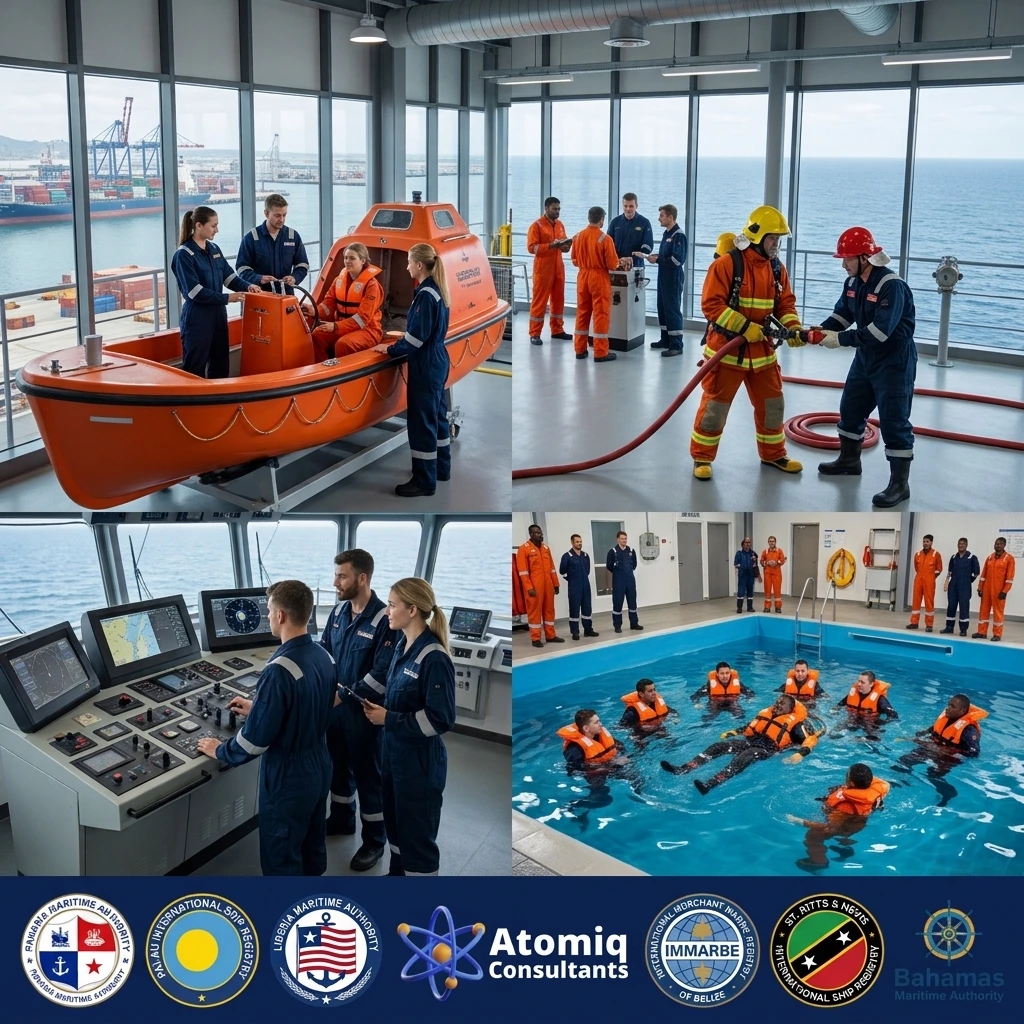
Seafarer Fatigue Management: Global Hub for Ship, Yacht and Offshore Crew

خدمات

 
Posted on Google Google
Andy Fitriansyah profile picture
Andy Fitriansyah
Google star 1Google star 2Google star 3Google star 4Google star 5Trustindex verifies that the original source of the review is Google.
Trust agency and fast respon
Posted on Google Google
Zameel Kapat profile picture
Zameel Kapat
Google star 1Google star 2Google star 3Google star 4Google star 5Trustindex verifies that the original source of the review is Google.
Quality and Quick service
Posted on Google Google
Dody Pambudhi profile picture
Dody Pambudhi
Google star 1Google star 2Google star 3Google star 4Google star 5Trustindex verifies that the original source of the review is Google.
Fast and trusted. Very recommended 👍
Posted on Google Google
ahmed abouzid profile picture
ahmed abouzid
Google star 1Google star 2Google star 3Google star 4Google star 5Trustindex verifies that the original source of the review is Google.
Helpful and professionals Thanks Atomiq Consultant
Posted on Google Google
Leo Worrall profile picture
Leo Worrall
Google star 1Google star 2Google star 3Google star 4Google star 5Trustindex verifies that the original source of the review is Google.
Very fast application process and good service. Palau seaman’s book was dispatched to me by courier within 48 hours of payment. Would definitely recommend
Posted on Google Google
Olga Poltavtseva profile picture
Olga Poltavtseva
Google star 1Google star 2Google star 3Google star 4Google star 5Trustindex verifies that the original source of the review is Google.
Thanks Gyanvi, thanks Karunesh you made our day. We were very happy to receive such a quick response and excellent communication from the team. They work efficiently and fast, and the delivery service was also excellent! We received the seaman’s book for our sailor without any issues. Highly recommended! Thank you again, and have a great day!
Posted on Google Google
Wael Farouk profile picture
Wael Farouk
Google star 1Google star 2Google star 3Google star 4Google star 5Trustindex verifies that the original source of the review is Google.
It was a wonderful , fast and easy experience, thank you for your efforts and support
Verified by Trustindex
Trustindex verified badge is the Universal Symbol of Trust. Only the greatest companies can get the verified badge who has a review score above 4.5, based on customer reviews over the past 12 months. Read more
Seafarer Fatigue Management: Hours of Rest Rules for Ship, Yacht and Offshore Crew

Seafarer fatigue is managed by minimum rest, set in law. Seafarer Fatigue Management Under the Maritime Labour Convention 2006 (MLC) and the STCW Convention, a seafarer must get at least 10 hours of rest in any 24-hour period and 77 hours in any 7-day period. Rest can be split into no more than two periods, one of them at least 6 hours long. The ship’s flag State applies these limits, whatever the crew’s nationality. Yacht and offshore crew are covered too, with exceptions explained below. Last reviewed 30 October 2026.

Seaman Books is a documentation support and processing partner based in Business Bay, Dubai. We prepare and file seafarer documents with flag-state administrations and arrange training enrolment. We are not a flag State, a government body or a training provider of record, and we don’t issue documents ourselves.

CHECK YOUR CERTIFICATES BEFORE YOUR NEXT CONTRACT

Keep your rest records and certificates up to date. Send us your certificate dates, and our team will check what may expire before your next contract ends.
WhatsApp Support

Free Eligibility Check WhatsApp: +971 52 943 5973

Which rules cover you: ship, yacht or offshore

You work onHours-of-rest rules that applyWho enforces them
A merchant ship on international voyages (bulk, tanker, container, cruise, ferry)MLC 2006 Standard A2.3 and STCW Section A-VIII/1The flag State. Port State control in each port
A commercial yacht (charter, crewed for hire)MLC and STCW, as applied by the flag, often through the Red Ensign Group Yacht Code for large yachtsThe flag State. Port State control
A private yacht not engaged in tradeUsually outside MLC and STCW. The flag’s national law and the crew contract applyFlag State, in practice the employment contract [VERIFY V4]
An offshore support vessel (OSV, AHTS, PSV, crew boat)MLC and STCW, like any seagoing shipFlag State and the coastal State
A fixed installation or rig on locationUsually the coastal State’s offshore safety and working-time law, not MLC. Mobile units may be treated as ships, depending on the flagCoastal State regulator and the operator
A fishing vesselNot MLC. ILO Work in Fishing Convention (C188) where ratified, plus national lawFlag State

Your nationality doesn’t change the limits. An Indian, Filipino, Indonesian or Ukrainian AB on a Panama-flag ship works under Panama’s rules.

Why fatigue is a safety issue

The IMO treats fatigue as a human-element risk with its own guidance: the IMO Guidelines on Fatigue (MSC.1/Circ.1598), approved by the Maritime Safety Committee at its 100th session in 2018. They replaced the 2001 guidance (MSC/Circ.1014) and are written in six modules: fatigue itself, the company, the seafarer, awareness and training, ship design, and the flag and port State authorities. (IMO: Fatigue)

A tired watchkeeper rarely feels dangerous. Fatigue slows reactions, narrows attention and makes people accept risks they would normally refuse. On the bridge, that’s a missed target on the radar. In the engine room, a skipped check during a night alarm. On a yacht tender, a misjudged approach to the swim platform. On a rig, a dropped-object near-miss at the end of a 12-hour night shift.

Warning signWhat it looks like at work
MicrosleepLosing a few seconds on watch or at a control panel
Slow decisionsReading the same alarm or permit line twice
IrritabilityShort temper in the mess, arguments over small things
Poor memoryForgetting a handover detail, a valve position or an isolation
Accepting shortcutsSkipping PPE, a gas test or a second check “just this once”

Tired crews also argue more, and fatigue is a recognised contributing factor in bullying and harassment on board.

The hours of rest rules, side by side

 MLC 2006 (ILO)STCW (IMO)
Who it coversAll seafarers on ships in scopeWatchkeepers and seafarers with designated safety, security and pollution-prevention duties
What it setsEither maximum hours of work or minimum hours of rest; the flag choosesMinimum hours of rest only
DailyMax 14 h work in 24 h, or min 10 h restMin 10 h rest in 24 h
WeeklyMax 72 h work in 7 days, or min 77 h restMin 77 h rest in 7 days
Splitting restNo more than two periods, one at least 6 hNo more than two periods, one at least 6 h
Longest gap between rest periods14 h14 h
Where it’s writtenStandard A2.3Regulation VIII/1, Section A-VIII/1

Sources: MLC 2006 consolidated text (ILO). STCW Code Section A-VIII/1

Under STCW Code Section A-VIII/1, seafarers assigned watchkeeping and designated safety, security and pollution-prevention duties must receive at least 10 hours of rest in any 24-hour period and 77 hours in any seven-day period. Rest may be divided into no more than two periods, one of which must be at least six consecutive hours. The interval between consecutive rest periods must not exceed 14 hours.

If you keep a watch, count rest, not work. A flag can apply the MLC hours-of-work limit, but STCW only counts rest. Watchkeepers are always held to the STCW rest rule.

Exceptions you should know:

  • Emergencies. The master can suspend the schedule for the immediate safety of the ship, the people on board or the cargo, or to help others in distress. Afterwards you must get an adequate period of rest.
  • Drills. Musters, fire-fighting and lifeboat drills must disturb rest as little as possible.
  • On call. If call-outs break your rest (a duty engineer in an unmanned machinery space, say), you are owed compensatory rest.
  • STCW flag exceptions. A flag can allow weekly rest to fall to a minimum of 70 hours, for no more than two consecutive weeks, under conditions it sets.

Merchant ships: how the flag State and port State check you

Every ship in scope must post a table of shipboard working arrangements showing the watch schedule and the rest hours for each position. Your daily hours of rest must be recorded, and under MLC you’re entitled to a copy of your own record, endorsed by the master (or someone the master authorises) and by you.

The Declaration of Maritime Labour Compliance (DMLC) Part I states which hours option the flag applies. It should be posted where crew can read it.

Port State control officers compare the rest record with what actually happened: the deck and engine logbooks, the oil record book, port arrival and departure times. A record showing 10 hours of rest on a day with three berthings is a deficiency, and it can lead to detention. On the same inspection, the officer checks crew certificates. An expired certificate and a falsified rest record are both crew-competence findings, and they tend to be found together.

KEEP this note: It is supported by official Paris MoU and Tokyo MoU publications. Use the final report rather than relying only on the preliminary statistics.

Two-watch ships carry the most risk. On a 6-on/6-off pattern, rest is compliant on paper with no margin. One port call, a drill and a meal at the wrong time push it under.

Yacht crew: guest hours, charter peaks and anchor watches

Yacht fatigue looks different from cargo-ship fatigue. Interior crew work to the guests’ day: late dinners, early breakfasts, tender runs at midnight. Deck crew stand anchor watches after a full day of water sports. On charter, a 14-day trip can run with no real day off.

What applies to you depends on how the yacht operates:

  • Commercial yachts (on charter or crewed for hire) are generally inside MLC and STCW. Large commercial yachts flagged with Red Ensign Group registries are surveyed against the REG Yacht Code. The hours-of-rest limits on this page apply, and your rest must be recorded like on any merchant ship.


Editorial note: Keep this statement, but clarify that MLC applicability depends on the vessel and its operation.

  • Private yachts not engaged in trade usually fall outside MLC and STCW. Your protection is then the flag’s national law and your crew agreement. Read the hours clause before you sign.

Practical points for yacht crew:

  • Charter is the risk window. Agree a rest rota with the chief stew or bosun before guests board, not on day four.
  • Anchor watches count as work. An overnight anchor watch after a full guest day can breach the 14-hour interval rule on its own.
  • Keep your own log of hours, especially on a private yacht with no formal record. It’s your only evidence in a contract dispute.

Your seaman book and documents are covered on our superyacht crew documents page .

Offshore crew: 12-hour shifts, rotations and the night swing

Offshore work runs on long shifts and long rotations. Shifts of 12 hours are typical, worked across rotations such as two weeks on and two weeks off. These are industry patterns, set by operators and contractors, not limits set by MLC or STCW. Fatigue builds in three places:

  • The night swing. Changing from days to nights mid-hitch disrupts sleep for several days, and the first night shifts after the change are when crew are least adapted.
  • Travel day. Crew often fly in after a long journey and start a shift the same day. That day’s fatigue is from travel, not work, and nobody records it.
  • The last days of a hitch. Sleep debt accumulates over a 14- or 21-day rotation.

Which rules apply offshore depends on where you work. Crew on offshore support vessels (OSVs, AHTSs, PSVs, crew boats) are seafarers on ships, so MLC and STCW apply. Workers on fixed installations are usually covered by the coastal State’s offshore safety and working-time law. Mobile offshore units sit in between, depending on the flag and the coastal State.

Certificates are a fatigue issue offshore too. A BOSIET that lapses mid-rotation means a retake of the full course (OPITO 5750, 20 hours 40 minutes of training), usually during your field break. The one-day FOET refresher is only open while your certificate is still in date, and taking it in the three months before expiry keeps your original expiry date. Planning renewals around your rotation protects your time off. See BOSIET course enrolment from Dubai.

Fishing vessels: a separate regime

MLC 2006 does not cover fishing vessels. Fishers’ rest is set by the ILO Work in Fishing Convention, 2007 (C188) where a State has ratified it, and by national law. For larger vessels at sea for more than three days, C188 sets minimum rest of 10 hours in any 24-hour period and 77 hours in any 7-day period.

Note: Make clear that C188 applies to commercial fishing operations, not automatically to all merchant ships, yachts or offshore vessels.

 If you work in fishing, check which flag your vessel flies and whether that flag has ratified C188.

Country note: Indonesian seafarers

Indonesia’s maritime administration is the Directorate General of Sea Transportation (Direktorat Jenderal Perhubungan Laut) of the Ministry of Transportation, which issues Indonesian seafarers’ national documents, including the buku pelaut. Indonesia ratified MLC 2006 through Law No. 15 of 2016.

Indonesia ratified the Maritime Labour Convention (MLC), 2006, on 12 June 2017, and the Convention entered into force for Indonesia on 12 June 2018. Indonesia approved the Convention through Law No. 15 of 2016 (Undang-Undang Nomor 15 Tahun 2016), dated 6 October 2016.

On board, the rules come from the flag. An Indonesian AB on a Liberia-flag tanker works under Liberia’s implementation of MLC and STCW. Many Indonesian crew work in fishing, where the C188 section above applies instead. For flag-state seaman books, see our guide for Indonesian seafarers.

Recording your rest: don’t sign a false record

Your rest record does three jobs:

  1. It’s your evidence. In a complaint, the record is what an inspector reads first.
  2. It’s cross-checked. Inspectors compare it with logbooks and port times.
  3. It sits next to your service record. Your seaman book shows where and when you served. The rest record shows the conditions. Keep copies of both.

Adjusting rest hours “so the paperwork is clean” is a common pressure on board. Don’t sign a record you know is false. It deletes your own evidence and puts your signature on a document an inspector may treat as falsified.

If a schedule can’t be kept within the limits, raise it with your head of department, then the master. If it’s not resolved, MLC Regulation 5.1.5 gives you an on-board complaint procedure, and Regulation 5.2.2 lets you complain to a port State control officer ashore. Our MLC 2006 seafarer rights guide explains both routes.

Practical fatigue management for crew

Know your pattern

PatternRest availableThe catch
4-on/8-off (three watchkeepers)Two 8-hour blocks a dayUsually compliant. Port work and drills eat into off-watch time
6-on/6-off (two watchkeepers)Two 6-hour blocks a dayNo margin. Meals, handover and one call-out push it under
Day work plus on-callOne long night blockRepeated alarms break it into fragments
Offshore 12-hour shiftOne 12-hour blockCompliant on paper. Travel days and night swings aren’t
Yacht guest serviceIrregularRest follows the guests’ day, not a rota

Write every interruption in your record when it happens, not at the end of the week.

Protect the core sleep

  • Make one rest period at least 6 hours of actual sleep, not 6 hours off watch.
  • Keep the cabin dark and cool. Eye masks and earplugs are cheap and they work.
  • Stop caffeine several hours before your main sleep. Its effect lasts longer than most people expect.
  • Avoid heavy meals right before sleeping.

Respect the low point

Alertness is lowest in the early hours of the morning, whatever your rank or experience. The 00–04 and 04–08 watches, and offshore night shifts, carry the most risk. Get up and move, use the bridge watch alarm as intended, and call for help early.

Time zones, fasting and joining

  • Crossing time zones: each clock change takes an hour from someone. Rotate who loses it.
  • Fasting months: crew who fast during Ramadan should plan sleep around the pre-dawn and sunset meals with their head of department before the month starts, and tell their watch partner.
  • Joining day: after a long flight, tell the officer on watch how long you’ve been travelling. A first watch straight off a 30-hour journey is a known risk.

Speak up early

Reporting fatigue isn’t weakness. The IMO guidelines treat it as information a company needs to manage risk. A near-miss report that names fatigue is more useful than one that doesn’t.

For companies, masters, yacht managers and crewing managers

Module 2 of the IMO guidelines sets out the company’s part: realistic manning, workload planning around port calls, fatigue in the safety management system, and a culture where fatigue can be reported without penalty. Two practical steps protect crews and inspection records at the same time:

Fatigue at Sea: Hours of Rest Rules and Fatigue Management

  1. Audit rest records against logbooks before a port State inspector does. Look for identical entries day after day, rest that never dips on port days, and records signed in bulk.
  2. Audit certificate expiries against contract end dates. A certificate that expires mid-contract means a crew change or a deficiency, often on short notice, and short-notice crew changes are themselves a fatigue driver.

Seaman Books does the second. We check crew certificates and seaman books against contract dates and flag requirements, and prepare renewals before they’re due. Our crew document audit explains what we check. We don’t audit rest records or run fatigue programmed. That stays with your DPA and the master.

Keep your certificates valid: the commercial part

Fatigue is managed on board. Expiring certificates are managed before you join, so you aren’t chasing paperwork during rest hours or field breaks.

If you are…Check this before your next contractNext step
A seafarer joining a merchant shipSTCW Basic Safety Training; PST and FPFF refresher evidence every 5 yearsSTCW Basic Safety Training enrolment · STCW renewal
Offshore crewBOSIET or FOET expiry against your rotation dates (renew inside the 3-month window)BOSIET, HUET and FOET enrolment
Yacht crewSeaman book and STCW basic training validitySuperyacht crew documents
Any seafarer needing a flag-state seaman bookEligibility for Panama, Liberia, Belize, Palau, Bahamas, Honduras or St Kitts & NevisFree seaman book eligibility check
A crewing or yacht managerCertificate expiries against contract end dates, across the crew listCrew document audit

Who delivers the training. Training institutes deliver courses and issue certificates. For STCW, that’s Atomiq College Private Limited, our Group’s training institute in Kathmandu, listed on the IMMARBE Approved Entities register under Maritime Training Institutes.

Atomiq College runs STCW Basic Safety Training as a 5-day course covering all four A-VI/1 modules, plus PST and FPFF refresher training.

Offshore courses (BOSIET, HUET, FOET) are delivered by OPITO-approved centers, which we book for you. Fatigue management itself isn’t a mandatory standalone STCW certificate, and we don’t sell a “fatigue course”.

What it costs. Course fees are set by the training center; seaman book fees are set by the flag administration. Our coordination charge is quoted separately. You get all three in writing, itemized, before you pay anything.

How fast. We reply on WhatsApp during office hours, 09:30 to 18:00 Dubai time (UTC+4).

Send us three things

  1. Your rank and the type of vessel (ship, yacht, offshore)
  2. Your certificate list with expiry dates (a photo is fine)
  3. Your next joining date

We’ll tell you what expires before your contract ends and what to renew first.

WhatsApp +971 55 458 3416 · or use the form below.

Contact Us Now

Frequently asked questions: Seafarer Fatigue Management

How many hours of rest must a seafarer get?

At least 10 hours in any 24-hour period and 77 hours in any 7-day period, under MLC 2006 and STCW. Rest can be split into no more than two periods, one at least 6 hours long, with no more than 14 hours between them. A flag State can set stricter limits, never looser ones.

Do hours of rest rules apply to yacht crew?

On commercial yachts, generally yes: MLC and STCW apply through the flag, and large Red Ensign yachts are surveyed against the REG Yacht Code. Private yachts not engaged in trade usually fall outside both conventions, so the flag’s national law and your crew agreement decide your hours.

Do MLC rest hours apply offshore?

Crew on offshore support vessels are seafarers on ships, so MLC and STCW apply. Workers on fixed installations are usually covered by the coastal State’s offshore safety and working-time law instead. Mobile offshore units depend on the flag and the coastal State.

Can the master cancel my rest period?

Only for the immediate safety of the ship, the people on board or the cargo, or to help others in distress. Once normal operations resume, you must get adequate rest. A tight port schedule or a commercial deadline is not an emergency under the conventions.

What should I do if my rest hours record is wrong?

Don’t sign a record you know is inaccurate. Ask your head of department and the master to correct it. If they don’t, use the on-board complaint procedure under MLC Regulation 5.1.5, or complain to a port State control officer ashore. Keep your own notes and a copy.

Is there an STCW certificate for fatigue management?

No. Fatigue management isn’t a standalone mandatory STCW certificate. The hours-of-rest rules sit in STCW Section A-VIII/1, and the IMO Guidelines on Fatigue include a module on awareness and training for seafarers and companies. Your mandatory certificates are your basic training and your rank’s competency certificates.

Does a seaman book record hours of rest?

No. A seaman book (CDC, SIRB or discharge book) records sea service: ship, rank and dates. Hours of rest are recorded separately on board. Keep copies of both, because inspectors and future employers may look at them together.

How does fatigue relate to certificate renewal?

An expired certificate forces short-notice training or a crew change, often in your rest days or field break. Offshore, a lapsed BOSIET means retaking the full course instead of the one-day FOET. Checking expiries against contract dates before you join avoids both.

Written by Dipak Paudel, Seaman Books, Atomiq Management Consultancies L.L.C., #903 Regal Tower, Business Bay, Dubai.  Seaman Books is a documentation support and processing partner. It is not a flag-state authority or a government body and does not issue documents.

Written By

Picture of Dipak Paudel

Dipak Paudel

Dipak is an experienced maritime documentation and content professional with experience since 2021, specializing in seaman books, crew documentation, maritime compliance, and visa-related documentation solutions through SeamanBooks.com and Atomiq Consulting.

نموذج الاتصال

آخر مشاركة