For seafarers working in the global maritime industry, a valid Continuous Discharge Certificate (CDC) is one of the most essential documents they must carry, Beware of Fake or Invalid CDC. The CDC serves as an official record of a seafarer’s sea service, vessel experience, and employment history. Shipping companies and maritime authorities rely on this document to verify a seafarer’s professional background before assigning them to vessels.
However, challenges can arise when seafarers unknowingly obtain CDC documents that are not issued through proper or recognized channels. With increasing regulatory checks and digital verification systems, maritime authorities are now more equipped than ever to identify discrepancies in documentation.
Understanding these risks helps seafarers protect their careers and remain compliant with international maritime standards.
Why a Valid CDC Is Essential
A Continuous Discharge Certificate acts as a seafarer’s official employment record at sea. Each sign-on and sign-off is recorded, allowing authorities and employers to accurately verify sea service history.
A properly issued CDC
- Confirms professional experience and qualifications
- Supports visa and immigration processes
- Ensures compliance with maritime regulations
- Improves employment opportunities with reputed shipping companies
Without a valid CDC, verifying sea service can become difficult, potentially affecting career progression.
Challenges with Improperly Issued – Fake or Invalid CDC Documents
In some situations, seafarers may rely on third-party services that do not follow official procedures. While such documents may appear legitimate, they may not always be registered or verifiable through the appropriate maritime authority.
Some seafarers choose these options due to faster processing expectations. However, with the adoption of advanced verification systems, shipping companies and port authorities can now identify inconsistencies more efficiently.
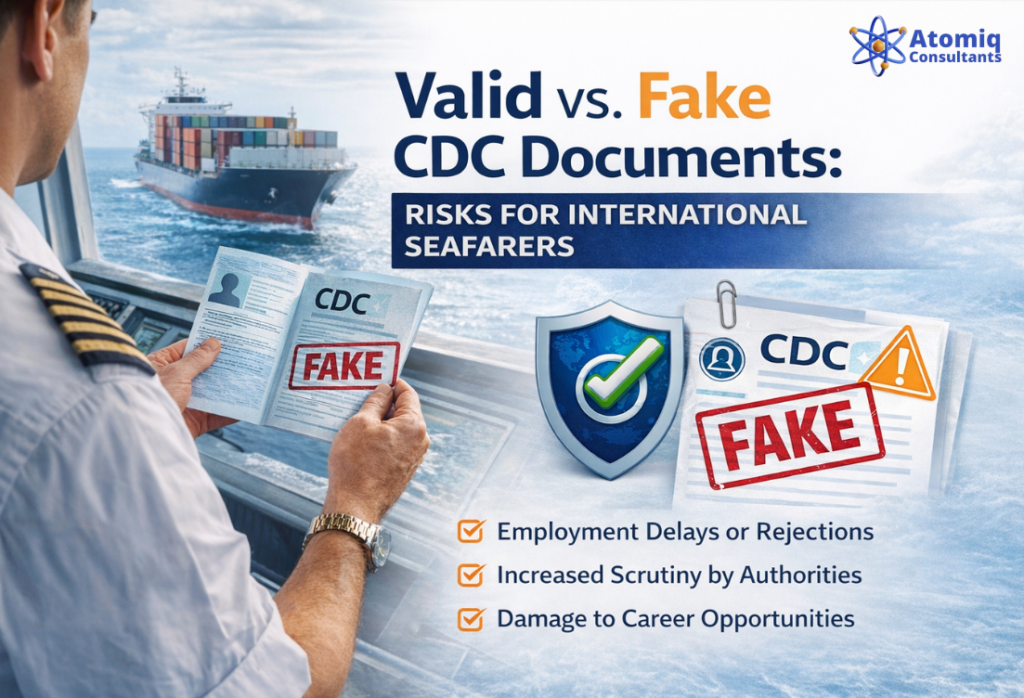
Potential Risks and Consequences : Fake or Invalid CDC
Using a CDC that lacks proper verification can pose several professional challenges.
- Employment delays or rejection due to unverifiable records
- Increased scrutiny during documentation checks
- Regulatory or compliance issues depending on jurisdiction
- Impact on professional reputation, affecting future opportunities
For seafarers working globally, maintaining accurate and verifiable documentation is essential for long-term career stability.
How CDC Verification Is Conducted
To ensure compliance, maritime authorities and employers follow structured verification processes, including:
- Validating records with issuing maritime authorities
- Cross-checking sea service details with employers
- Reviewing training certifications and documentation history
- Using digital databases for authentication
These measures help maintain safety, transparency, and trust within the maritime industry.
How to Avoid CDC-Related Issues
The most effective way to avoid documentation issues is to follow official and recognized procedures when applying for a CDC.
Seafarers are advised to:
- Apply through authorized maritime authorities
- Avoid unofficial or unverified agents
- Ensure all supporting documents are accurate and complete
- Verify their CDC before submitting it for employment
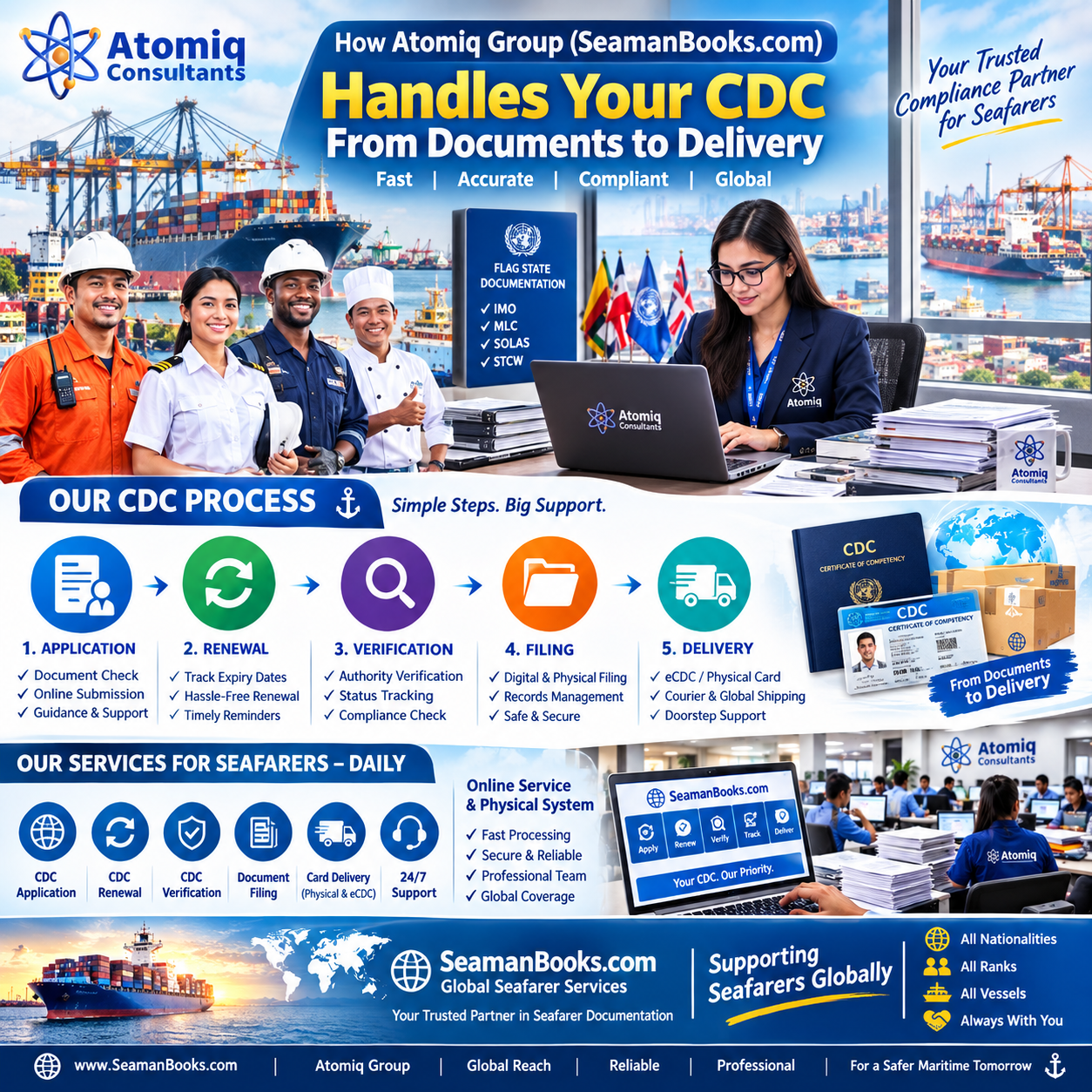
Atomiq Consultants supports seafarers by providing guidance on proper documentation processes and helping them navigate requirements in a compliant and professional manner. By following the correct approach, seafarers can ensure their documents are valid, recognized, and aligned with global maritime standards.
Conclusion
A valid CDC plays a crucial role in building a secure and successful maritime career. While alternative or faster options may sometimes appear convenient, ensuring that documentation is properly issued and verifiable is essential.
By obtaining CDCs through legitimate channels and maintaining accurate records, international seafarers can protect their professional reputation, avoid unnecessary complications, and confidently pursue opportunities across the global shipping industry.
Frequently Asked Questions (FAQs)
- What is a CDC for seafarers?
A Continuous Discharge Certificate (CDC) is an official document that records a seafarer’s sea service, vessel assignments, and employment history. - Why is a CDC important for international seafarers?
It serves as proof of experience and is required by shipping companies and maritime authorities for verification and compliance. - What happens if a CDC cannot be verified?
It may lead to delays in employment processing, additional checks, or possible rejection depending on the situation. - How do shipping companies verify CDC documents?
They verify through official maritime databases, issuing authorities, and cross-checking service records. - Can documentation issues affect job opportunities?
Yes, incomplete or unverifiable records may impact hiring decisions. - How can seafarers confirm if their CDC is valid?
By checking with the issuing authority or through recognized maritime documentation channels. - Are documentation discrepancies common?
With stricter regulations, discrepancies are less common but still monitored closely. - What documents are required to obtain a CDC?
Typically a passport, training certificates, medical fitness certificate, and verified sea service records. - Can seafarers work internationally without a CDC?
Most international vessels require a valid CDC as proof of employment and experience. - How can seafarers avoid documentation issues?
By applying only through authorized authorities and ensuring all information provided is accurate and verifiable.