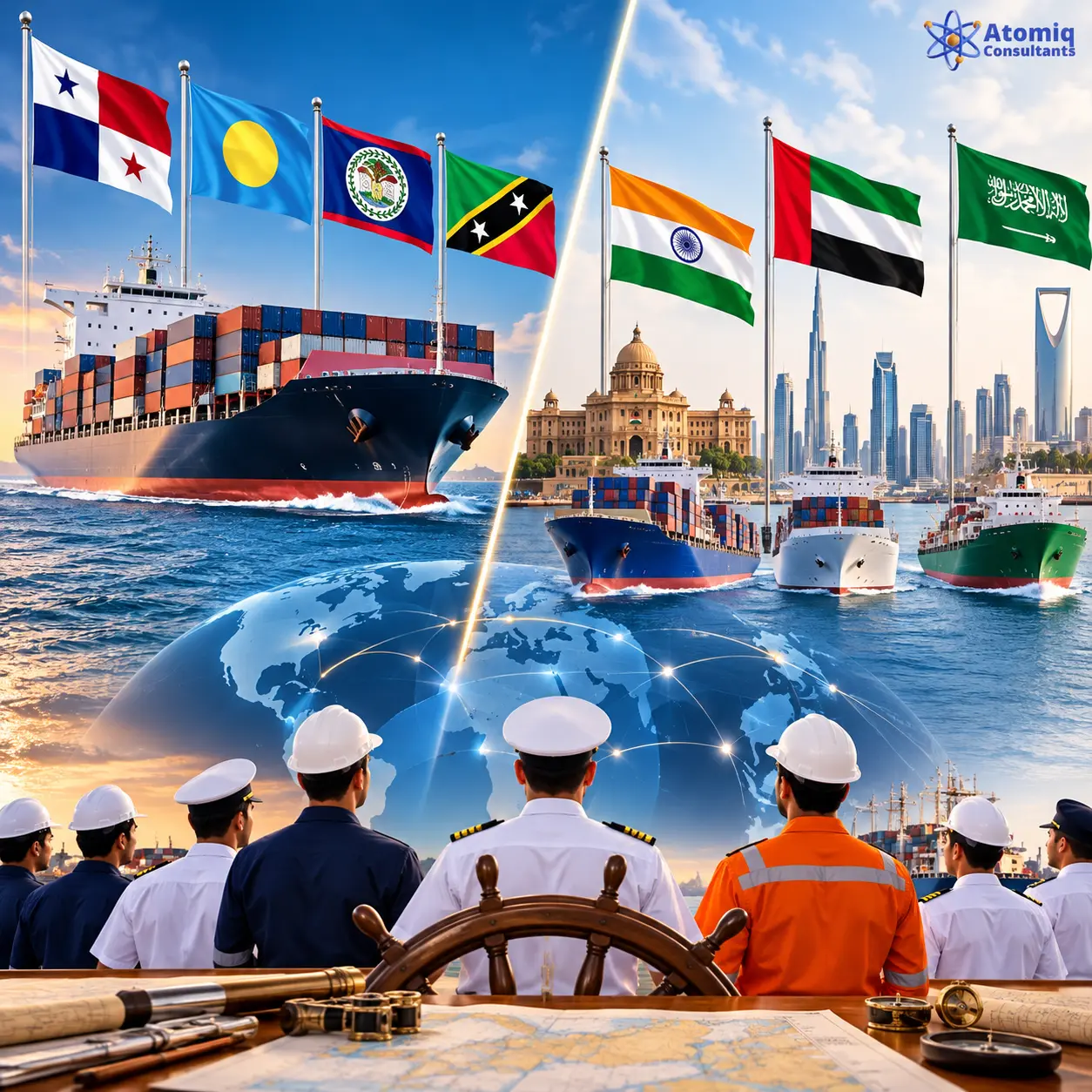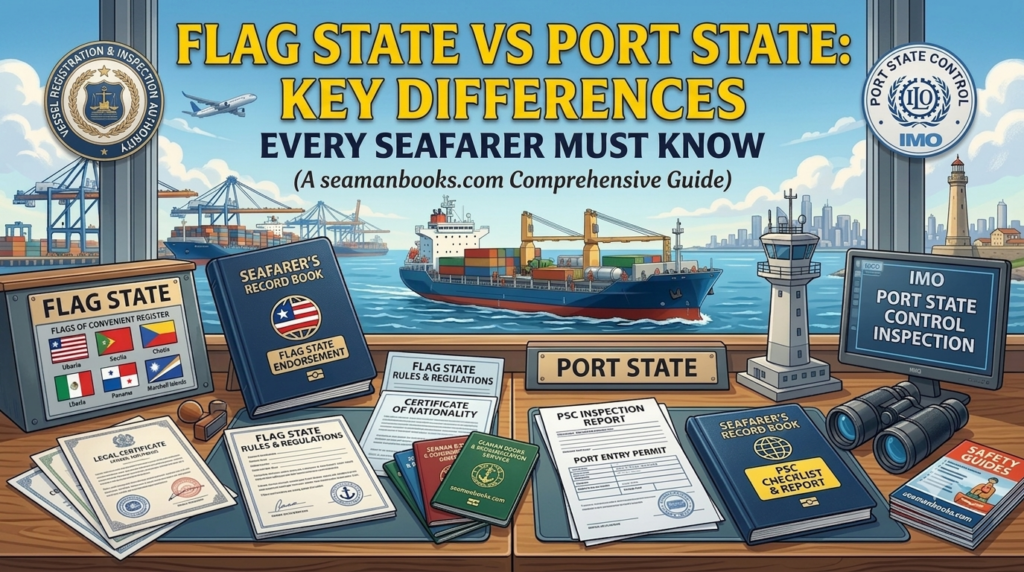
Understanding the distinct roles of a Flag State vs Port State is essential for any maritime professional. When navigating the complex legal frameworks of international shipping, The flag state is the country where a ship is registered — its laws govern the vessel, its crew documents, and working conditions everywhere it sails. The port state is any country the ship visits, which can inspect, detain, or ban that ship under Port State Control (PSC), regardless of the flag it flies. If you’re a seafarer, this difference decides which endorsements you carry, who checks them at the gangway, and what happens if paperwork fails an inspection.
Flag state = the ship’s “nationality” (registration, certificates, crew documentation, MLC compliance). Port state = the inspector (PSC officers verifying that flag state rules are actually followed). Your CoC endorsement and seaman’s book come from the flag state; the officer checking them in Rotterdam, Fujairah, or Houston works for the port state.
Flag State vs Port State: Side-by-Side Comparison
Aspect | Flag State | Port State |
Role | Registers the ship; sets and enforces rules on board | Inspects visiting foreign ships in its ports |
Legal basis | UNCLOS, SOLAS, MARPOL, STCW, MLC 2006 | Regional MoUs (Paris, Tokyo, Riyadh, IOMoU, etc.) |
Issues to seafarers | CoC endorsements, SIRB/seaman’s book, GMDSS & tanker endorsements | Nothing — it verifies your flag state documents |
Power over the ship | Certification, surveys, taxation, crew standards | Inspection, deficiency notes, detention, banning |
Examples | Liberia (17.4% of world tonnage), Panama (15.2%), Marshall Islands, Bahamas, Malta | USA (USCG), UAE, Australia (AMSA), EU states, Saudi Arabia, Bahrain |
What Does the Flag State Do for Seafarers?
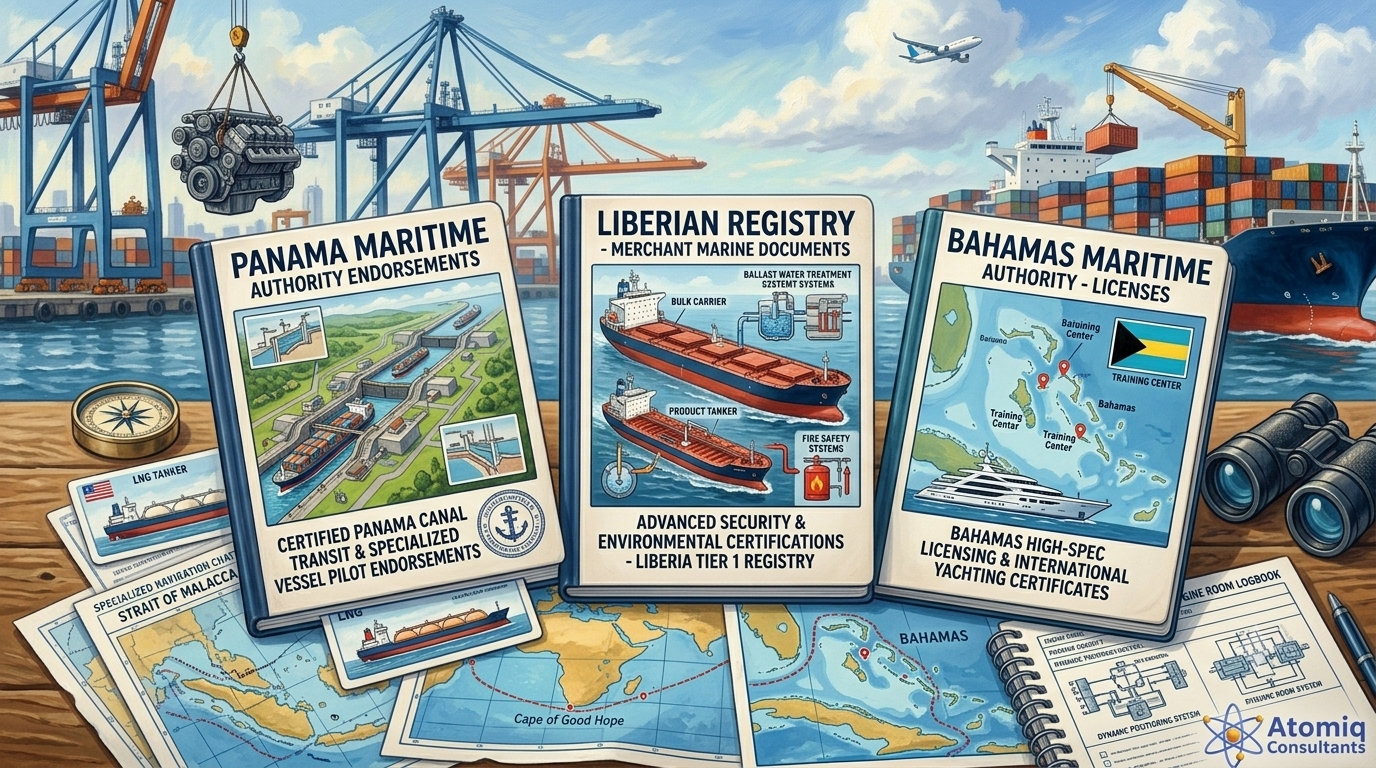
The flag state is your legal employer’s jurisdiction at sea. It ratifies and enforces STCW and MLC 2006, meaning your wages, rest hours, repatriation rights, and certificate validity all flow from the flag on the stern. Before signing on, every officer needs the flag state’s Certificate of Competency (CoC) endorsement under STCW Regulation I/10, and most crew need the flag’s seaman’s book (SIRB/SIB).
The world’s leading flag states in 2026 are Liberia (now the largest registry, white-listed by Paris and Tokyo MoUs), Panama (second largest, currently on the Paris MoU grey list), the Marshall Islands, Malta, and the Bahamas — all fully MLC-compliant open registries. Read our full breakdown in Top 10 Flag States for Seafarers: Panama vs Liberia vs Bahamas.
Joining a Liberian, Panamanian or Bahamas-flag ship? All Seaman Books issues flag state CoC endorsements, seaman’s books and CRAs online in 24–48 hours — from anywhere in the world. Apply now →
What Does the Port State Do?
Port State Control exists because not every flag polices its own fleet well. PSC officers board foreign ships to verify certificates, crew documents, working conditions, and equipment. Nine regional MoUs divide the world: Paris MoU (Europe/North Atlantic), Tokyo MoU (Asia-Pacific, incl. Australia), Riyadh MoU (Gulf states — Saudi Arabia, UAE, Bahrain), Viña del Mar (Latin America, incl. Panama), the Indian Ocean MoU, and others, while the US Coast Guard runs its own regime.
A PSC inspection can end three ways: clean report, deficiencies to rectify, or detention — the ship cannot sail until problems are fixed. Expired endorsements or a missing CRA are among the most common crew-related deficiencies. Detentions are published on MoU websites and damage both the ship’s and the flag’s record.
Why Flag State vs Port State Matters Where You Sail: Country-by-Country
- UAE & Gulf (Riyadh MoU): Fujairah, Jebel Ali and Khor Fakkan are among the world’s busiest inspection points. Crew joining in the UAE, Saudi Arabia, or Bahrain should carry valid flag endorsements or an electronic CRA — processed online without a consulate visit.
- USA (USCG): The strictest solo regime. Liberia and Marshall Islands vessels benefit from Qualship 21 recognition, meaning fewer inspections and smoother crew document checks.
- Europe (Paris MoU): Panama’s grey-list status means Panama-flag ships face higher inspection priority in EU ports — keep every endorsement current before ETA Rotterdam, Piraeus or Algeciras.
- Australia (AMSA/Tokyo MoU): Famously rigorous PSC with a strong focus on MLC rest-hour and wage records.
- Greece (Piraeus): Both a major port state and the world’s top shipowning nation — Greek-managed fleets fly Liberia, Malta and Greek flags, so officers there typically hold multiple endorsements.
- Panama: Home of the largest canal transit fleet; Viña del Mar MoU inspections plus AMP flag administration.
FAQ — Flag State vs Port State
What is the main difference between flag state and port state?
The flag state is where a ship is registered and whose laws apply on board worldwide — it issues the ship’s certificates and the crew’s endorsements. The port state is any country the ship visits, whose PSC officers inspect foreign ships and can detain those that fail.
Can a port state detain a ship over crew documents?
Yes. Missing or expired CoC endorsements, seaman’s books, or medical certificates are recorded deficiencies and, in serious cases, detainable. Always sail with valid flag state documents or a current CRA — renew yours online here.
Who issues a seafarer’s documents — the flag state or the port state?
Always the flag state. Your CoC endorsement, SIRB/seaman’s book, and GMDSS or tanker endorsements come from the ship’s registry (Panama, Liberia, Bahamas, etc.). Port states never issue seafarer documents; they only verify them during inspections.
Which flag states pass port state control most easily?
Liberia, Marshall Islands, Bahamas, Malta, Singapore and Hong Kong are white-listed by both the Paris and Tokyo MoUs. Panama is currently Paris MoU grey-listed, which increases inspection frequency for Panama-flag ships in European ports.
People Also Ask
- What is Port State Control (PSC)?
The inspection regime under which a country examines foreign-flag ships in its ports for compliance with SOLAS, MARPOL, STCW and MLC — with power to detain non-compliant vessels.
- What are the 9 PSC MoU regions?
Paris, Tokyo, Riyadh, Indian Ocean, Mediterranean, Viña del Mar, Caribbean, Abuja and Black Sea MoUs — plus the separate US Coast Guard regime.
- Is the USA a flag state or a port state?
Both: the US Coast Guard registers and inspects US-flag ships (flag state control) and inspects foreign ships in US ports (port state control).
- What happens if a ship is detained by PSC?
It cannot sail until deficiencies are rectified and re-inspected; the detention is published on the MoU database against the ship and its flag.
Final Word
Flag state vs port state are two halves of one system: the flag gives your ship its nationality and you your documents; the port checks that both stand up at the gangway. Sailing with valid, correctly endorsed flag state documents is the simplest way to keep inspections short and contracts uninterrupted.
Don’t let paperwork stop your ship. All Seaman Books processes Panama, Liberia, Bahamas, Marshall Islands and Malta seaman’s books and endorsements — fully online with express 24–48 hour CRA. Start your application →