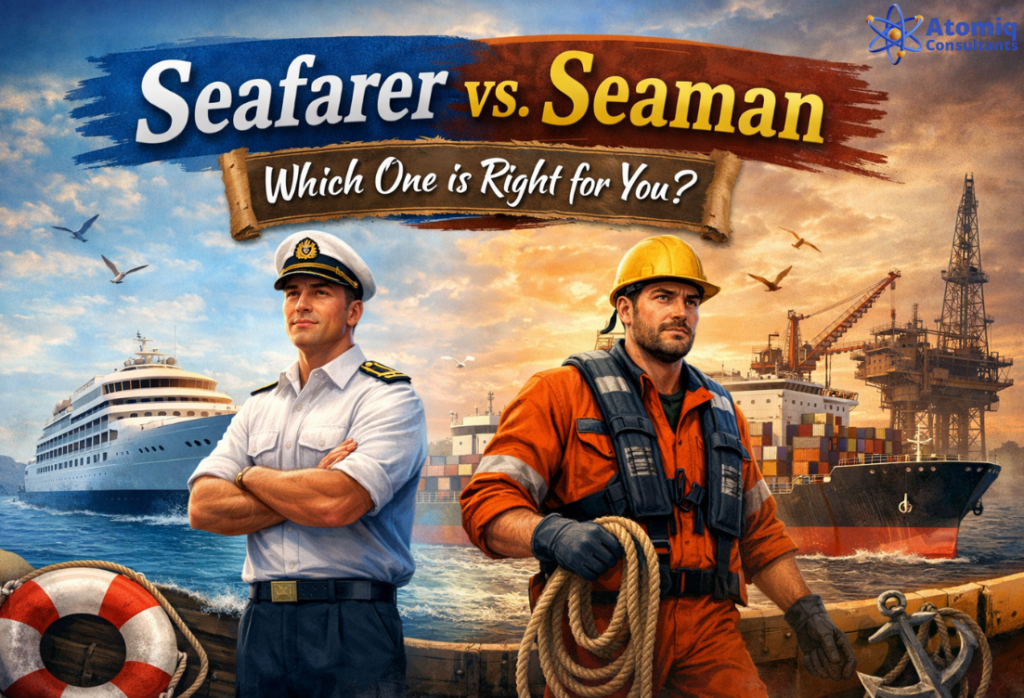
Seafarer vs Seaman: A seafarer is anyone who works aboard a ship — officers, engineers, technicians, and crew. A seaman is specifically a non-officer, deck-level crew member on commercial vessels. In most government forms, bank documents, and occupation fields, both terms are accepted interchangeably to describe a maritime worker.
There are several types of maritime jobs, but seafarer and seaman are the two most common terms you’ll encounter in the industry. While they may sound similar, they differ in scope, rank, responsibilities, and career growth opportunities — and understanding that difference is key before choosing your path at sea.
This guide breaks down what each role involves, including salary expectations, STCW requirements, and long-term career prospects, so you can make a confident, informed decision about your maritime career.
Seaman Book vs Seafarer Book – Differences, Eligibility & How to Apply- Check Free Eligibility With our Expert
Understanding Maritime Careers: Seafarer vs Seaman
Maritime jobs can take you across the globe and expose you to diverse cultures and experiences. However, not all maritime careers are the same. There are multiple roles available at sea, and choosing the right one depends on your skills, qualifications, and long-term ambitions. If you’re considering a career as a seafarer or seaman, here’s what you need to know.
What does Seafarer mean?
A seafarer is a broad term used to describe anyone working onboard a ship, including officers, engineers, technicians, and crew members. Seafarers are commonly employed by international shipping companies, cruise lines, and offshore industries.
Seafarers often enjoy:
Better salary packages, especially in specialized or officer-level roles
Opportunities to work in global environments
Career growth through advanced certifications and promotions
Exposure to passenger-based services in cruise ships or high-end vessels
This role is ideal for individuals looking for long-term career growth, higher earnings, and international exposure.
Read More: Best and Reliable Maritime Documentation for Seafarers
What does Seaman mean?
A seaman, on the other hand, typically refers to non-officer crew members working on commercial vessels such as cargo ships, bulk carriers, and oil tankers. Their responsibilities mainly involve physical and operational tasks that ensure the smooth functioning of the vessel.
Seamen usually:
Handle deck operations, maintenance, and cargo work
Assist officers in daily ship activities
Follow safety procedures and onboard duties
Work in more physically demanding environments
One major advantage of becoming a seaman is that there are many entry-level opportunities available. This makes it easier for beginners to enter the maritime industry without extensive experience.
Key Differences Between Seafarer and Seaman
| Aspect | Seafarer | Seaman |
|---|---|---|
| Scope | All maritime workers (officers, engineers, crew) | Non-officer deck crew specifically |
| Salary | Higher — officer roles earn $3,000–$10,000+/month | Lower entry-level — $800–$2,500/month |
| Experience Needed | Intermediate to advanced | Entry-level, no prior experience needed |
| STCW Required | Basic + advanced modules for officers | Basic STCW only |
| Vessel Types | All — cargo, cruise, offshore, tankers | Mainly cargo ships, bulk carriers, tankers |
| Career Ceiling | Captain, Chief Engineer, Pilot | Able Seaman, Bosun, Deck Supervisor |
Seaman Book or Seafarer Book? See the key differences, requirements and application options. Check your eligibility for free before you apply.
Training, Certification, and Career Growth
Both seafarers and seamen must complete basic STCW (Standards of Training, Certification, and Watchkeeping) training to ensure safety and competency at sea. However, those aiming to grow as seafarers—especially into officer or technical roles—will need additional certifications, sea time, and specialized training.
Starting as a seaman can be a strong stepping stone. With experience and further education, many seamen advance into higher-ranking positions and eventually become certified seafarers in specialized roles.
Conclusion
Choosing between a seafarer and a seaman career comes down to where you are right now and where you want to go. If you’re looking for a quick entry into the maritime industry with hands-on deck experience, starting as a seaman is a practical and proven first step. If you’re aiming for higher salaries, international opportunities, and long-term career advancement, pursuing a broader seafarer path with advanced certifications is the stronger choice.
Either way, the foundation is the same — the right documents and the right training. Whether you need a Seaman Book (CDC) for your first contract or STCW certification to move up the ranks, Atomiq Group (Seamanbooks.com) helps seafarers and seamen get certified and sail-ready fast.
Frequently Asked Questions
- Are “seafarer” and “seaman” the same thing?
Not exactly. “Seafarer” covers all maritime workers — officers, engineers, and crew. “Seaman” refers specifically to non-officer crew members. However, on most official forms, government documents, and occupation fields, both terms are used interchangeably to describe anyone who works at sea professionally. - What does “Are you a seaman/seafarer by occupation?” mean on a form?
This is a standard question on visa applications, bank account forms (like HDFC seafarer accounts), and government documents. If you work on a ship in any capacity — officer, engineer, or deck crew — you should answer Yes. Both seaman and seafarer qualify as the same occupational category in most official and legal contexts. - What is the difference between a seafarer and a seaman in salary?
Seamen in entry-level roles typically earn $800–$2,500/month. Seafarers in officer or specialized roles can earn $5,000–$10,000+/month. The salary gap widens significantly with rank, certification, and vessel type. - Is “seaman” a profession or an occupation?
Yes—seaman/seafarer is a recognized professional occupation internationally. It is classified under maritime professions by the IMO (International Maritime Organization) and requires STCW certification to practice legally. - What is the difference between a seaman and a sailor?
“Sailor” is an informal, general term often used in everyday language. “Seaman” is the formal maritime profession term used in contracts, certificates, and international conventions. In practice, all three terms (sailor, seaman, seafarer) describe people who work at sea.