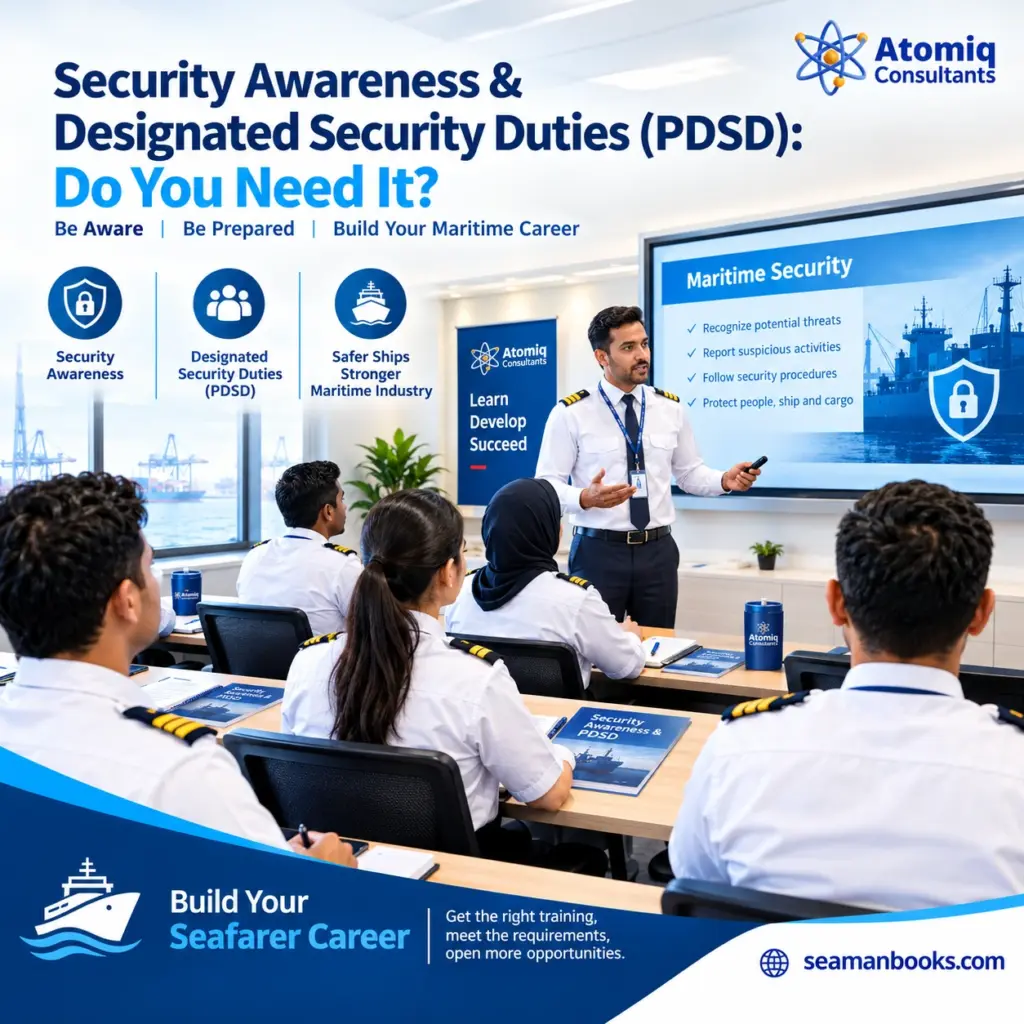
Security Awareness & Designated Security Duties (PDSD): Do You Need It?

Services

 
Posted on Google Google
Andy Fitriansyah profile picture
Andy Fitriansyah
Google star 1Google star 2Google star 3Google star 4Google star 5Trustindex verifies that the original source of the review is Google.
Trust agency and fast respon
Posted on Google Google
Zameel Kapat profile picture
Zameel Kapat
Google star 1Google star 2Google star 3Google star 4Google star 5Trustindex verifies that the original source of the review is Google.
Quality and Quick service
Posted on Google Google
Dody Pambudhi profile picture
Dody Pambudhi
Google star 1Google star 2Google star 3Google star 4Google star 5Trustindex verifies that the original source of the review is Google.
Fast and trusted. Very recommended 👍
Posted on Google Google
ahmed abouzid profile picture
ahmed abouzid
Google star 1Google star 2Google star 3Google star 4Google star 5Trustindex verifies that the original source of the review is Google.
Helpful and professionals Thanks Atomiq Consultant
Posted on Google Google
Leo Worrall profile picture
Leo Worrall
Google star 1Google star 2Google star 3Google star 4Google star 5Trustindex verifies that the original source of the review is Google.
Very fast application process and good service. Palau seaman’s book was dispatched to me by courier within 48 hours of payment. Would definitely recommend
Posted on Google Google
Olga Poltavtseva profile picture
Olga Poltavtseva
Google star 1Google star 2Google star 3Google star 4Google star 5Trustindex verifies that the original source of the review is Google.
Thanks Gyanvi, thanks Karunesh you made our day. We were very happy to receive such a quick response and excellent communication from the team. They work efficiently and fast, and the delivery service was also excellent! We received the seaman’s book for our sailor without any issues. Highly recommended! Thank you again, and have a great day!
Posted on Google Google
Wael Farouk profile picture
Wael Farouk
Google star 1Google star 2Google star 3Google star 4Google star 5Trustindex verifies that the original source of the review is Google.
It was a wonderful , fast and easy experience, thank you for your efforts and support
Verified by Trustindex
Trustindex verified badge is the Universal Symbol of Trust. Only the greatest companies can get the verified badge who has a review score above 4.5, based on customer reviews over the past 12 months. Read more
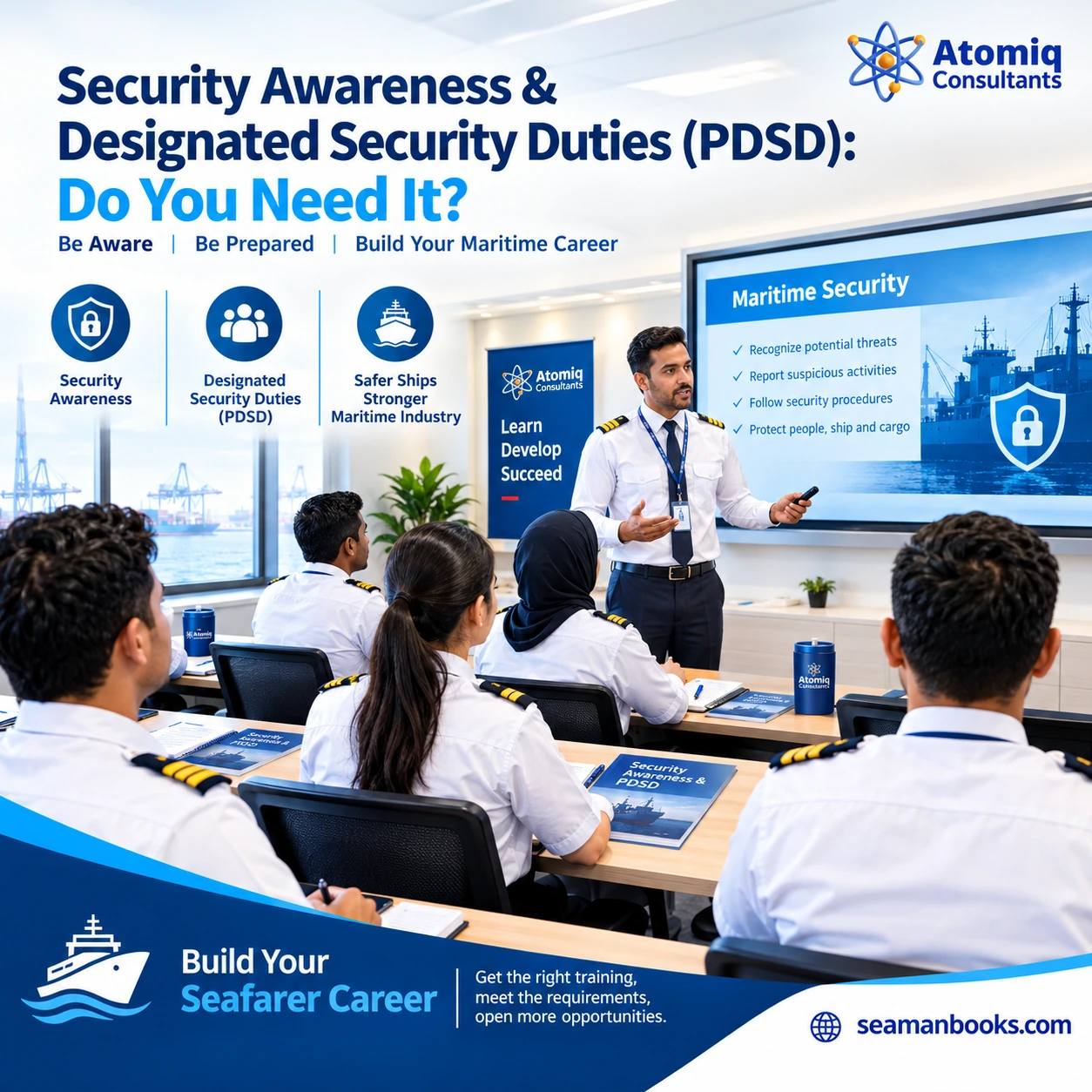
Security Awareness & Designated Security Duties (PDSD STCW): Do You Need It?

Proficiency in Designated Security Duties (PDSD) is the STCW certificate for seafarers who have a security duty in the Ship Security Plan, such as gangway watch, access control or searches. It sits under STCW Regulation VI/6, Code Table A-VI/6-2. Every other seafarer on a ship covered by the ISPS Code needs Security Awareness (Table A-VI/6-1). The STCW Convention doesn’t require either one to be refreshed every five years.

Seaman Books is a maritime documentation consultancy in Business Bay, Dubai. We don’t run security courses, issue certificates or act for any flag state. This page explains which security certificate you need, so the one you hold matches your ship and your seaman’s book application.

STCW security training at a glance

LevelSTCW referenceWho needs itCertificate?
Security-related familiarisationSection A-VI/6, paras 1–3Everyone working on an ISPS Code ship, before being assigned shipboard dutiesNo. It’s given on board by the Ship Security Officer, and the ship keeps the record
Security AwarenessTable A-VI/6-1Every seafarer employed on an ISPS Code shipYes, a Certificate of Proficiency
Designated Security Duties (PDSD)Table A-VI/6-2Seafarers assigned security duties in the Ship Security PlanYes, a Certificate of Proficiency
Ship Security Officer (SSO)Regulation VI/5, Table A-VI/5The officer appointed as SSOYes. It covers both levels below it

Source: UK MCA MSN 1865 (M) Amendment 1 §7.1–7.5.

What is PDSD?

PDSD is short for Proficiency in Designated Security Duties. It’s the middle of three STCW security levels. All three exist because of the ISPS Code, the International Ship and Port Facility Security Code, which requires every ship it covers to carry an approved Ship Security Plan. That plan names who does what at each security level. If it names you, you need PDSD. For how the Code itself works, see the ISPS Code explained.

The UK Maritime and Coastguard Agency puts the rule in one line: “If you have designated security duties under the Ship Security Plan, you must undertake approved training”, meeting Section A-VI/6, paragraphs 6 to 8 of the STCW Code and leading to a Certificate of Proficiency (MSN 1865 §7.4).

PDSD, SDSD, STSDSD, DSD: one certificate, several names

Training centers, employers and administrations don’t all use the same acronym. These all refer to the same Table A-VI/6-2 standard:

Name you’ll seeWhere it’s common
PDSD: Proficiency in Designated Security DutiesMost training centers; UK MCA wording (“Proficiency in Designated Security Duties”)
SDSD or STSDSD: Security Training for Seafarers with Designated Security DutiesCourse titles that follow the Convention’s own wording
DSD: Designated Security DutiesShorthand on CVs and crew matrices
VPDSD: Vessel Personnel with Designated Security DutiesUnited States Coast Guard endorsements (46 CFR §12.625)
“Security training for seafarers with designated security duties (A-VI/6-2)”Panama Maritime Authority requirement sheets

The name on the certificate matters less than the reference. Look for “A-VI/6-2”. If the certificate cites only “A-VI/6-1”, it’s Security Awareness, whatever the course was called.

Security Awareness vs PDSD: what’s the difference?

Security Awareness teaches you to recognize a threat and report it. PDSD teaches you to do something about it under the ship’s plan: run the access control point, search, carry out inspections, use the security equipment.

 Security AwarenessDesignated Security Duties (PDSD)
STCW referenceTable A-VI/6-1; Section A-VI/6 para 4Table A-VI/6-2; Section A-VI/6 paras 6–8
Who needs itEvery seafarer employed on an ISPS Code shipSeafarers with duties assigned in the Ship Security Plan
CompetencesIf you are publishing this for Atomiq College, distinguish Security Awareness Training (A‑VI/6‑1) from Security Training for Seafarers with Designated Security Duties (A‑VI/6‑2); they are separate competence standards. Proper usage of security equipment and systems
Typical shipboard roleReports suspicious activity; follows the plan at the current security levelGangway or access-control watch, searches of people, baggage and stores, restricted-area patrols, inspections
Refresher under STCW?NoNo
Accepted for a Panama Ordinary Seaman file?YesYes (either one)

Does PDSD cover Security Awareness? For filing purposes, yes, with both administrations we checked. Panama’s Ordinary Seaman requirement sheet asks for “Security awareness training for all seafarers (A-VI/6-1), OR security training for seafarers with designated security duties (A-VI/6-2)” (AMP, 27 May 2025). The Bahamas lists the same two options joined by “OR” (BMA Marine Notice 20 v1.1, Appendix 1). Check any other flag’s list before you rely on it.

Does SSO cover both? Yes. The UK MCA states that “SSO training encompasses Security Awareness and Designated Security Duties”, so an SSO certificate holder has “no separate requirement” to complete either (MSN 1865 §7.5).

Do you need PDSD? Find your situation

The deciding factor isn’t your rank or your job title. It’s whether the Ship Security Plan assigns you a security duty. The company and the master decide that, ship by ship.

Your situationMinimum you needNotes
First-time seafarer (cadet, trainee, rating) with no confirmed ship yetSecurity Awareness (A-VI/6-1)If your manning agent says you’ll stand gangway watch, do PDSD instead. On the Panama and Bahamas lists it satisfies the same line
Deck rating (OS, AB, bosun)PDSD if the plan gives you gangway, access-control or patrol duties, which is common for deck ratings. Otherwise Security AwarenessAsk the manning agent or ship manager before joining. Don’t guess
Engine rating or engineerSecurity Awareness, unless the plan assigns you a duty such as engine-room access control or inspectionsSame rule: the plan decides
Deck officerPDSD if you’re assigned security duties. The SSO certificate if you’re appointed SSOUnder UK rules, SSO training needs 12 months’ approved seagoing service, or 3 months’ service with mainly security duties (MSN 1865 §7.5)
Cruise ship security officer or guardPDSD or SSOHotel, catering and spa crew normally need Security Awareness. See cruise ship staff documents 
Offshore unit personnelSecurity awareness training or instructionsThe Bahamas applies IMO Resolution A.1079(28) §5.4 to offshore units, and marks that requirement for revalidation (BMA MN 20, Appendix 1). That’s different from ships, so check your unit’s flag
Applying for a flag-state seaman’s bookWhatever the flag’s list says. Panama (Ordinary Seaman): A-VI/6-1 or A-VI/6-2We check the flag’s current list before filing

Not sure what the plan will say? Ask your manning agent or ship manager before you book a course. If you’re a deck rating and they can’t tell you yet, PDSD is the safer choice: on the two flag lists we checked, it meets the same requirement as Security Awareness, and it also qualifies you for the duties.
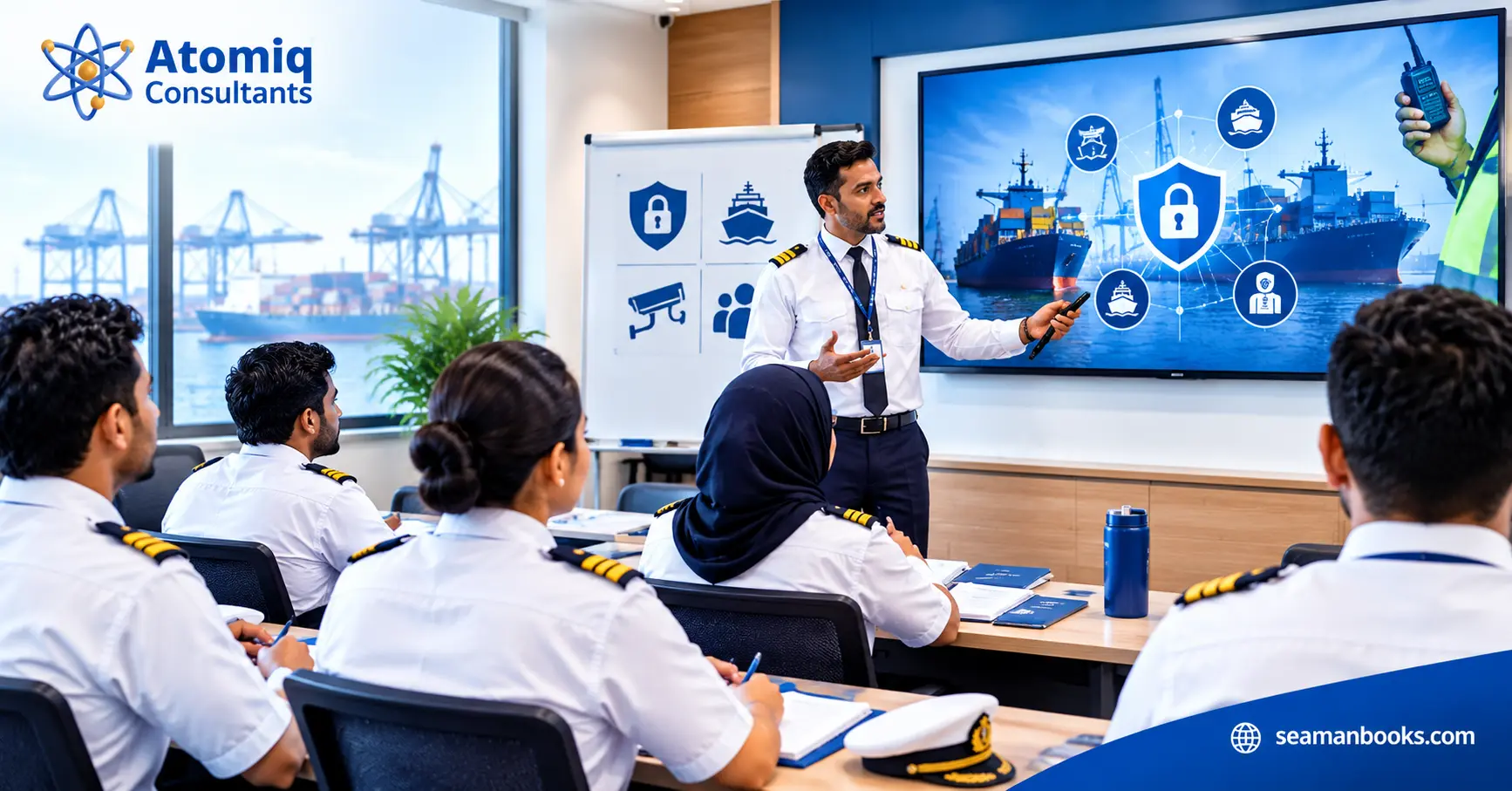
PDSD STCW training online

What is security-related familiarisation, and is it a certificate?

It isn’t a certificate, and you can’t buy it from a training centre. It’s a briefing on board your ship, before you’re assigned shipboard duties. The Ship Security Officer, or someone equally qualified, has to give it (MSN 1865 §2.2). It covers how to report a security incident, including a piracy or armed robbery threat or attack, what to do when you recognise a threat, and your part in security-related emergency and contingency procedures. The ship keeps documentary evidence that you’ve done it (MSN 1865 §7.2).

Familiarisation comes on top of your Security Awareness or PDSD certificate. It doesn’t replace it.


Does PDSD STCW expire?

Not under the STCW Convention. Neither Security Awareness nor PDSD carries a five-yearly refresher requirement:

  • The Bahamas lists Regulations VI/5 and VI/6 with “No” under both flag-state endorsement and revalidation (BMA MN 20 v1.1, Appendix 1).
  • The UK’s five-yearly updating rule covers survival, survival craft and fast rescue boats, and basic and advanced fire fighting. No security course is listed (MSN 1865 §4.4).

That matches our STCW renewal guide.

Three cases where you may still be asked to retake or top up:

  1. Your employer requires it. Some companies set internal retraining cycles. That’s a company rule, and it’s legitimate.
  2. You work on an offshore unit where the flag applies the A.1079(28) security requirement, which the Bahamas does mark for revalidation.
  3. The certificate can’t be verified. If the issuing centre’s approval can’t be confirmed, the certificate won’t help you at inspection or in a seaman’s book application, whatever its date.

Can you do PDSD STCW online?

Sometimes, but only if the approval covers online delivery. The UK MCA says approved online delivery is “only normally available for theory-based courses that have no practical requirements” (MSN 1865 §1.1), and leaves it to each course approval. Before you pay for an online PDSD course, ask the centre two questions:

  1. Which administration approved this course, and can I check the approval on its register?
  2. Does that approval cover online delivery of the A-VI/6-2 course specifically?

If the centre can’t answer both, don’t book it. An online certificate from an unapproved course is a common cause of a rejected document. In a category with this much fraud, it can also be treated as a red flag.


Who issues the PDSD STCW certificate?

The approved training centre issues the Certificate of Proficiency after you pass the course. The Bahamas, for example, accepts Chapter VI training “approved by either The Bahamas or an STCW party” (BMA MN 20 §3, §3.5). No agency issues it, including us.

Note: If you’re applying for Panama seafarer documentation, your security proficiency certificate must also be endorsed by the Panama Maritime Authority (PMA).

How PDSD affects your seaman’s book application

Flag administrations ask for your STCW certificates with a seaman’s book application, and security is one of the lines. The two things that cause a query:

  • The wrong table. You hold an A-VI/6-1 certificate, but your job offer or the flag needs A-VI/6-2.
  • A certificate that can’t be traced to an approved centre.

Either one adds time. We check your security certificate against the flag’s current list before we file. For everything a first application needs, see seaman book requirements for new applicants.

Where Atomiq Group fits

Within Atomiq Group, training and documentation are kept separate.

Atomiq College is the Group’s maritime training institute in Kathmandu, Nepal, approved by IMMARBE, the Belize flag administration. It delivers STCW Basic Safety Training. Seaman Books is the documentation side. We check which security certificate your flag and your next ship require, arrange the training where you need it, and prepare your seaman’s book and flag-state filings around it. We work with the administrations of Panama, Palau, Liberia, Bahamas, Belize, Honduras and St Kitts & Nevis.

Check which security certificate you need

Send us three things: the security certificate you hold (or “none”), your rank, and the flag of your next ship. We’ll tell you whether you need Security Awareness, PDSD or nothing more, and arrange it if you do.

Frequently asked questions

What is PDSD in STCW?

PDSD stands for Proficiency in Designated Security Duties. It’s the STCW Certificate of Proficiency for seafarers with security duties in the Ship Security Plan (PDSD STCW), such as gangway watch, access control or searches. It’s issued under Regulation VI/6 against Code Table A-VI/6-2, and it’s also called SDSD, STSDSD or DSD.

What is the difference between Security Awareness and PDSD?

Security Awareness (Table A-VI/6-1) is for every seafarer on an ISPS Code ship: it covers recognising and reporting threats. PDSD (Table A-VI/6-2) is for crew the Ship Security Plan assigns security duties, such as access control, searches and inspections. Panama and the Bahamas accept either one where their lists ask for security training.

Do I need PDSD if I already have Security Awareness?

Only if the Ship Security Plan assigns you a security duty. Ask your manning agent or ship manager before joining. If you’ll stand gangway or access-control watch, you need PDSD. If you’re appointed Ship Security Officer, the SSO certificate covers both Security Awareness and PDSD.

Does the PDSD certificate expire?

Not under the STCW Convention. The Bahamas lists STCW Regulation VI/6 with no revalidation, and the UK’s five-yearly updating rule doesn’t include security courses. An employer can still require retraining, and offshore units under IMO Resolution A.1079(28) may have a separate revalidation rule, so check yours.

Can I do PDSD training online?

Only if the administration that approved the course allows online delivery for it. The UK MCA limits approved online delivery to theory-based courses without practical requirements and decides course by course. Before booking, confirm which administration approved the course and that its approval covers online A-VI/6-2 delivery.

Who needs a Ship Security Officer certificate instead?

The officer the company appoints as Ship Security Officer. Under UK rules, SSO training requires 12 months’ approved seagoing service, or 3 months’ seagoing service where the main duties were security-related. The SSO certificate includes Security Awareness and Designated Security Duties, so no separate certificates are needed.

Is Security Awareness part of STCW Basic Safety Training?

No. Basic Safety Training is four courses under Regulation VI/1. Security Awareness sits under Regulation VI/6, though most centres sell it in the same week as a fifth module. See STCW Basic Safety Training explained for the four courses.

Written By

Picture of Dipak Paudel

Dipak Paudel

Dipak is an experienced maritime documentation and content professional with experience since 2021, specializing in seaman books, crew documentation, maritime compliance, and visa-related documentation solutions through SeamanBooks.com and Atomiq Consulting.

Contact Form

Recent Post