What happens if you are abandoned
Abandonment is the failure mode this Convention was strengthened specifically to address, and the 2014 amendments to the Code — in force since 18 January 2017 — put a funded floor under it.
Under Standard A2.5.2, you are deemed abandoned where the shipowner:
- fails to cover the cost of your repatriation; or
- has left you without the necessary maintenance and support; or
- has otherwise unilaterally severed ties with you, including failure to pay contractual wages for a period of at least two months
Every ship in scope must carry a financial security certificate — an insurance policy or equivalent — and it must be posted somewhere you can see it on board. When it is triggered, the assistance must be sufficient to cover:
- outstanding wages and other entitlements, limited to four months of each
- all expenses reasonably incurred by you, including the cost of repatriation
The same 2014 amendments added Standard A4.2.1, requiring financial security for contractual claims arising from a seafarer’s death or long-term disability. Contractual compensation must be paid in full and without delay, and where the extent of a long-term disability is hard to assess, interim payments must be made so as to avoid undue hardship.
The ILO maintains a public database of reported seafarer abandonment cases. If your ship is on it, that is a matter of public record.
How MLC 2006 is actually enforced
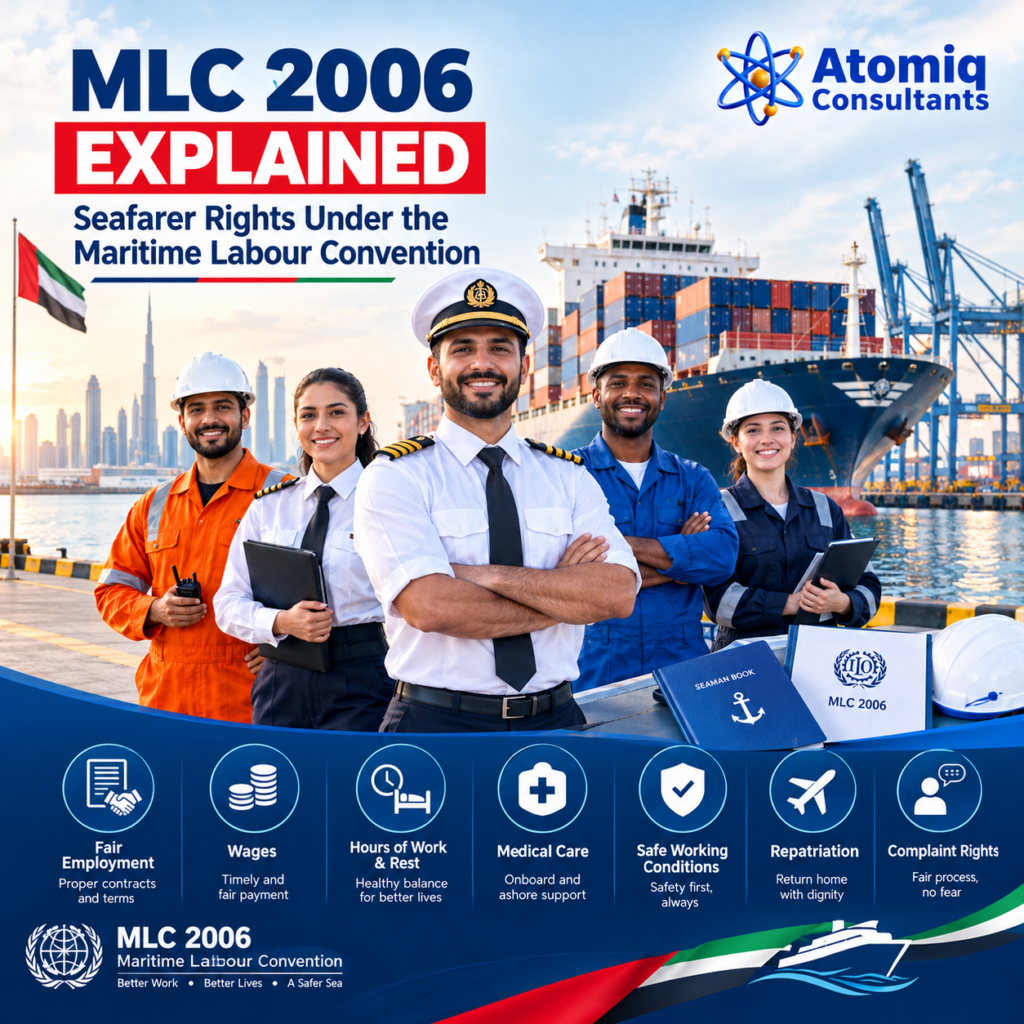
This is where most explainers stop short, and where the practical answer lives. MLC 2006 has no police force of its own. It is enforced through three layers.
1. Your flag State. The State whose flag your ship flies is legally responsible for inspecting it and certifying compliance. Ships of 500 GT or more on international voyages must carry two documents: a Maritime Labour Certificate, valid for a maximum of five years, and a Declaration of Maritime Labour Compliance (DMLC). The DMLC comes in two parts — Part I, in which the flag State lists the national requirements, and Part II, in which the shipowner states the measures adopted to meet them. Both should be posted on board where you can read them.
2. Port State control. When your ship calls at a foreign port in a ratifying State, a port State control officer may inspect it. Where deficiencies are serious or repeated, that inspection can result in detention of the ship — which is the sanction that actually changes shipowner behaviour, because it costs money by the hour.
3. You. Which brings us to the complaint procedures.
How to make a complaint
You have two routes, and they are designed to be used in this order.
On board — Regulation 5.1.5. Every ship must have an on-board complaint procedure, and you must be given a copy of it. The procedure is designed to resolve complaints at the lowest possible level, but it explicitly preserves your right to complain directly to the master, to shore-based personnel, or to an external authority. The Convention requires safeguards against victimisation for making a complaint.
Ashore — Regulation 5.2.2. You can also complain to a port State control officer in any port you call at in a ratifying State, whether or not you have exhausted the on-board procedure first. The onshore complaint-handling procedure exists precisely for the case where the on-board route is the problem.
The 2025 amendments strengthen both. They add a right to be accompanied or represented, define victimisation as “any adverse action taken… for lodging a complaint which is not manifestly vexatious or maliciously made”, and require Members to take appropriate steps to safeguard the confidentiality of complaints. Those provisions are expected to enter into force on 23 December 2027.
What has changed: the amendments, 2014 to 2025
MLC 2006 is a living instrument. Its Code is reviewed by a Special Tripartite Committee and amended through an accelerated procedure, which means the Convention you trained on is probably not the Convention in force today.
| Amendments | In force | What changed |
|---|
| 2014 | 18 January 2017 | Financial security for abandonment (Standard A2.5.2) — four months of outstanding wages and entitlements plus repatriation costs. Financial security for contractual claims on death or long-term disability (Standard A4.2.1) |
| 2016 | 8 January 2019 | The 2016 amendments to the Maritime Labour Convention, 2006 entered into force on 8 January 2019. They introduced, among other changes, a provision allowing a Maritime Labour Certificate to be extended by up to five months in specified circumstances where the relevant inspection had been completed but a new certificate could not be issued and made available onboard. The amendments also strengthened measures addressing shipboard harassment and bullying, including reference to the relevant ICS/ITF guidance. |
| 2018 | 26 December 2020 | The 2018 amendments to the Maritime Labour Convention, 2006 entered into force on 26 December 2020. They strengthened protection for seafarers held captive as a result of piracy or armed robbery against ships by requiring their employment agreements to remain in effect during captivity and ensuring that wages and other entitlements continue to be paid until the seafarer is released and duly repatriated, or, where applicable, until death is determined under national law. |
| 2022 | 23 December 2024 | Recreational facilities must include social connectivity, and shipowners should provide internet access at reasonable charge (Standard A3.1, Guideline B3.1.11). Food and drinking water must be suitable in quantity, nutritional value, quality and variety and provided free of charge (Standard A3.2). All necessary appropriately-sized personal protective equipment (Standard A4.3) — which matters most to the women in the workforce, who were routinely issued men’s sizing. All seafarer deaths must be investigated, recorded and reported annually (Standard A4.3). Prompt disembarkation for seafarers needing immediate medical care, and repatriation of remains in accordance with the seafarer’s or next of kin’s wishes (Standard A4.1). Recruitment services must operate a system of protection compensating seafarers for monetary loss from service failures (Standard A1.4). States must facilitate prompt repatriation, including of abandoned seafarers (Standard A2.5.1(9)) |
| 2025 | Expected 23 December 2027 | A new right to shore leave (new Standard A2.4.2): you must be allowed ashore when the ship is in port, without discrimination by flag State, and “no seafarer shall be required to hold a visa or special permit” for shore leave; authorities refusing it must give written reasons. Violence and harassment (Standard A4.3(1)(e) and 2(e)–(h)): Members must require prevention and elimination, including prohibition in law, of shipboard violence and harassment, including sexual harassment, bullying and sexual assault, referenced to ILO Convention No. 190, with safe, fair and effective reporting mechanisms. Repatriation costs specified to include passage, accommodation, food in transit, up to 30 kg of luggage and medical treatment until fit to travel. Seafarers should be designated key workers. Menstrual hygiene products to be available on board (Guideline B3.1.10). Strengthened complaint confidentiality and anti-victimisation provisions (Standard A5.1.5) |
The 2025 amendments were adopted by the fifth meeting of the Special Tripartite Committee on 11 April 2025, approved by the International Labour Conference on 6 June 2025 and notified to member States on 23 June 2025. The window for States to express disagreement closes on 23 June 2027.
Sources: Amendments of 2022 to the Code; Amendments of 2025 to the Code (ILC.113 Instruments); Fifth meeting of the Special Tripartite Committee.
What MLC 2006 means for your documents
This is the part most seafarers miss, and it is the part that costs them money.
Standard A2.1(1)(e) requires that you be given a document containing a record of your employment on board the ship. Standard A2.1(3) is equally specific about what that record must not contain: no statement as to the quality of your work or as to your wages. It is a factual record of service, not an appraisal and not a payslip.
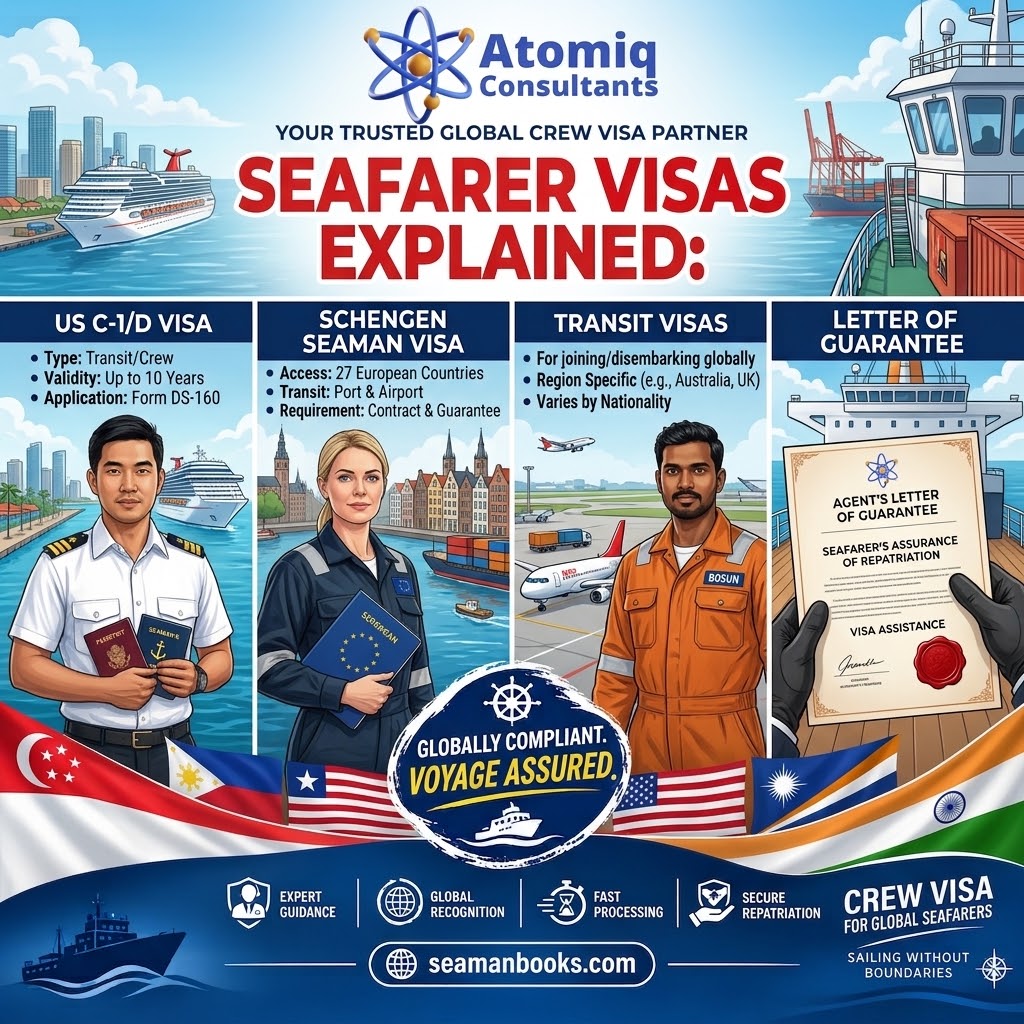
In most flag States, the instrument that discharges this requirement is your seafarer’s discharge book — the seaman’s book or CDC. It is the document a crewing manager reads to confirm your sea time, and the one that decides whether your next contract happens.
Two clarifications worth being precise about, because the confusion is widespread:
- MLC 2006 does not itself issue your seaman’s book. Your flag State does. The Convention creates the obligation that a record of employment exists; the flag administration decides the form it takes, who is eligible and how it is applied for.
- The seafarer’s identity document is a separate instrument. Seafarers’ identity documents sit under ILO Conventions No. 108 and No. 185, not under MLC 2006. A discharge book and an identity document are different things and are not interchangeable at a port.
So the practical chain looks like this: MLC 2006 gives you the right to a record of service → your flag State issues the document that carries it → your employability depends on that document being valid, correctly issued and verifiable. A right you cannot evidence is a right you cannot use.
Three things people get wrong about MLC 2006
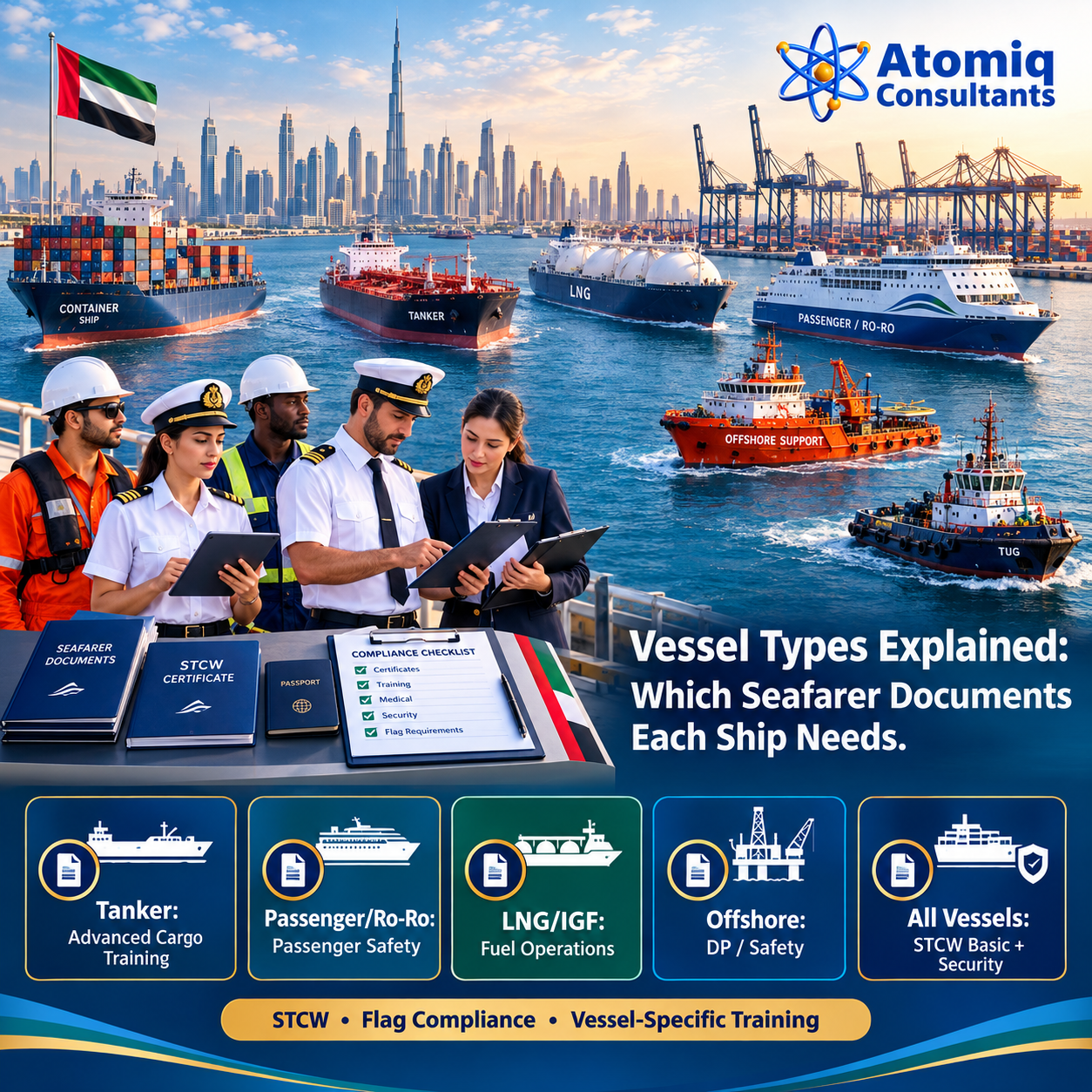
“MLC and STCW are the same thing.” They are not, and they come from different organisations. STCW is an IMO convention about your competence — training, certification and watchkeeping. MLC 2006 is an ILO convention about your conditions — pay, hours, accommodation, medical care. You need both. Neither substitutes for the other.
“The MLC certificate is my certificate.” It is not. The Maritime Labour Certificate and the DMLC belong to the ship. They certify that the vessel’s working and living conditions have been inspected against the Convention. Nothing on them is personal to you.
“My contract overrides the MLC.” It does not. A Seafarers’ Employment Agreement can give you more than the Convention requires. It cannot lawfully give you less, and a clause purporting to do so does not bind you.
Frequently asked questions
What is MLC 2006 in simple terms?
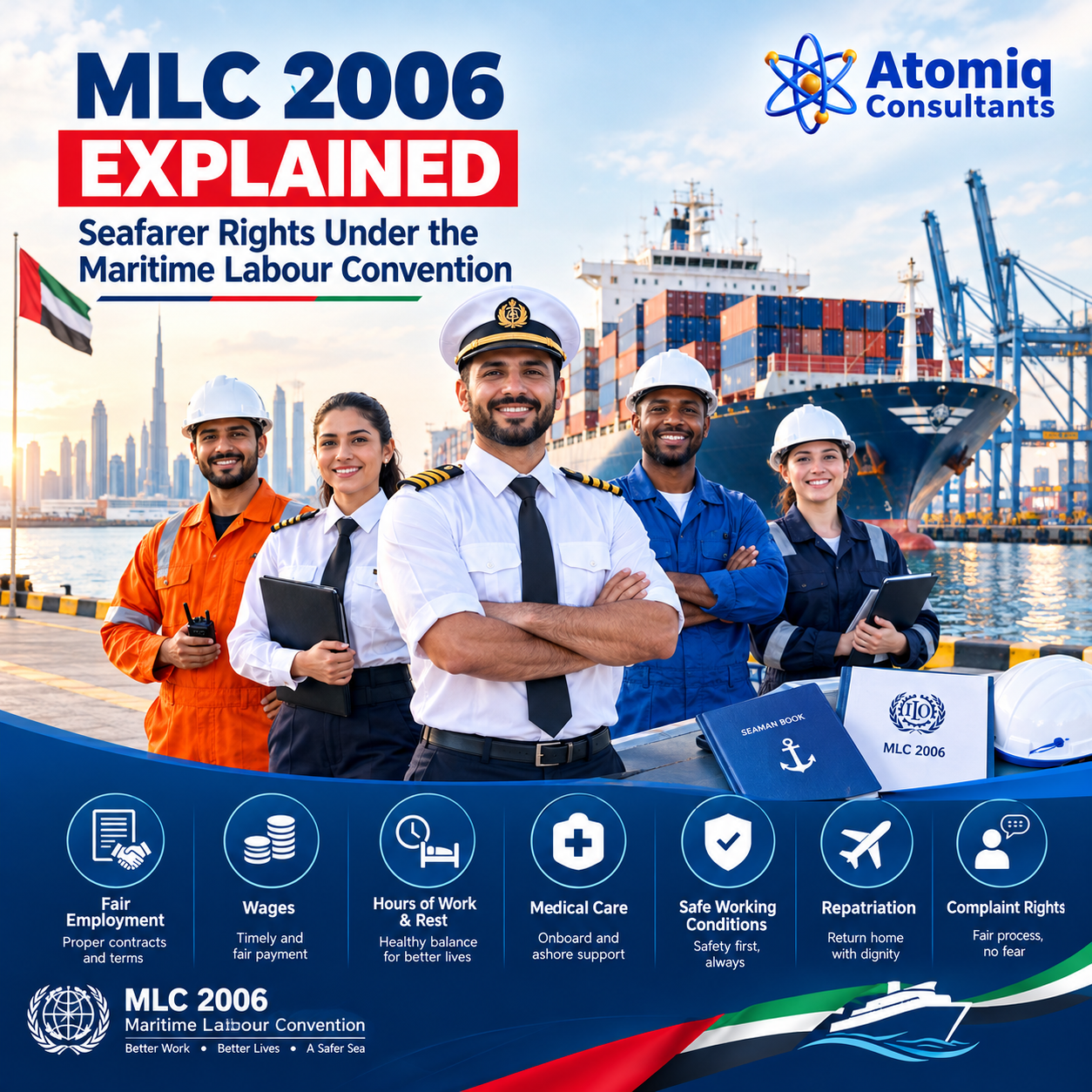
MLC 2006 is an International Labour Organization treaty that sets the minimum working and living conditions for seafarers on ships. It covers minimum age, employment agreements, wages, hours of rest, leave, repatriation, accommodation, food, medical care and complaints, and it is enforced by flag States and port State control.
What rights does MLC 2006 give seafarers?
A written Seafarers’ Employment Agreement, wages at no greater than monthly intervals, regulated hours of work and rest, at least 2.5 days of paid leave per month worked, repatriation at the shipowner’s expense, decent accommodation, free food and drinking water, medical care, and a protected right to complain on board and ashore.
Is MLC 2006 mandatory?
Yes, in the 113 States that have ratified it, covering 96.6% of world gross shipping tonnage. Ships flagged to non-ratifying States still face port State control inspection under the “no more favourable treatment” principle when calling at ports in ratifying States, so the Convention’s reach is effectively global.
What is the difference between MLC 2006 and STCW?
STCW is an IMO convention governing your training, certification and watchkeeping competence. MLC 2006 is an ILO convention governing your employment conditions — wages, hours, accommodation, medical care and welfare. They are separate instruments from separate organisations, and a seafarer must comply with both.
How many hours can a seafarer work under MLC 2006?
Standard A2.3(5) sets either a maximum of 14 hours of work in any 24-hour period and 72 hours in any seven-day period, or a minimum of 10 hours of rest in any 24-hour period and 77 hours in any seven-day period. Your flag State selects one limit and applies it.
Does MLC 2006 apply to ships under 500 gross tonnage?
Yes. The Convention applies to all commercial ships other than fishing vessels, traditional-build craft, warships and ships in exclusively inland or sheltered waters. What changes below 500 GT is only certification: those ships are not required to carry a Maritime Labour Certificate and DMLC.
What happens if a shipowner breaks MLC 2006?
You can use the on-board complaint procedure under Regulation 5.1.5, or complain to a port State control officer ashore under Regulation 5.2.2. Serious or repeated breaches found at a port State control inspection can result in detention of the ship until the deficiencies are rectified.
Is a seaman’s book required under MLC 2006?
MLC 2006 does not name the seaman’s book, but Standard A2.1(1)(e) requires that seafarers be given a document containing a record of their employment on board. In most flag States the seafarer’s discharge book, or CDC, is the document that satisfies this. Your flag administration decides its form and eligibility.
Where this leaves you
MLC 2006 gives you a floor. It does not give you the paperwork that proves you stood on it.
The Convention’s own logic points at one practical conclusion: your rights at sea run through your flag State, and so does every document that evidences your service. Which flag issues your book, whether it is currently valid, and whether a crewing manager can verify it are the questions that turn a legal entitlement into a signed contract.
If you are working out which flag state route fits your situation, the next step is our seaman book eligibility check — it takes a few minutes and costs nothing. If you would rather just ask a person, message us on WhatsApp at +971 55 458 3416. Office hours are 09:30 to 18:00, Dubai time.
Seaman Books is a documentation support and processing partner. We prepare, verify and coordinate seafarer documentation with flag-state administrations. We are not a flag state, a government body or a registry, and we do not issue documents ourselves.