What is a Ship Security Officer?
The Ship Security Officer is the person on board, accountable to the master, whom the company designates as responsible for the ship’s security. That includes implementing and maintaining the Ship Security Plan and liaising with the Company Security Officer and port facility security officers (ISPS Code, Part A, 2.1.6).
The ISPS Code has applied since 1 July 2004 under SOLAS Chapter XI-2. It requires a designated SSO on every ship it covers. STCW Regulation VI/5, added by the 2010 Manila Amendments, makes that person hold a certificate of proficiency. The 2010 amendments also brought piracy and armed robbery into the SSO competence standard. For the Code itself, see the ISPS Code explained.
What an SSO does, day to day
| Task | What it means on board | Reference |
|---|---|---|
| Security inspections | Regular walk-rounds of access points, restricted areas and openings | ISPS A/12.2 |
| Run the Ship Security Plan | Keep it current, apply the measures for the current security level (1, 2 or 3), propose amendments | ISPS A/12.2 |
| Cargo and stores | Coordinate the security side of cargo, stores and bunker handling with the terminal | ISPS A/12.2 |
| Report deficiencies and incidents | To the Company Security Officer | ISPS A/12.2 |
| Crew awareness and training | Brief new joiners and give the onboard security-related familiarisation | ISPS A/12.2; STCW A-VI/6 |
| Security equipment | Make sure it’s operated, tested and calibrated | ISPS A/12.2 |
| Drills and exercises | Drills at least every 3 months, plus a drill within a week when more than 25% of crew change at once and the new crew haven’t drilled on that ship in the last 3 months. Exercises at least once each calendar year, with no more than 18 months between them | ISPS B/13.6–13.7 |
| Declaration of Security | Completed with the port facility when either side requests one, for example when the ship is at a higher security level than the port | ISPS A/5 |
| Ship Security Alert System | Know how the covert SSAS works and how it’s tested, without setting off a false alert | SOLAS XI-2/6 |
| Security records | Keep training, drill, incident and level-change records for the period the flag requires. Port State Control inspectors check them | ISPS A/10 |
Who needs an SSO certificate?
One person per ship needs it: whoever the company designates as SSO. The ISPS Code leaves that choice to the company. In practice it’s the master or the chief officer, and some flags require an officer. Many companies expect chief officers to hold the certificate before promotion, so it’s often taken in advance of designation.
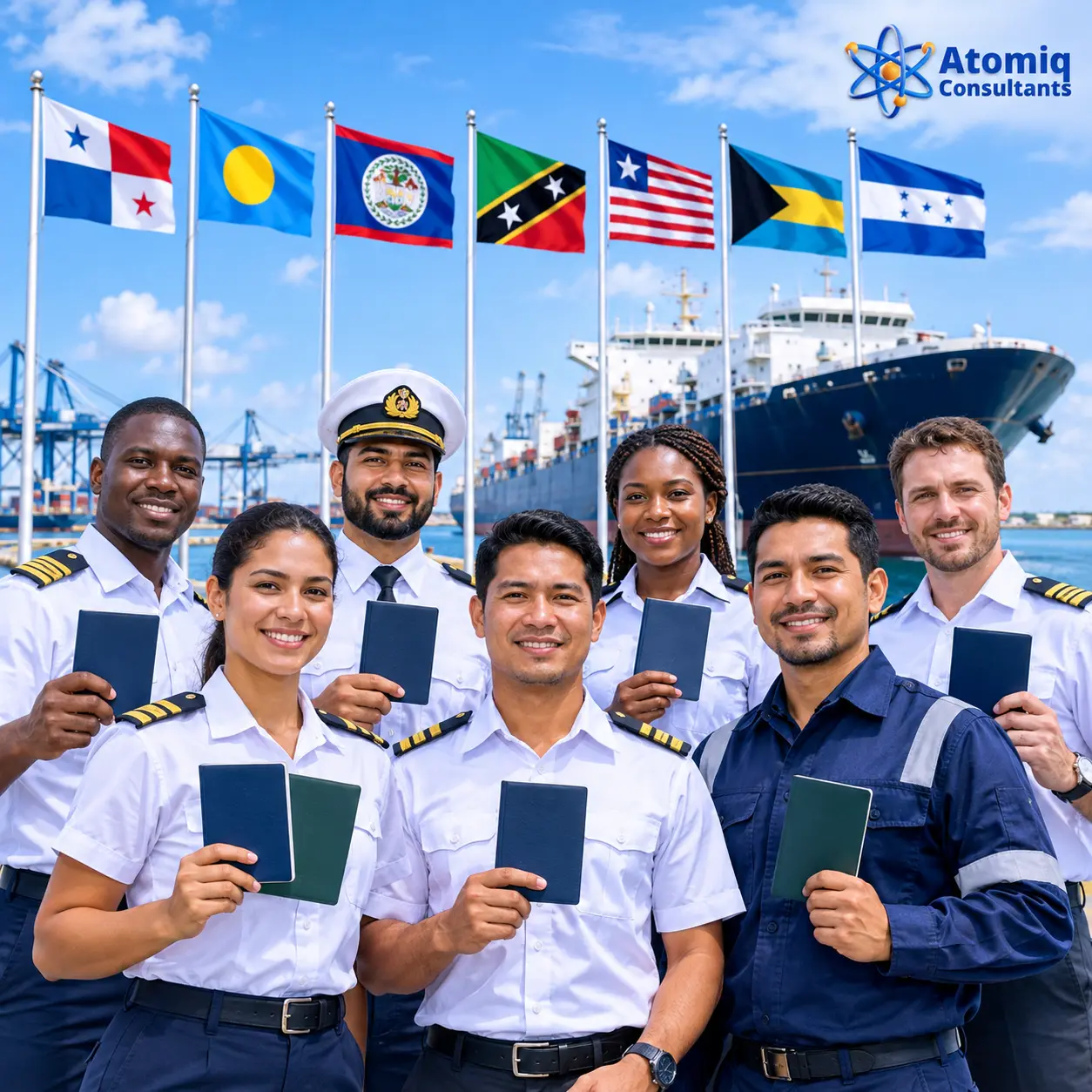
Note: Minimum SSO rank requirements vary by flag. Panama and Belize require a management-level officer. Palau recommends management-level appointment but does not make it mandatory in Circular 151.1. Liberia permits licensed officers or approved security professionals subject to its qualification requirements. St Kitts & Nevis requires STCW-compliant SSO certification but no specific minimum rank was identified.
| Your situation | Do you need SSO? | Otherwise |
|---|---|---|
| Master, or chief officer likely to be designated | Yes, if designated. Often expected before promotion | — |
| Second or third officer | Only if designated, which is less common | PDSD if the Ship Security Plan assigns you security duties |
| Deck rating with gangway or access-control watch | No | Designated Security Duties (PDSD) |
| Any other seafarer on an ISPS Code ship | No | Security Awareness (A-VI/6-1) |
| Officer applying for a Panama CoC endorsement | Not required, but it’s one of two accepted options | A-VI/6-2 or A-VI/5, endorsed by the AMP |
| Shore staff responsible for fleet security | No | That’s the Company Security Officer (see below) |
SSO vs Security Awareness vs PDSD
| Security Awareness | Designated Security Duties (PDSD) | Ship Security Officer (SSO) | |
|---|---|---|---|
| STCW reference | Table A-VI/6-1 | Table A-VI/6-2 | Regulation VI/5, Table A-VI/5 |
| Who | Every seafarer on an ISPS Code ship | Crew assigned duties in the Ship Security Plan | The designated SSO |
| Sea-service entry rule | None | None | 12 months, or appropriate seagoing service |
| Covers the levels below? | — | Accepted in place of Awareness on Panama and Bahamas rating lists | Yes (UK MSN 1865 §7.5) |
The UK Maritime and Coastguard Agency says “SSO training encompasses Security Awareness and Designated Security Duties”, so an SSO holder has “no separate requirement” for either (MSN 1865 (M) Amendment 1, §7.5). Check your own flag’s list before relying on this for an application.
Five titles that get confused
| Title | Where the role sits | Standard | Can Seaman Books help? |
|---|---|---|---|
| Ship Security Officer (SSO) | On board, designated by the company | STCW Reg VI/5; IMO Model Course 3.19 | Yes: flag acceptance check and endorsement filing |
| Company Security Officer (CSO) | Shore office, responsible for the fleet’s security assessments and plans (ISPS A/11) | IMO Model Course 3.20; not an STCW certificate of proficiency | No |
| Port Facility Security Officer (PFSO) | At the port facility (ISPS A/17) | IMO Model Course 3.21 | No |
| Vessel Security Officer (VSO) | US term, for US-flagged vessels | US Coast Guard endorsement | No. That’s a USCG process |
| Armed security guard | Private maritime security company | Not an STCW role. An SSO certificate doesn’t authorise carrying weapons | No |
Note: IMO Model Courses 3.20 (Company Security Officer) and 3.21 (Port Facility Security Officer) are officially listed. Both revised courses were validated by IMO’s HTW Sub-Committee in February 2025 and published in 2025. Course 3.19 (Ship Security Officer) is also confirmed.
SSO entry requirements
STCW Regulation VI/5 says every candidate for a certificate of proficiency as ship security officer shall:
- have approved seagoing service of not less than 12 months, or appropriate seagoing service and knowledge of ship operations; and
- meet the standard of competence in Section A-VI/5, paragraphs 1 to 4, of the STCW Code.
Administrations then issue a certificate of proficiency to everyone found qualified (IMO: STCW Convention).
Recommendation: Use the Liberia circular as the direct flag-administration reference and retain the STCW Convention text as the primary international legal reference.
Each administration turns “appropriate seagoing service” into its own rule. The UK accepts 12 months, or 3 months where the main duties were security-related (MSN 1865 §7.5). India’s DG Shipping-approved courses list a minimum of 12 months’ sea service, proven with your CDC. Check the administration that will issue your certificate before you book.
What the course covers
Section B-VI/5 adds that a qualified SSO should have enough English to correctly interpret and communicate messages relevant to ship or port facility security.
Note: STCW Code Table A-VI/5. All five listed SSO competencies match Column 1. The detailed requirements in Columns 2–4 should also be considered when describing the full standard of competence.
Cost and duration
The issuing administration and the training centre set these, not STCW. Published listings checked on 25 November 2026:
| Market | Format | Duration | Listed fee | Approval shown |
|---|---|---|---|---|
| United Kingdom | Fully online | 21 hours | GBP 475 + VAT | UK MCA (provider’s statement) |
| India | Classroom + e-learning | 3 days + 12 hours e-learning | INR 3,900 | DG Shipping course ID listed |
| Europe (general) | — | Typically 3 days | EUR 300–500 (an industry blog’s estimate, not a listing) | — |
These are examples, not quotes, and approval is what you’re paying for. A cheap certificate that your flag won’t accept costs more than an expensive one it will. Travel, accommodation and time off are extra for classroom courses.
Online or classroom?
Unlike basic safety training, the SSO course has no in-water or live-fire practical, so some administrations approve online delivery. The UK MCA, for example, has approved online SSO courses. Before you pay for any course, online or not, check four things:
- The approving administration is named, along with the course’s approval reference.
- You can verify the approval with that administration, not only on the provider’s site.
- The certificate will cite Regulation VI/5 or Table A-VI/5. If it cites only A-VI/6-1 or A-VI/6-2, it’s a lower-level course.
- The flag you’ll serve under accepts certificates from that administration (next section).
A provider that sells an “SSO certificate” with no sea-service check fails point 1 in substance, whatever its website says. See how to spot fake maritime document services.
Will your flag accept your SSO certificate?
This is the step most guides skip. An SSO certificate is issued by one administration. If you serve on a ship flagged elsewhere, that flag decides whether to recognise it.
Worked example: Panama. For an officer’s CoC endorsement under STCW Regulation I/10, Panama requires a security certificate, either Designated Security Duties (A-VI/6-2) or Ship Security Officer (A-VI/5), and the security certificate itself must be endorsed by the Panama Maritime Authority (AMP).
| AMP charge (non-nationals) | USD | AED (at 3.6725) |
|---|---|---|
| Officer CoC endorsement | 270 | about 992 |
| Master / Chief Engineer CoC endorsement | 275 | about 1,010 |
| Security course verification for an I/10 endorsement | 50 | about 184 |
Panama sets these fees, and no agent can discount them.
The restriction to check first: Panama’s MMC-344 (January 2025 revision) states that the AMP does not recognize CoCs, CoPs, course certificates or seaman’s books issued to non-nationals by a list of 12 administrations. If your SSO certificate was issued by one of them and you aren’t that country’s national, Panama may refuse it. That’s why we check acceptance before anyone books a course or files.
Full Panama documents, timeline and fees: Panama CoC endorsement. Comparing other open registries: Liberia vs Palau CoC endorsement.
Does the SSO certificate expire?
STCW Regulation VI/5 contains no revalidation requirement, unlike Advanced Fire Fighting or Survival Craft, which need refreshing at least every five years. Some sources say an SSO certificate is “valid for 5 years”. That comes from an administration’s or employer’s rule, or from confusing SSO with certificates that do need revalidation. It isn’t from the Convention. India’s DG Shipping-approved course listings, for example, show the course validity as unlimited.
What decides your case:
- The expiry date printed on your certificate, if your administration prints one;
- your flag’s rules for recognising it;
- your company’s Safety Management System, which may require retraining on a fixed cycle.
Note: STCW Regulation VI/5 does not establish a five-year revalidation requirement for SSO Certificates of Proficiency. Unlike specified basic and advanced safety-training certificates, SSO certification is not subject to Convention-level periodic revalidation. Flag Administrations and employers may impose additional requirements.
See STCW basic vs advanced training for the certificates that do need refreshing.
If the SSO is unavailable
The SSO signs off unexpectedly or falls ill. Does the ship sail without one? STCW Section B-VI/5 covers this. In exceptional necessity, the administration may let a seafarer with specific security duties and an understanding of the Ship Security Plan act as SSO until the next port of call, or for up to 30 days. The company should tell the next port(s) of call as soon as possible.
This is a temporary measure for the ship. It doesn’t give the stand-in a certificate, and it’s guidance, so the flag’s own rules apply.
How to get an SSO certificate: 5 steps
- Check your sea service against the issuing administration’s rule. Have your sea service testimonials or sea service letter ready.
- Confirm what your joining flag accepts, before you book anything.
- Complete an approved SSO course at a centre approved by the issuing administration. Run the four-point check above.
- Get the certificate of proficiency issued. It should cite Regulation VI/5 or Table A-VI/5.
- Get it recognised by your flag. For Panama, that means AMP endorsement of the security certificate as part of your I/10 file.
How Seaman Books helps
Seaman Books is a documentation support and processing partner, not a flag-state authority or a training provider of record. For officers with an SSO certificate, we:
- check whether your joining flag will accept your certificate, free and before you pay any fees;
- prepare and file the endorsement or recognition application, including the security course verification;
- follow the file to issue and tell you when the temporary certificate is ready.
Turnaround: for Panama, the Temporary Certificate is typically issued in 3 to 5 business days once the file is complete.
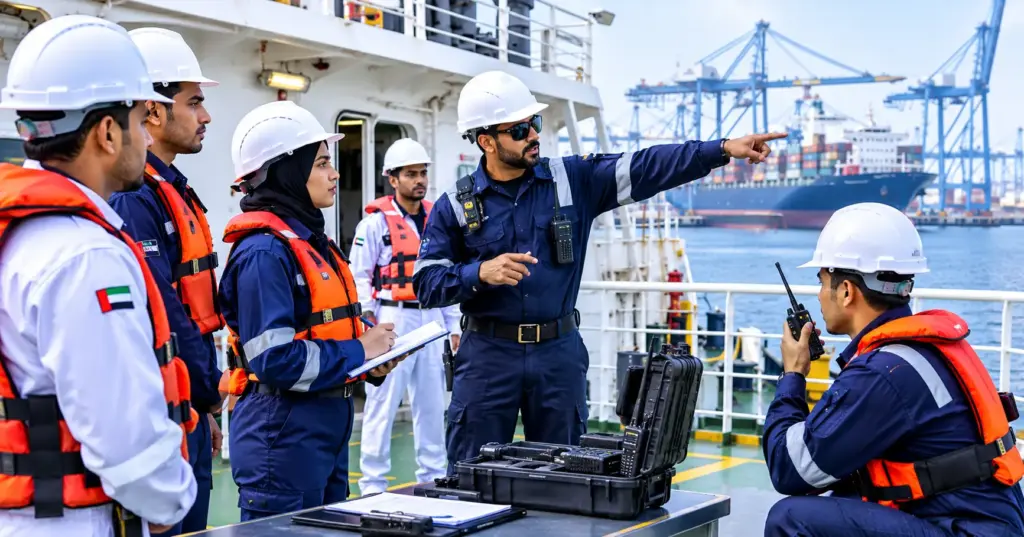
Note:Verify the completeness of the Regulation I/10 recognition file, including CoC authenticity checks, flag-state recognition endorsement, supporting documents and applicable flag Administration requirements.
Price: AMP charges as above, plus our service fee and we will quote per application, itemized on your quote.
Need the course itself? Atomiq College, the Atomiq Group’s maritime training institute, runs an approved Ship Security Officer course. Before you book, we confirm that your joining flag accepts certificates from Atomiq College’s approving administration.