Basic vs advanced: what actually changes
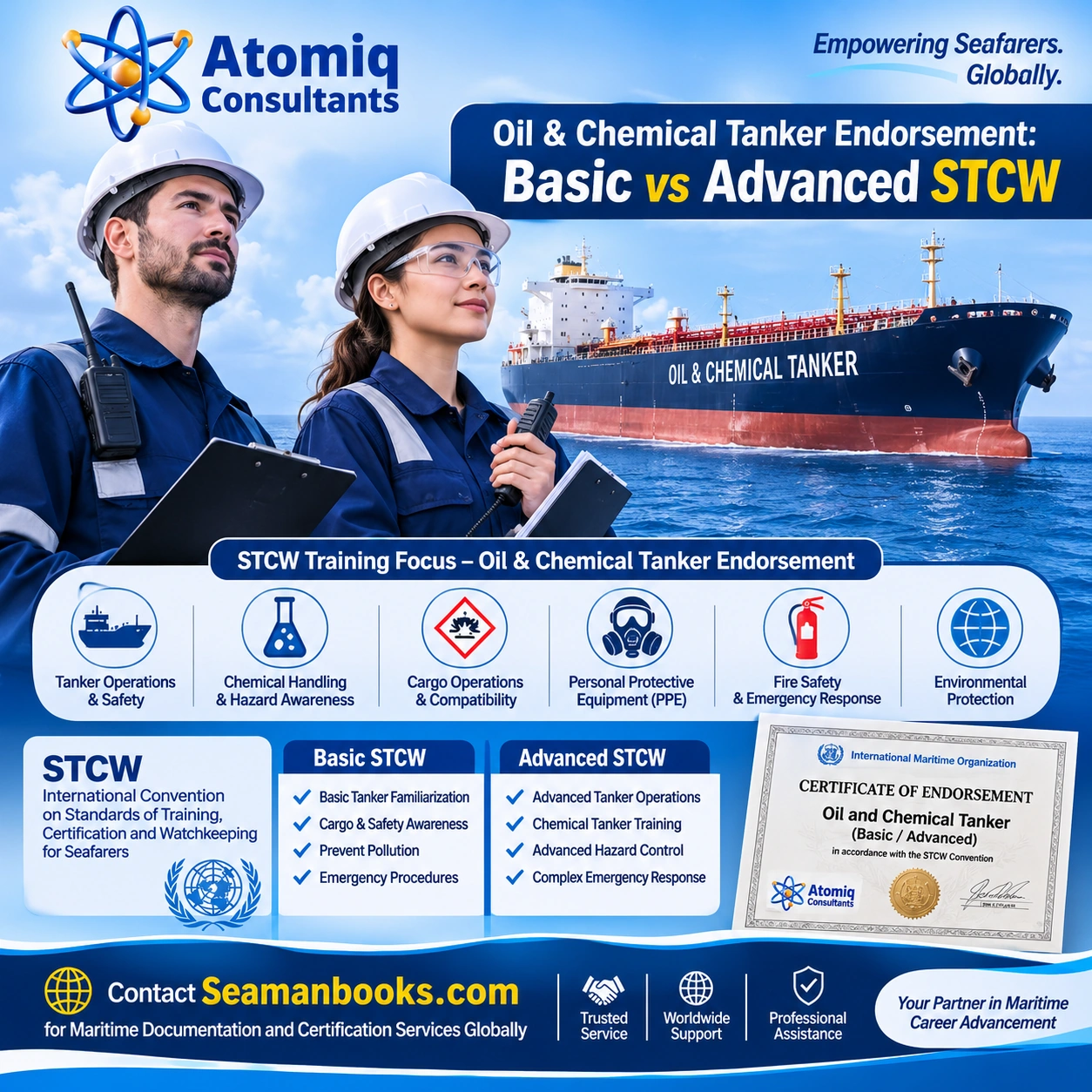
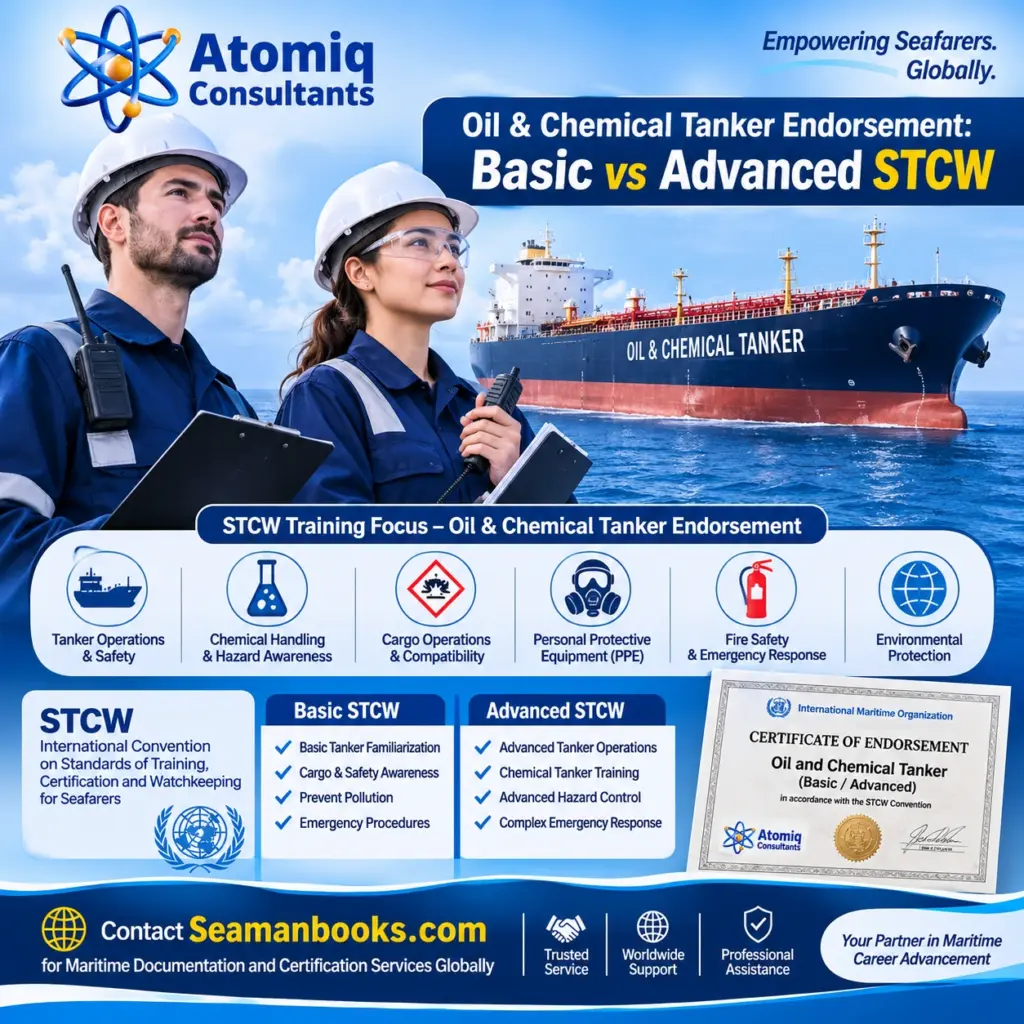
Basic training lets you work on a tanker. Advanced training lets you be in charge of its cargo.
- Basic is the entry certificate. Without it, most operators will not sign you onto an oil or chemical tanker at all, even as a rating, if you will touch cargo or cargo equipment. It can be earned in a classroom.
- Advanced cannot be earned in a classroom alone. The course is only half of it; the other half is time on board a tanker of that type, served while you already hold basic.
That second point is why crewing agents ask for “tanker experience” rather than “a tanker course”. The certificate proves you trained. The sea time proves someone trusted you on a working cargo deck.
Oil or chemical: why advanced splits in two
The basic certificate covers both oil and chemical tankers. The advanced certificates do not. An officer with Advanced Oil cannot take cargo responsibility on a chemical tanker, and the reverse is also true.
The reason is the cargo. Chemical tankers carry many products with different toxicity, reactivity and tank-cleaning requirements. Oil tankers bring their own hazards, including inert gas systems and crude oil washing. The competence standards are different tables in the STCW Code.
Moving from one to the other is quicker if you already hold an advanced tanker certificate. In the US implementation, a holder of Advanced Oil or Advanced Liquefied Gas can qualify for Advanced Chemical (and vice versa) through a one-month supernumerary programme on the new tanker type with at least three loadings and three discharges. Product/chemical tankers are common in the trade. If your ship is certified to carry both, check with the company which advanced certificate your post requires. Many cargo officers on these ships hold both.
Which one your rank needs
| You are | Usually needed | Notes |
|---|---|---|
| Deck or engine rating with cargo duties (AB, pumpman, oiler) | Basic | Often the only tanker certificate a rating ever needs |
| Junior officer (3rd officer, 3rd/4th engineer) | Basic | Advanced if assigned immediate cargo responsibility |
| Chief mate, second engineer | Basic + advanced for the tanker type | Named in V/1-1 |
| Master, chief engineer | Basic + advanced for the tanker type | Named in V/1-1 |
| Galley, steward, no cargo duties | Neither, under V/1-1 | Company policy may still require the basic course |
Before booking, ask the crewing department for the contract’s certificate list. Booking advanced before you have tanker sea time wastes the course fee and starts a five-year clock you may not use.
Sea time: the part you cannot buy
Advanced certification needs time on a tanker of the right type, served while you hold the basic certificate. There are two ways to get it:
- Three months of approved seagoing service on oil tankers (for Advanced Oil) or chemical tankers (for Advanced Chemical).
- At least one month of approved onboard training as a supernumerary, outside the crew complement, including at least three loading and three unloading operations, documented in an approved training record book.
The supernumerary route is faster, but it only exists if an operator agrees to carry you. Most seafarers take the slow route: they join with basic, sail in a non-cargo-responsible role, and complete the advanced course after three months.
Keeping it valid
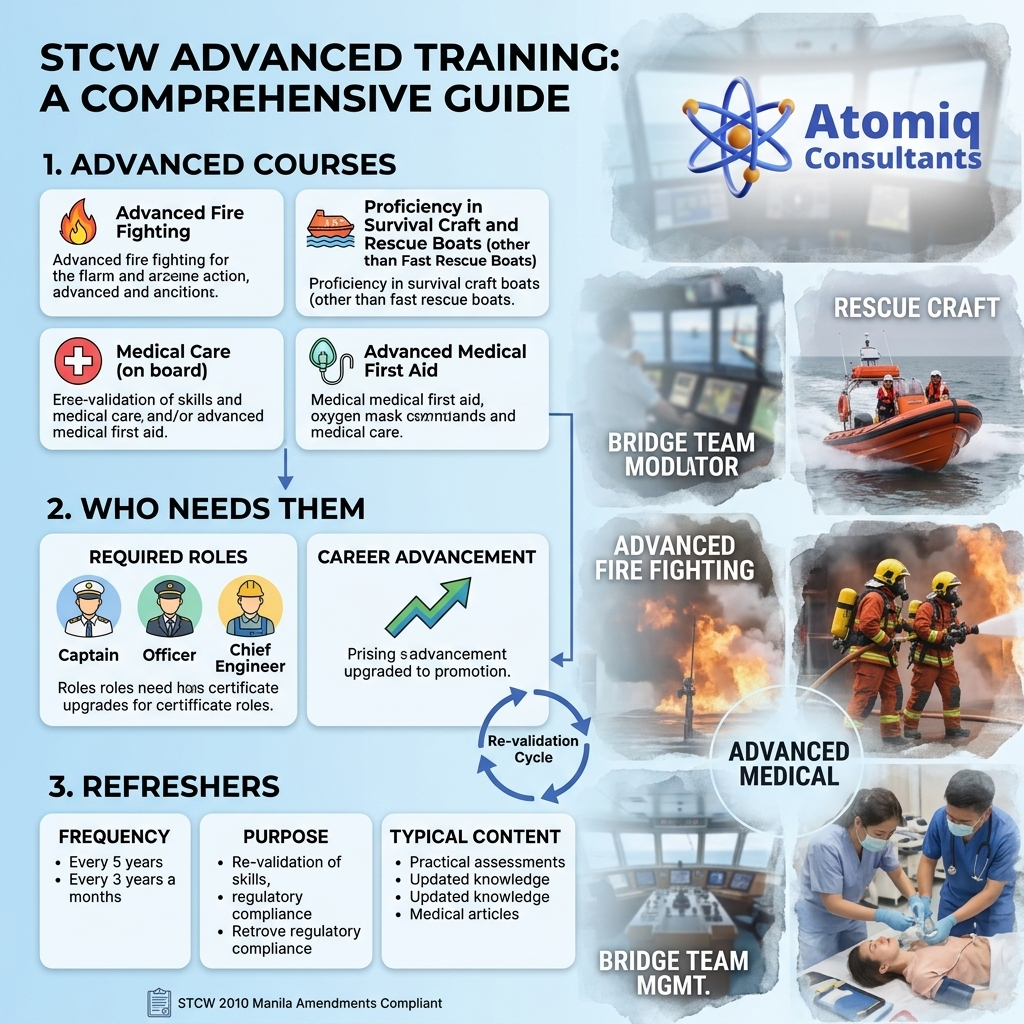
Tanker certificates are not issued for life. At intervals not exceeding five years, you must show either:
- at least three months of approved seagoing service on tankers within the previous five years, in duties appropriate to the certificate; or
- completion of an approved relevant training course.
Some administrations add conditions. The US, for example, also asks advanced holders renewing on sea service to show participation in at least two cargo transfers in that period (46 CFR §13.120). Check the issuing administration’s own rule.
Track every expiry date in one place with the crew certificate tracking template →
Not the same certificate: gas tankers
Oil and chemical tanker certificates do not qualify you for LNG or LPG carriers. Gas carriers sit under a separate regulation, V/1-2, with their own basic and advanced certificates. Oil or chemical tanker experience helps with recruitment but does not replace them.
See LNG and gas carrier certification for the V/1-2 route.
Two meanings of “endorsement”
Seafarers use “tanker endorsement” for two different things, and mixing them up costs joining dates.
| Tanker certificate of proficiency | Flag-state endorsement or recognition | |
|---|---|---|
| What it proves | You completed the V/1-1 training and, for advanced, the sea time | The flag of the ship you are joining accepts your certificates |
| Who issues it | Your national administration, or the approved training centre, depending on the country | The flag-state administration (Panama, Liberia, Palau and others) |
| Local names | “Tanker endorsement” on a US MMC; “DCE” (Dangerous Cargo Endorsement) in India; “certificate of proficiency” in most countries | Endorsement, certificate of recognition, special qualification — the name varies by flag |
A valid tanker certificate does not mean the flag has accepted it. Whether a flag endorses a foreign V/1-1 certificate, recognises it, or accepts it as is varies by flag, and that is checked per application.
For how flag endorsements work in general, see why your seaman book isn’t enough.
How to tell a genuine tanker course from a paper one
- The certificate names Regulation V/1-1 and the STCW table it was issued against.
- The centre is approved by an administration, and you can check that certificate with the centre or the administration.
- The centre asks for your basic safety training first. One that enrols you without checking is not following the Convention.
- An advanced certificate issued without sea time evidence is not valid. If a centre offers Advanced Oil to someone who has never served on a tanker, walk away.
Where Seaman Books fits
Seaman Books is the documentation side of Atomiq Group, at #903 Regal Tower, Business Bay, Dubai. We do not issue tanker certificates, and we do not issue flag documents. The administrations do. We prepare, check and file.
For tanker crew, that means:
- Checking your certificate set against the vessel’s flag before you sign, so a missing endorsement is found in Dubai, not at the gangway in Fujairah or Ras Tanura.
- Preparing and filing the flag-state seaman’s book and endorsement or recognition applications with Panama, Palau, Liberia, Bahamas, Belize, Honduras or St Kitts & Nevis.
- Checking your existing certificates for authenticity and expiry before filing.
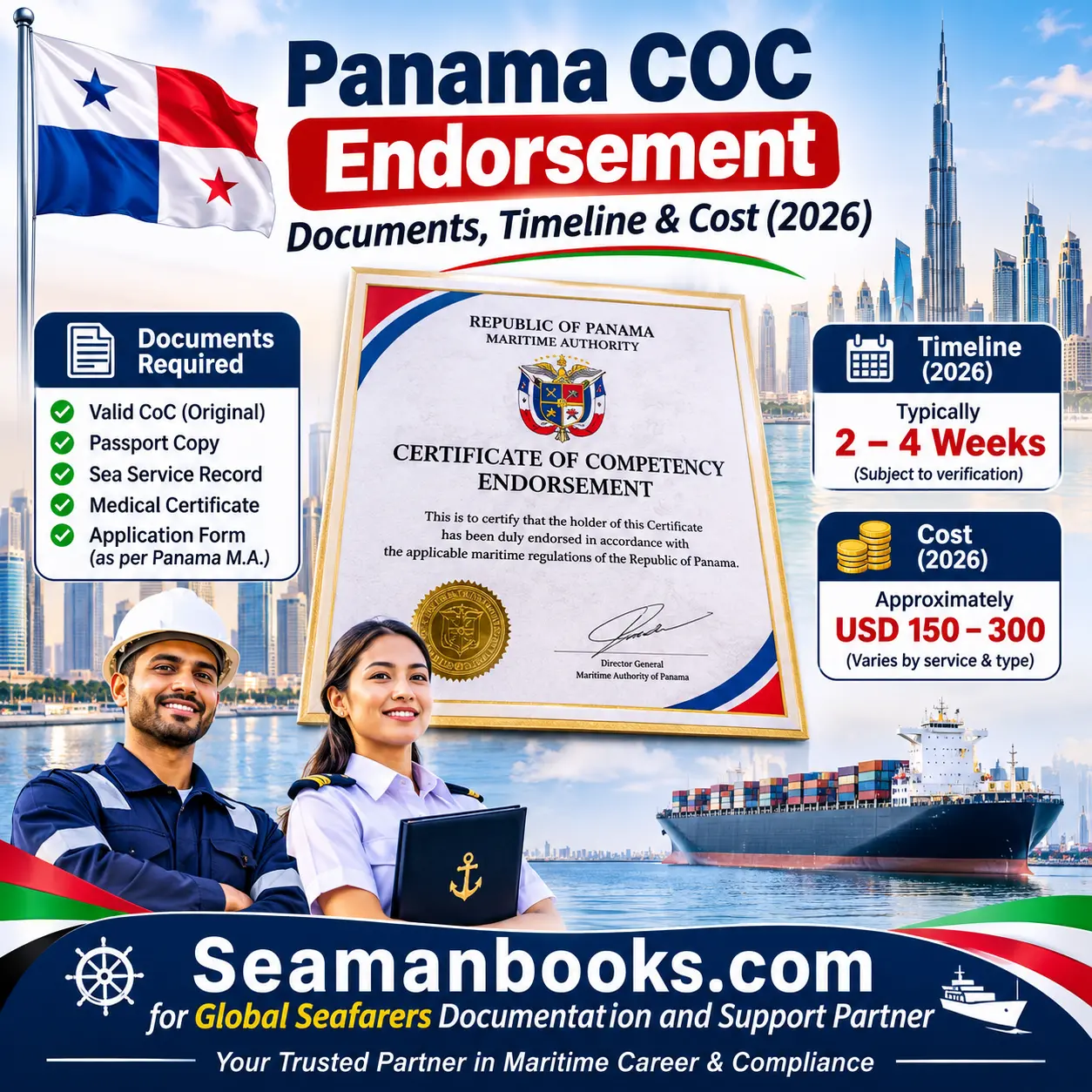
Turnaround (Panama): Processing Certificate in 3–5 business days, valid 90 days; printed 5-year book in up to 25–30 days, or within 10 days on urgent processing (urgent fee quoted on request).
Cost: Panama’s own published charge for a seaman’s book for a non-national is here is fee chart . That is the flag’s fee, not ours. Our service fee depends on country location and flag state services, quoted per application and itemized separately.
Atomiq College, our Group’s training institute, delivers STCW basic safety training and refreshers. It does not currently run tanker courses. Tell us your rank, your certificates and the vessel you are joining, and we will tell you which tanker certificate the role needs before you pay for any course.
Check your tanker documents — WhatsApp +971 55 458 3416 · Free eligibility check · or use the form below.