Advanced STCW at a glance
Prerequisite All four basic training certificates (PST, FPFF, EFA, PSSR) under Regulation VI/1 Typical length 1–5 days per course, depending on the module Who issues the certificate The approved training centre that assessed you, not a flag state and not an agency Refresher every 5 years Advanced Fire Fighting, PSCRB, Fast Rescue Boats No STCW refresher Medical First Aid, Medical Care, Ship Security Officer Not the same as A Certificate of Competency (your rank licence) or OPITO offshore training (BOSIET, HUET)
What is the difference between basic and advanced STCW training?
Basic training is the same for everyone. Advanced training depends on your job on board. Every seafarer with safety duties needs the four Regulation VI/1 courses before joining a seagoing ship. Advanced courses certify that you can lead or take charge of something, such as a fire party, a lifeboat or medical care, or that you can work in a specialised trade like tankers.
| Basic training | Advanced training | |
|---|---|---|
| Who needs it | Every seafarer with safety or emergency duties | Officers, designated team leaders, and crew on specialised ships |
| STCW basis | Regulation VI/1 | Regulations VI/2–VI/6 and Chapter V |
| Number of courses | 4 (plus Security Awareness, usually bundled) | Varies by rank and ship type |
| Typical length | About 5 days as one block | 1–5 days per course |
| Prerequisite | Seafarer medical certificate | All four basic certificates |
| Refresher | PST and FPFF every 5 years | AFF, PSCRB and FRB every 5 years |
For the four basic courses in detail, see STCW basic safety training .
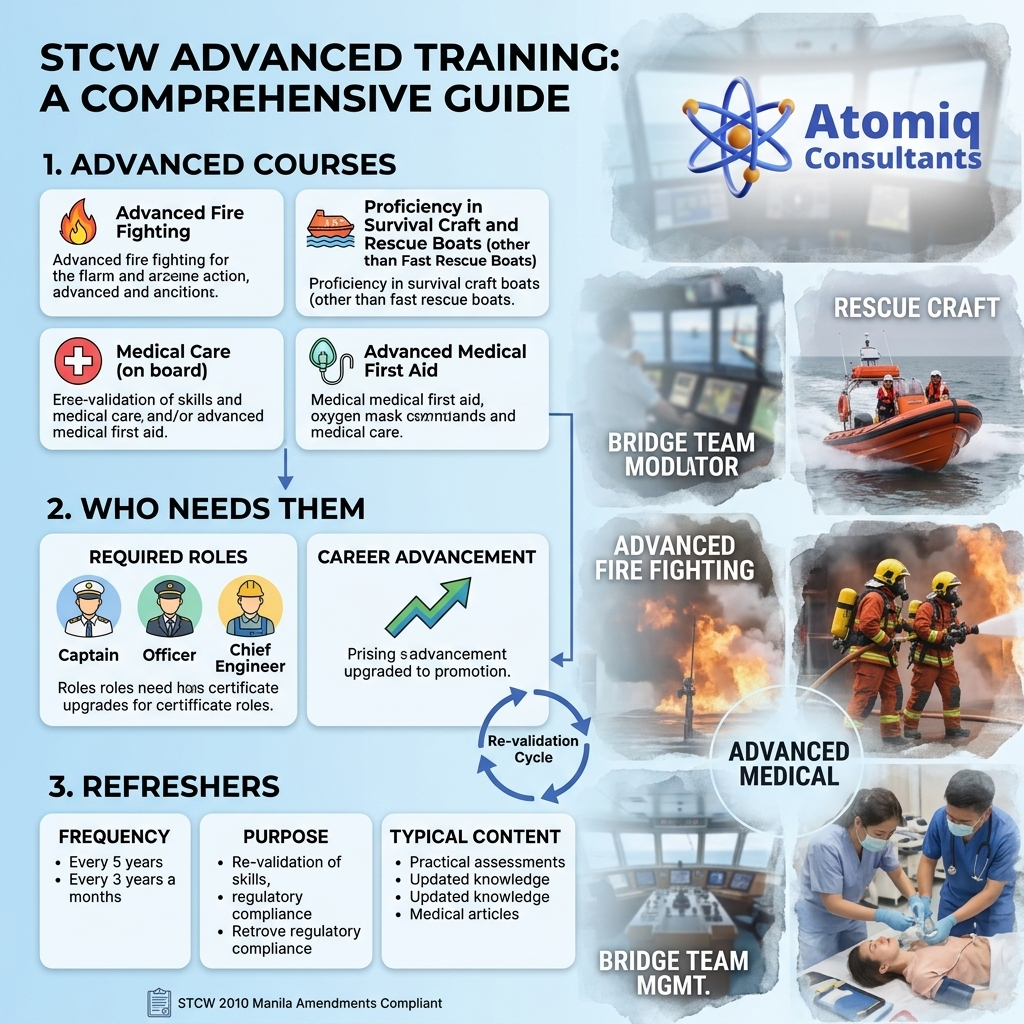
Advanced STCW courses: the full list
| Course | STCW basis | What it certifies | Typically required for |
|---|---|---|---|
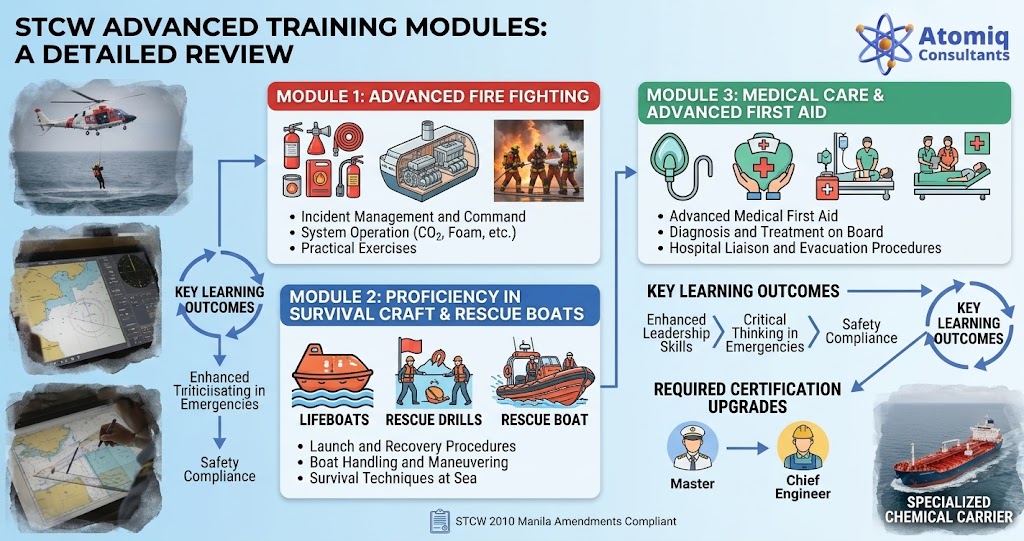
| Proficiency in Survival Craft and Rescue Boats (PSCRB) | Reg VI/2, Table A-VI/2-1 | Launching and taking charge of lifeboats, liferafts and rescue boats | Officers; ratings assigned to survival craft. A prerequisite for most officer CoCs |
| Proficiency in Fast Rescue Boats (FRB) | Reg VI/2, Table A-VI/2-2 | Handling fast rescue boats in launch and recovery | Crew designated to a fast rescue boat, common on passenger and offshore ships |
| Advanced Fire Fighting (AFF) | Reg VI/3, Table A-VI/3 | Controlling fire-fighting operations on board | Officers and anyone designated to lead a fire team |
| Medical First Aid (MFA) | Reg VI/4, Table A-VI/4-1 | Immediate first aid beyond Elementary First Aid | The crew member designated to give first aid, usually a deck officer |
| Medical Care | Reg VI/4, Table A-VI/4-2 | Taking charge of medical care on board | Master and the officer in charge of medical care |
| Ship Security Officer (SSO) | Reg VI/5, Table A-VI/5 | Acting as the ship’s appointed security officer under the ISPS Code | The officer appointed as SSO |
| Designated Security Duties (DSD) | Reg VI/6, Table A-VI/6-2 | Carrying out assigned security duties | Crew with designated security duties. See PDSD explained |
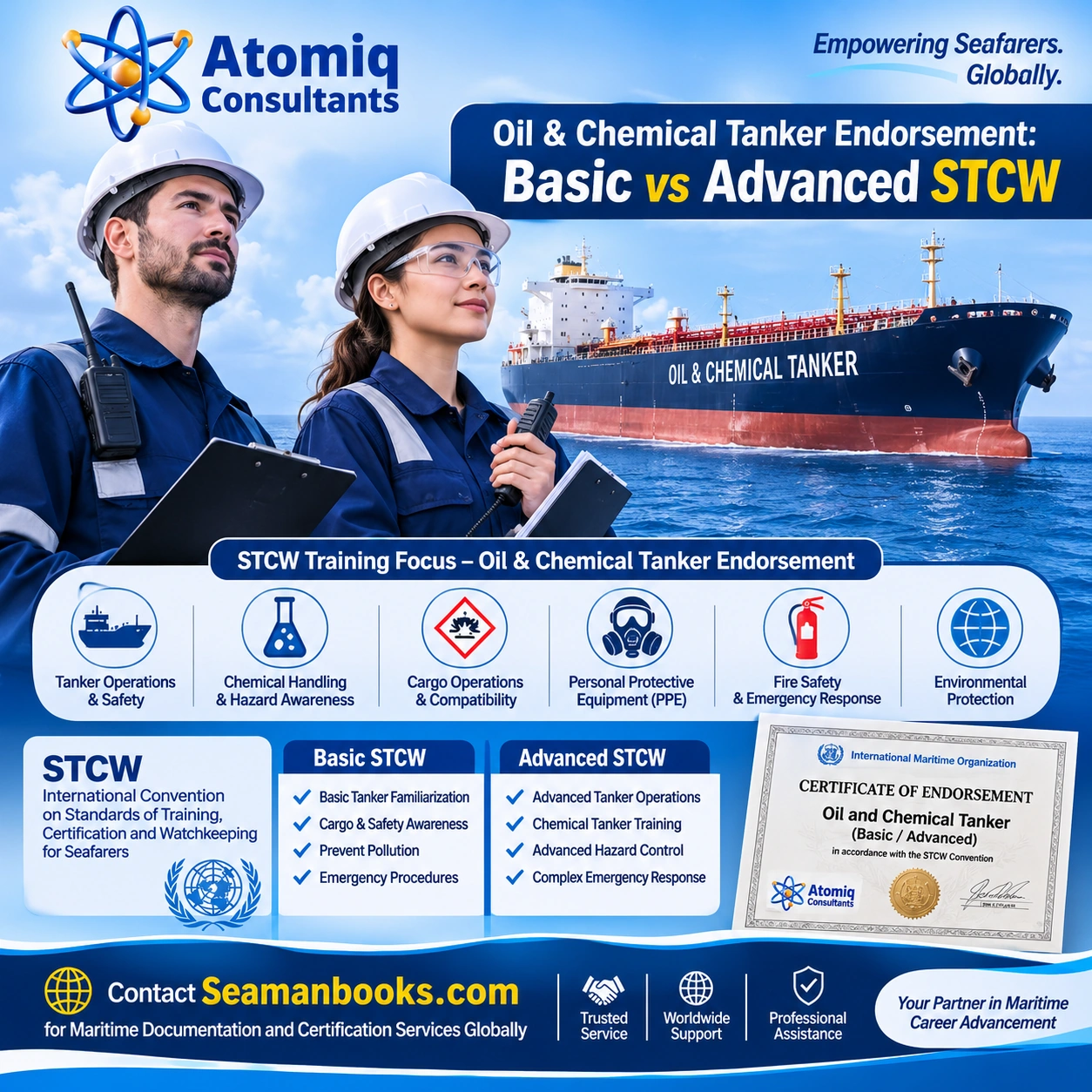
| Oil and chemical tanker cargo operations (basic / advanced) | Reg V/1-1 | Cargo and safety operations on oil or chemical tankers | Crew and officers on tankers |
| Liquefied gas tanker cargo operations (basic / advanced) | Reg V/1-2 | Cargo and safety operations on LNG/LPG carriers | Crew and officers on gas carriers |
| Passenger ship training (crowd management, crisis management) | Reg V/2 | Managing passengers and crises on passenger ships | Crew and officers on cruise ships and ro-ro passenger ferries |
Operational courses are separate. Bridge Resource Management, Radar/ARPA, ECDIS and GMDSS are tied to a deck officer’s Certificate of Competency, not to Chapter VI. Some course sites call them “advanced”. They are covered in STCW certification explained.
Which advanced courses does my rank need?
There is no universal list, and anyone who sells you one without asking your rank and ship type is guessing. The pattern most seafarers follow:
| You are | Usually needed after basic | Often needed depending on ship |
|---|---|---|
| Deck or engine rating | PSCRB if assigned to survival craft | Tanker basic (V/1-1 or V/1-2); passenger ship training |
| Officer of the watch, deck or engine | PSCRB, AFF, Medical First Aid | FRB; tanker advanced; SSO if appointed |
| Master or chief mate | All of the above plus Medical Care | SSO |
| Hotel or catering crew on a cruise ship | Passenger ship crowd management | PSCRB if assigned to survival craft |
Before you book anything, check two things: what your employer’s crewing department lists for your contract, and what the flag requires for your rank. Booking an advanced course you don’t need, or booking it too early, puts its five-year refresher out of step with your other certificates.
How often do advanced certificates need refreshing?
Advanced Fire Fighting, Proficiency in Survival Craft and Rescue Boats, and Fast Rescue Boats must be refreshed at least every five years. The requirement came in with the 2010 Manila Amendments and has applied to certificates since 1 January 2017. Medical First Aid, Medical Care and Ship Security Officer carry no Convention-level refresher, though a flag or employer can set one.
Final verdict: The five-course refresher list is consistent with your renewal page. Keep the glossary definitions aligned, use A-VI/2 paragraphs 5–6 for PSCRB and A-VI/3 paragraphs 5–6 for AFF, and qualify the alternative evidence according to flag-state rules. Renewal routes are covered in STCW renewal.
Advanced STCW courses in the Philippines: what to check, and where we fit
If you are a Filipino seafarer, take your advanced STCW courses at a MARINA-accredited training institution in the Philippines. MARINA issues the Philippine Certificate of Proficiency (COP), and only courses from institutions it accredits count towards it.
Seaman Books does not run training in the Philippines, and we cannot book MARINA courses or appointments. Our group’s training institute, Atomiq College, is in Kathmandu, Nepal.
Where we can help Filipino seafarers is the documentation for a foreign-flagged ship. If your next contract is on a vessel registered under Panama, Liberia, Palau or another open registry, the flag usually expects:
- A flag-state seaman book, alongside your Philippine SIRB. See Panama seaman book and Liberia seaman book.
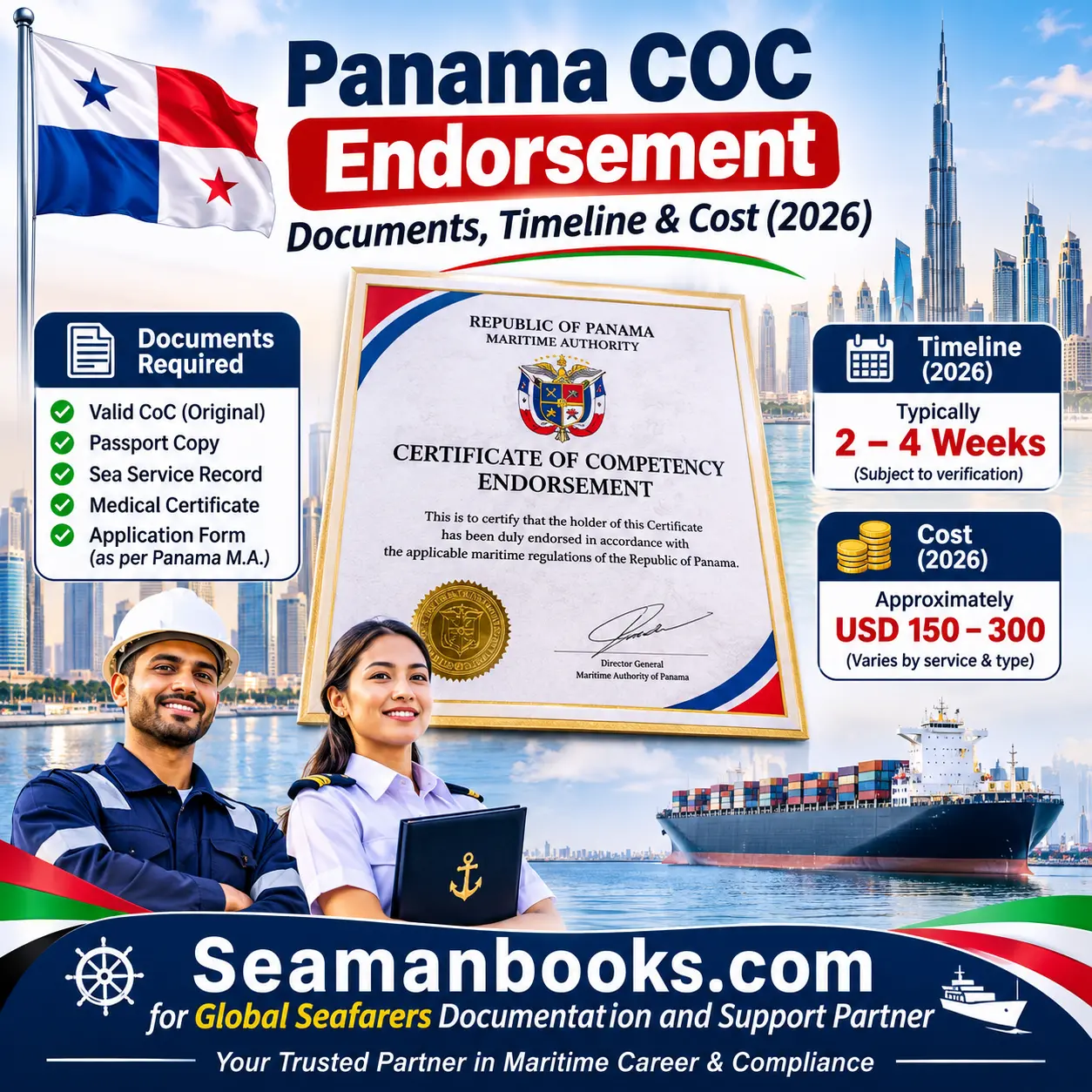
- For officers, a flag endorsement of your Philippine CoC, which recognises your national licence for service under that flag. See Panama CoC endorsement
- Your COPs, including advanced ones, presented with the application. The flag checks them; it does not reissue them.
Check what your flag needs: WhatsApp us your rank, vessel flag and certificate dates
How to tell a real advanced course from a paper one
- It has a practical assessment. AFF uses live fire and breathing apparatus; PSCRB needs a real lifeboat launch. A fully online AFF or PSCRB certificate will not survive a port state control check.
- The center is approved by a flag administration and its certificates can be verified with the center or the administration.
- You hold all four basic certificates first. A centre that will enrol you in AFF without seeing your FPFF certificate is not following the Convention.
- The certificate names the STCW regulation and table it was issued under.