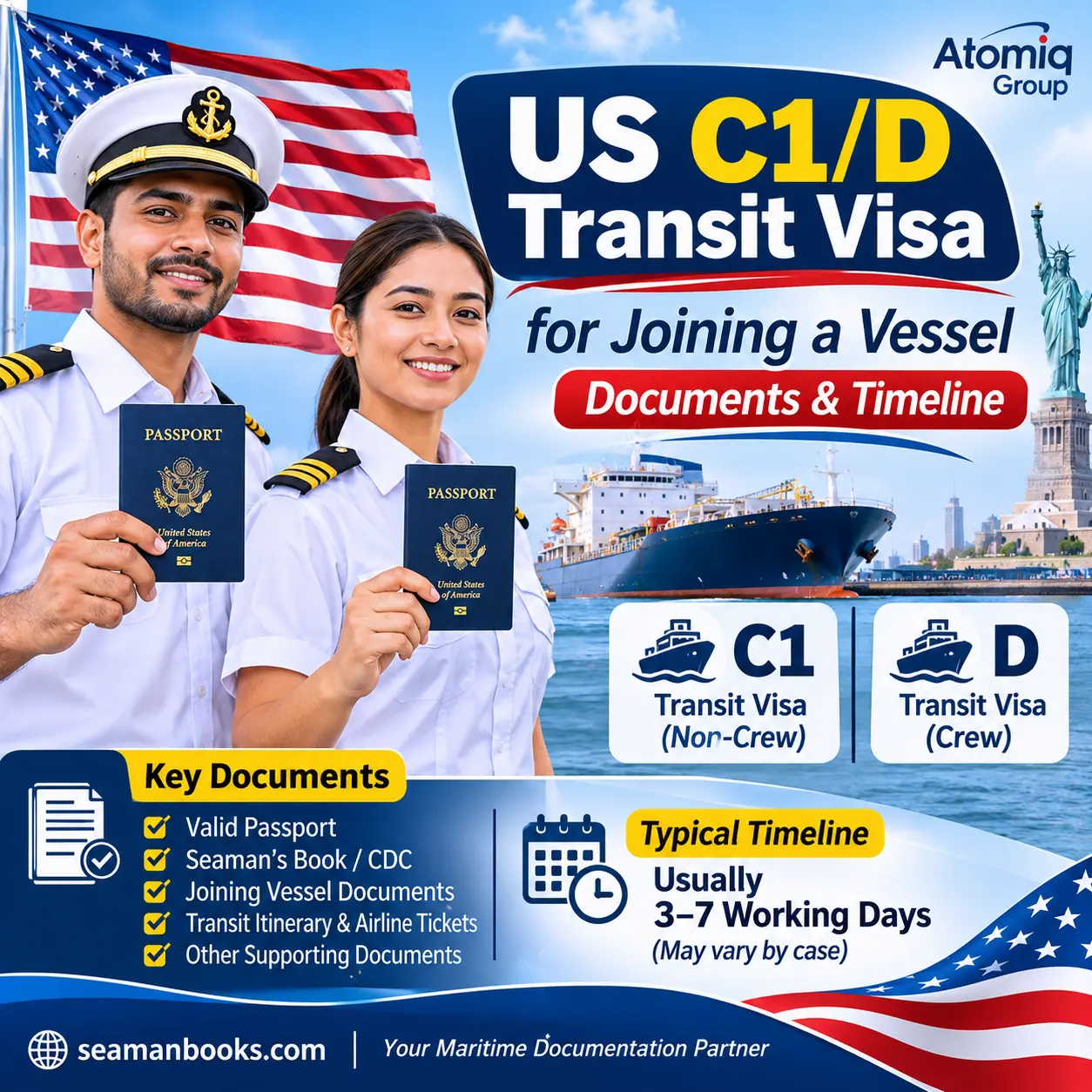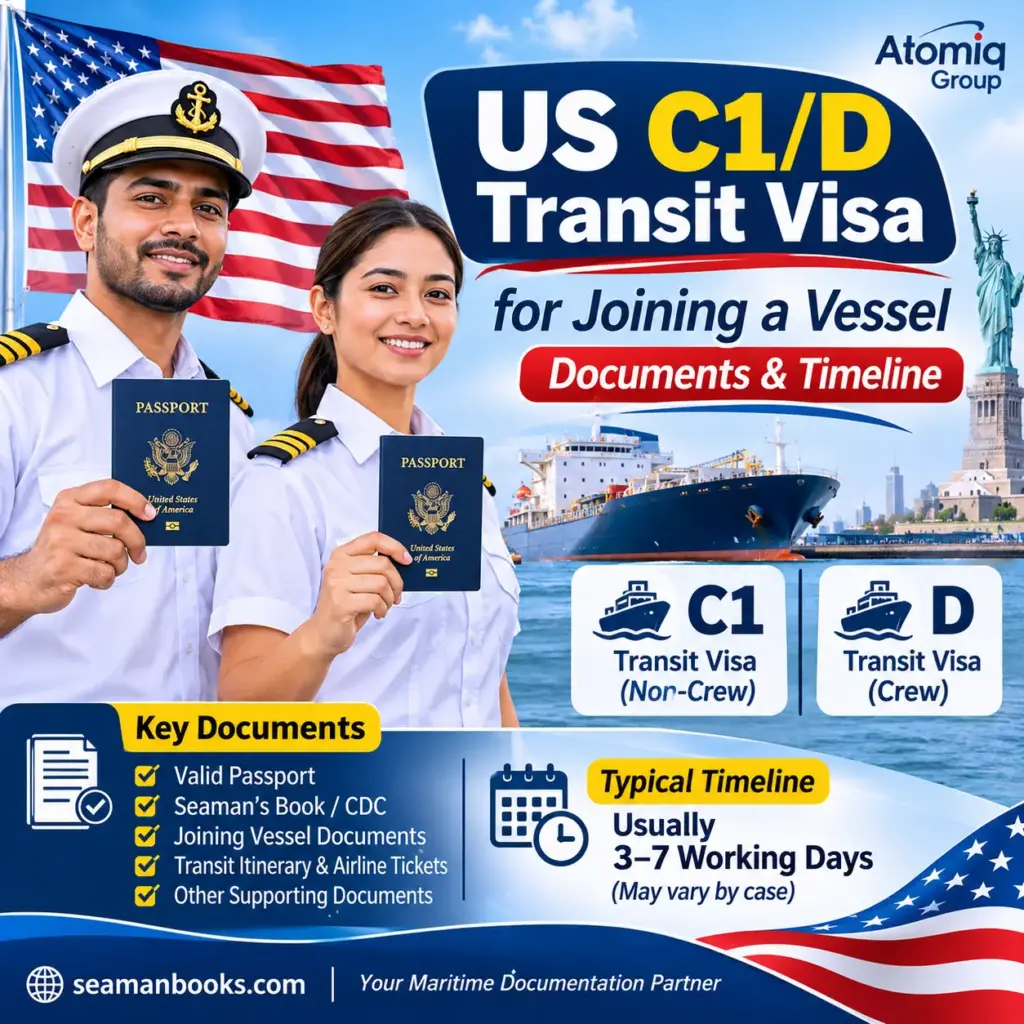
To join a ship in a US port, a non-US seafarer normally needs a C1/D visa: Requirements C-1 to travel through the US to the vessel, D to work on board. You apply with Form DS-160, pay a US$185 non-refundable fee, and attend a consular interview with your passport and a letter from your employer or its agent. The interview wait, not the processing, sets the timeline. Check it for your consulate before you accept a join date.
Last updated 2 November 2026. Rules and fees belong to the US Department of State and change without notice. Each one links to its source.
What the C1/D covers, and what it does not
The D visa is for crew working on board a vessel. The C-1 covers transit. The State Department puts it plainly: “If you travel to the United States to meet and board the vessel you will work on, you need a transit (C-1) visa.” If you apply for both together, and your country’s reciprocity schedule allows it, the officer can issue them as one combination C1/D visa.
Three limits matter when you plan a contract:
- It is not a stay visa. Unless you are engaged in lightering, you must leave the US on a vessel within 29 days. The State Department counts departure as complete only once the vessel reaches international waters bound for a foreign port.
- It only works with a job. You can apply without being employed. But you can use the visa to enter a US port as crew only when you are employed on the vessel you arrive on.
- Lightering is different. Crew transferring liquid cargo ship-to-ship hold a D-3 and may stay up to 180 days.
Canadian and Bermudian citizens do not need a visa to enter as crew. You cannot fly in on ESTA to join a ship. The Visa Waiver Program does not cover crew.
For a side-by-side with Schengen and UK transit rules, see the seafarer visa guide.
C1/D visa requirements: the document checklist
Bring these to the interview. The first four are on the State Department’s list. The rest are what the officer may ask for to test the purpose of your trip.
| Document | Required or likely | Why the officer cares |
|---|---|---|
| Passport, valid at least six months beyond your stay | Required | Identity and travel validity |
| DS-160 confirmation page | Required | Your application on file |
| Application fee receipt (where paid before interview) | Required | US$185, non-refundable |
| Photo, uploaded in the DS-160 (bring a print if the upload failed) | Required | Identity |
| Letter from your employer or its agent: vessel name, port and date of joining, your rank | Expected for transit to a vessel | The State Department tells applicants to be ready to show one |
| Contract of employment or offer letter | Likely | Purpose of trip |
| Seaman’s book (CDC / SIRB) | Likely | Service history, and a rank that matches the letter |
| STCW certificates and flag-state endorsements | Likely | Shows you are qualified for the rank you are joining as |
| Proof you will leave: return ticket, sign-off arrangement or onward contract | Likely | “Intent to depart” is one of three things the State Department says may be tested |
The test behind the paperwork. The State Department says officers may ask for evidence of three things: the purpose of your trip, your intent to depart the US, and your ability to pay its costs. The joining letter covers purpose and cost. Your seaman’s book and certificates make the purpose believable. A rank on the letter that your book and STCW certificates do not support is the kind of mismatch that turns a short interview into a long one.
How to apply for a C1/D visa, step by step
- Complete Form DS-160 online. Select the crew/transit category, upload your photo, and print the confirmation page.
- Pay the application fee. The fee is US$185 and is non-refundable. Depending on your nationality, a visa issuance fee may also apply.
- Schedule the interview at the US embassy or consulate in the country where you live. You may apply elsewhere, but the State Department warns it can be harder to qualify outside your country of residence.
- Gather your documents using the checklist above.
- Attend the interview. Fingerprints are usually taken. Interviews are generally required, with limited exceptions, and the officer may call any applicant for interview.
- Collect your passport with the visa, by the delivery method your consulate uses.
C1/D timeline: how long it takes, and what you can control
There is no single processing time for a C1/D. The total is the sum of stages, and one of them dominates:
| Stage | Who controls it | Time |
|---|---|---|
| DS-160 and fee | You | Can be done the same day |
| Interview appointment | Your consulate | Varies by post. This is the stage that delays joins. Check the State Department’s wait-time tool, under the category “Crew and Transit (C, D, C1/D)” |
| Interview | Consular officer | One appointment |
| Further checks after interview, where applied | Consular officer | Not predictable. [VERIFY: State Dept administrative processing page — add its stated timescale only if published] |
| Passport return | Consulate’s delivery service | Set locally |
The State Department describes its wait-time figures as estimates that can change week to week. It notes they are generally the longest you may wait, because new slots open regularly. If your post has a long queue, two things help:
- Apply early. You do not need a job to apply. A C1/D already in your passport when the offer arrives is the difference between joining on time and losing the contract.
- Ask about an expedited appointment through your consulate’s scheduling system, with your joining letter as the reason. The consulate decides; there is no right to one.
Planning rule: work backwards from the sign-on date. Take the published wait for your post, add a margin for further checks and passport return, and do not book flights until the visa is in your passport.