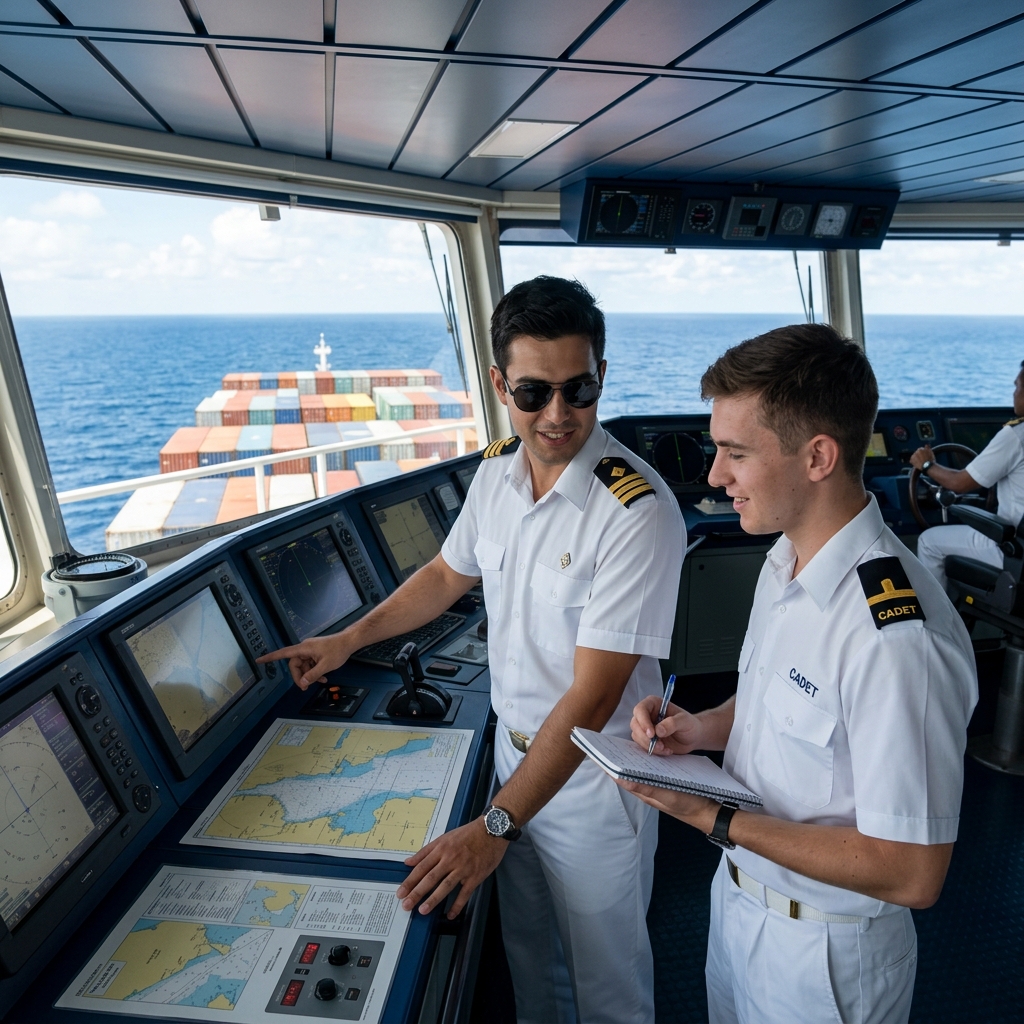
If you are considering a career at sea, understanding the Merchant Navy ranks is a good place to start. The rank you hold determines your responsibilities on board, the qualifications you need, your career progression and, in many cases, your earning potential.
But the Merchant Navy is not one single career path because you can work in the deck department, engine department or other shipboard departments depending on your education, training and career goals.
This guide explains the main Merchant Navy career ladder works, what qualifications are involved and what you should know before starting your career at sea.
What Is the Merchant Navy?
The Merchant Navy refers to the commercial shipping industry. Merchant ships transport cargo, fuel, vehicles and passengers around the world.
It is different from a country’s military navy. Merchant Navy professionals work on commercial vessels operated by shipping companies, shipowners and other maritime organizations.
Common vessel types include:
- Container ships
- Bulk carriers
- Tankers
- LNG and LPG carriers
- Ro-Ro vessels
- Cruise ships
- Offshore vessels
The type of vessel you work on can also affect the training, certificates and experience required for certain positions.
Merchant Navy Ranks Structure Explained
The rank structure can look complicated at first, but it becomes easier when you divide it into departments.
The two main operational departments are:
- Deck department
- Engine department
The deck department is mainly responsible for navigation, cargo operations, safety and the general operation of the ship.
The engine department is responsible for propulsion, machinery, electrical systems and the technical operation of the vessel.
There are also catering, hotel and other specialist roles on some vessels.
Merchant Navy Ranks Chart
A simplified officer career structure looks like this:
Deck Department | Engine Department |
Master / Captain | Chief Engineer |
Chief Officer / Chief Mate | Second Engineer |
Second Officer | Third Engineer |
Third Officer | Fourth Engineer |
Deck Cadet | Engine Cadet |
Ratings and support positions sit alongside the officer structure. Examples include Able Seafarer, Ordinary Seaman, Bosun and engine-room ratings.
However, the exact rank titles and manning structure can vary between vessels, companies and flag states.
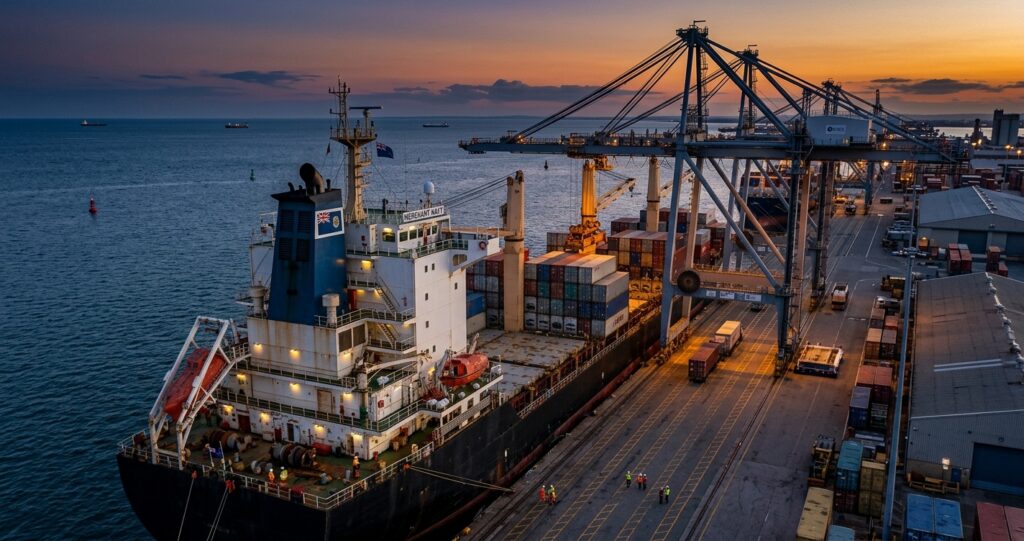
Deck Department Ranks
The deck department is responsible for navigation, cargo operations, deck maintenance and many aspects of shipboard safety.
The usual progression is:
Deck Cadet
A Deck Cadet is an officer under training. Cadets gain practical sea experience and complete the training required for an officer Certificate of Competency.
Third Officer
The Third Officer is normally an entry-level deck officer after completing the required training and certification.
Typical responsibilities can include safety equipment, firefighting equipment, watches and other duties assigned by the company.
Second Officer
The Second Officer is normally responsible for navigation-related duties, including passage planning and navigational publications and equipment.
Chief Officer
The Chief Officer, also called Chief Mate, is the senior deck officer below the Master.
The role commonly includes cargo operations, stability, deck maintenance and supervision of the deck crew.
Master or Captain
The Master has overall command of the vessel and is responsible for the ship, crew, cargo, safety and compliance.
For a more detailed explanation of each deck rank and the certificates associated with them, see our guide to Deck Department Ranks Explained: Duties, Certificates and Progression.
Engine Department Ranks
The engine department has its own career ladder.
A simplified progression is:
Engine Cadet
An Engine Cadet is an engineer under training who gains practical experience in the engine room and works toward the qualifications required for an engineering officer.
Fourth Engineer
The Fourth Engineer is generally an entry-level engineering officer and may be responsible for specific machinery and maintenance duties.
Third Engineer
The Third Engineer takes responsibility for additional machinery and engineering operations as assigned on the vessel.
Second Engineer
The Second Engineer is responsible for managing much of the day-to-day engine-room operation and maintenance under the Chief Engineer.
Chief Engineer
The Chief Engineer is the senior engineering officer and has overall responsibility for the vessel’s machinery and engineering department.
How Does Merchant Navy Career Progression Work?
Merchant Navy career progression is not simply based on working for a certain number of years.
Training, sea service, examinations and certificates all play an important role.
For officer careers, the general process involves:
- Completing the required maritime education or approved training route
- Completing required STCW training
- Obtaining the required medical fitness certification
- Completing the required sea service
- Passing the relevant examinations
- Obtaining the appropriate Certificate of Competency
- Gaining experience at the next rank
- Meeting the requirements for promotion to the next certificate level
The exact requirements depend on your country, flag administration, vessel type and the certificate you are applying for.
The International Maritime Organization’s STCW Convention provides the international framework for minimum standards of training, certification and watchkeeping for seafarers.
Merchant Navy Qualification: What Do You Need?
There is no single qualification that applies to every Merchant Navy job.
The requirements depend on the position you want.
For officer positions, the route generally involves maritime education or approved training, STCW certification, medical fitness, sea service and a Certificate of Competency.
Ratings follow a different certification route.
Before choosing a course, check the requirements of the maritime administration or authority that will issue your certificate. International STCW standards provide the framework, but national administrations can have additional requirements.
Can You Join the Merchant Navy After 12th?
Yes, depending on your education stream, country and the career route you choose.
Students from science backgrounds may have access to certain officer-training programmes that have specific mathematics and science requirements.
Students from commerce or other backgrounds may still have maritime career options, but the available courses and eligibility requirements can differ.
Therefore, instead of assuming that one educational background automatically qualifies you for every Merchant Navy position, check the entry requirements for the exact course and rank you want.
Can You Join the Merchant Navy After Graduation?
Graduation does not automatically qualify someone for a Merchant Navy officer position.
However, graduates may have several possible routes into maritime careers depending on their degree, country and the position they want.
Some careers outside the traditional deck and engine officer routes may also be available in areas such as maritime administration, logistics, shipping operations, port management and maritime services.
If you already have a degree, the best route depends on your existing qualification rather than simply starting a course without checking eligibility.
Merchant Navy Age Limit
There is no single worldwide Merchant Navy age limit that applies to every job.
Minimum age requirements can depend on:
- The country where you are applying
- The maritime administration
- The training programme
- The rank or position
- The type of vessel
- Medical and certification requirements
The Maritime Labour Convention also contains international requirements relating to minimum age and other employment conditions for seafarers.
For this reason, applicants should check the current requirements of their maritime authority or approved training institution rather than relying on a general age limit found online.
Merchant Navy Salary by Rank
Merchant Navy salaries vary considerably.
Your pay can depend on:
- Rank
- Experience
- Vessel type
- Shipping company
- Flag state
- Contract
- Collective bargaining agreement
- Vessel’s trading area
- Additional qualifications
This means a single salary figure cannot accurately represent what every Third Officer, Chief Engineer or Master earns.
For example, Seaman Books’ current salary guide uses the publicly available 2026 ITF/ILO wage scale and clearly distinguishes minimum wage figures from actual market salaries.
You can read the full guide here:
Seafarer Salary by Rank (2026): The Verified ITF/ILO Wage Floor
Which Merchant Navy Job Is Best?
There is no single “best” Merchant Navy job.
The right position depends on what you enjoy and what you are qualified to do.
Someone interested in navigation and ship operations may prefer the deck department.
Someone interested in machinery, engineering and technical systems may prefer the engine department.
Others may prefer catering, hospitality, electrical or specialist offshore roles.
Salary is also only one factor to consider. Working conditions, contract length, career progression, vessel type and the qualifications required are equally important.
Is There 100% Placement in the Merchant Navy?
No legitimate training provider can guarantee that every student will receive a job at sea.
Employment depends on qualifications, medical fitness, certification, experience, vacancies, company requirements and the hiring process.
Be particularly careful with anyone promising guaranteed placement or asking for large payments in exchange for a guaranteed shipboard job.
The ILO’s Maritime Labour Convention includes standards relating to seafarer recruitment and placement services and the protection of seafarers’ employment rights.
How Do You Get a Job on a Ship?
Getting your first shipboard job usually involves more than simply applying for a vacancy.
A typical process includes:
- Choose the type of maritime career you want
- Complete the required education and training
- Obtain the required STCW certificates
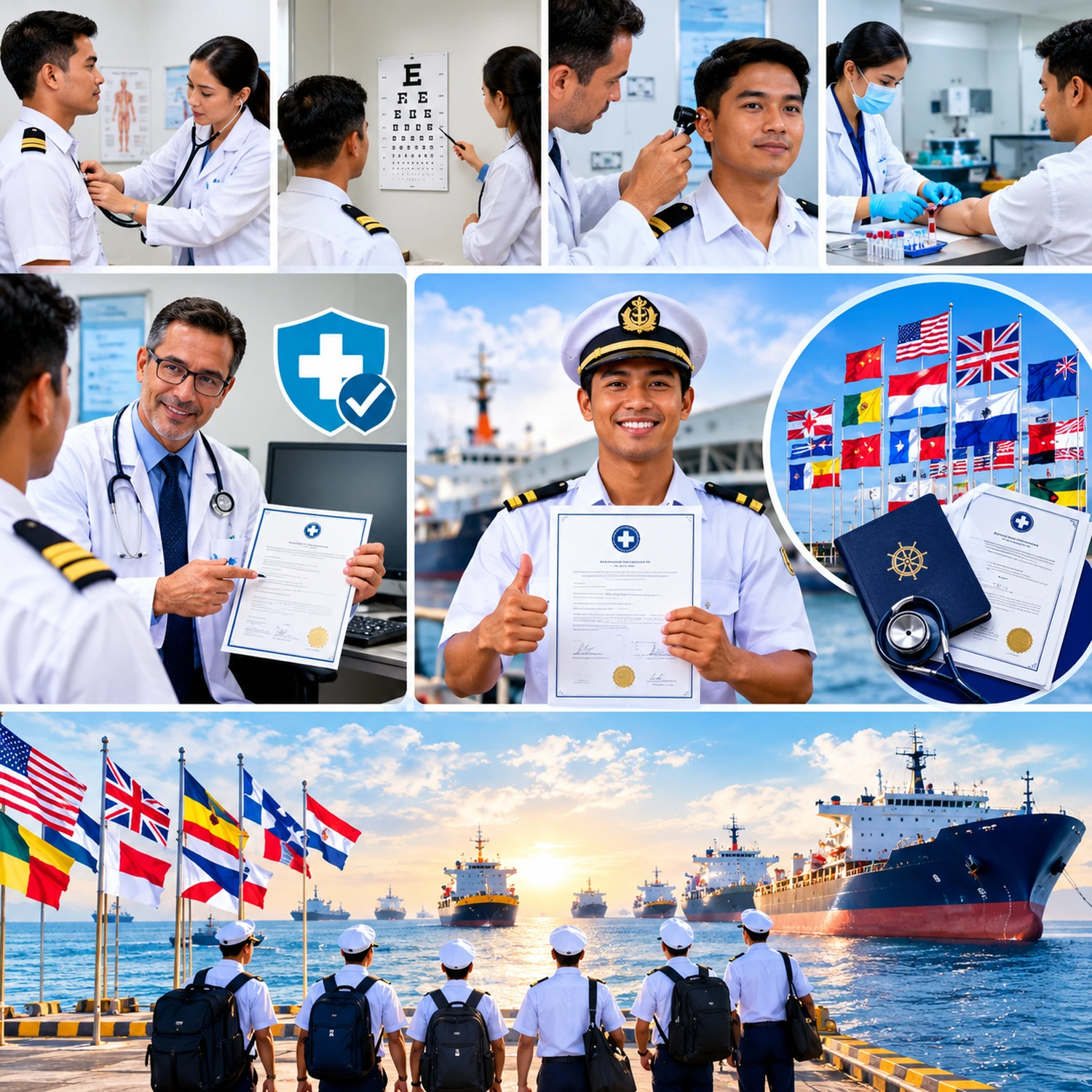
- Complete the required medical examination
- Obtain the necessary seafarer identity and record documents
- Prepare your CV and certificates
- Apply through legitimate shipping companies or recruitment and placement services
- Complete the employer’s selection process
- Complete any required visa and joining documentation
- Join the vessel once all requirements are cleared
Your documents should be ready before you start applying because employers and crewing agencies may require them during recruitment.
For help understanding the documents involved, see our CDC Application Documents Checklist.
What Are CDC, CoC, CoE and STCW?
These terms are often confusing for people entering the maritime industry.
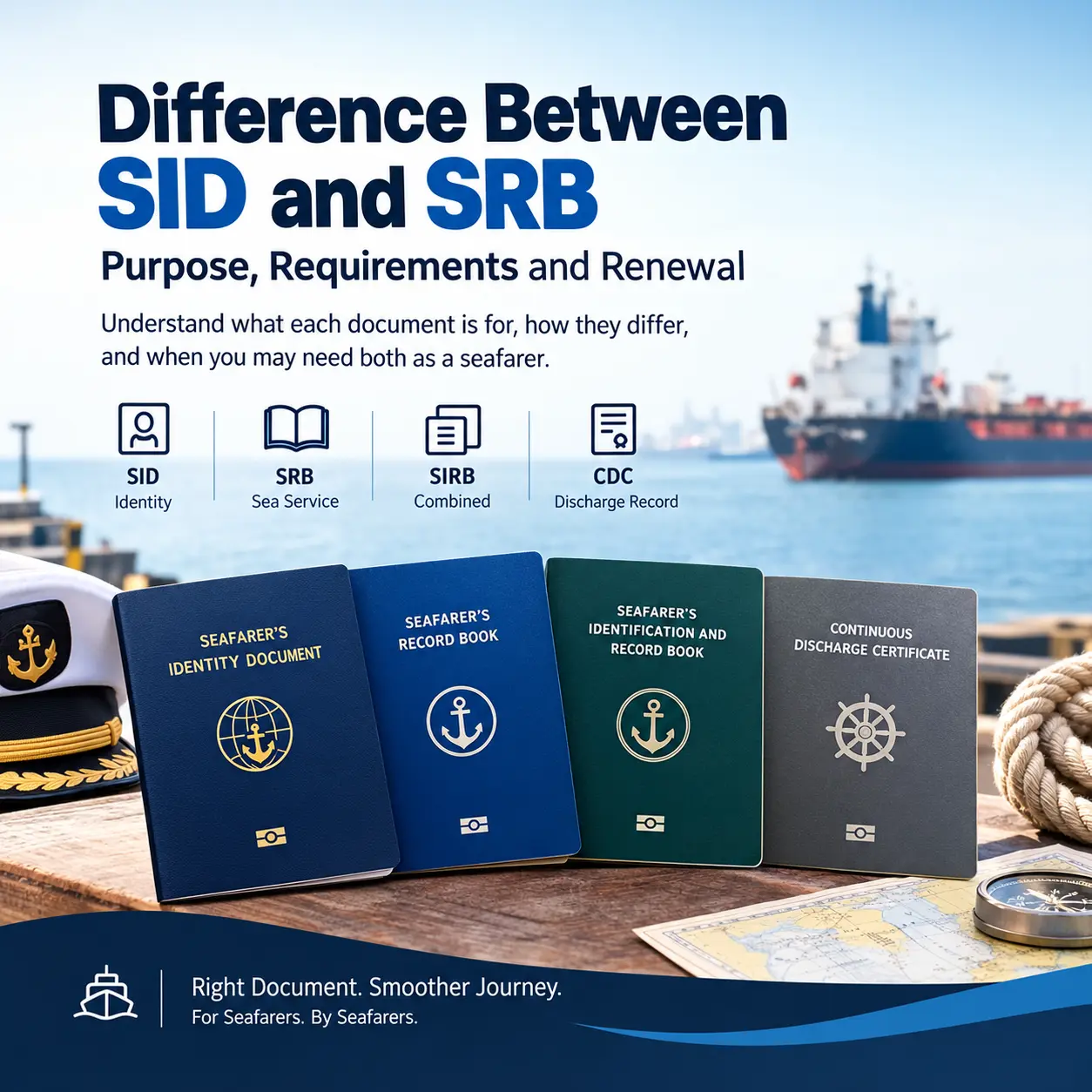
Seaman Book or CDC
A seaman book, CDC or SIRB is a seafarer’s identity and record document used by the relevant administration. The exact name and requirements depend on the issuing authority.
Certificate of Competency
A Certificate of Competency, or CoC, demonstrates that an officer has met the required competency standards for a particular role and level of responsibility.
Certificate of Endorsement
A Certificate of Endorsement or flag-state endorsement may be required when a flag administration recognizes a seafarer’s certificate for service on one of its vessels.
Read our guide Flag State Endorsement (CoE): Why Your Seaman Book Isn’t Enough to understand this distinction in more detail.
STCW
STCW stands for the International Convention on Standards of Training, Certification and Watchkeeping for Seafarers. The STCW Convention provides the international framework for minimum standards of training, certification and watchkeeping for seafarers.
It establishes minimum international standards, while individual maritime administrations are responsible for implementing certification requirements within their systems.
You can also read our STCW Certification Guide for information about training and certification.
What About Merchant Navy Ranks and Badges?
Ranks are often represented by stripes, badges or other insignia on uniforms.
However, rank insignia are not completely universal across every company, vessel or country.
The important distinction is between the title used on board and the certificate that authorises a seafarer to perform a particular role.
For example, a company may use titles such as Third Officer and Second Officer within an officer structure, while the underlying STCW certificate defines the competency level.
This is why it is better to understand the responsibilities and certification behind each rank rather than memorising badges alone.
Is There a “Rank 7” in the Merchant Navy?
Not as a universal system.
Merchant Navy ranks are not normally organized using one worldwide numbered system such as “rank 1” through “rank 10.”
The phrase “rank 7 in the navy” can also cause confusion because military Navy rank systems are different from Merchant Navy rank structures.
If you are researching a Merchant Navy career, focus on the actual rank title, department and required certificate.
Which Country Is Best for a Merchant Navy Career?
There is no single country that is best for every seafarer.
A better choice depends on factors such as:
- Quality and recognition of maritime training
- Certification requirements
- Employment opportunities
- Cost of training
- Nationality and eligibility
- Flag-state recognition
- Shipping companies operating in the market
- Opportunities for sea-time and career progression
Always check whether the training and certificates you obtain will be recognized by the administration and employers you intend to work with.
Merchant Navy Career Options Beyond the Rank Ladder
A Merchant Navy career does not have to end with becoming a Master or Chief Engineer.
Seafarers can eventually move into shore-based maritime careers such as:
- Marine operations
- Ship management
- Crewing
- Port operations
- Maritime compliance
- Marine surveying
- Maritime training
- Safety and quality management
- Technical management
- Maritime consultancy
Sea experience can therefore become the foundation for a range of careers both on board and ashore.
Documents You May Need for a Merchant Navy Career
The exact documents depend on your position, nationality, flag state and employer.
Common documentation can include:
- Passport
- Seaman book or CDC/SIRB
- STCW certificates
- Medical fitness certificate
- Certificate of Competency for applicable officer positions
- Certificate of Proficiency where applicable
- Flag-state endorsement where required
- Training records
- Visa or transit documents where required
Requirements can change depending on the vessel and flag state, so always confirm the current requirements before applying or travelling to join a vessel.
For seafarers who need help understanding their documentation requirements, Seaman Books provides documentation support for applications processed by relevant flag-state administrations.
Frequently Asked Questions
What is the hierarchy of ranks in the Merchant Navy?
The hierarchy varies depending on the department and vessel, but a simplified officer structure is Master, Chief Officer, Second Officer and Third Officer in the deck department, and Chief Engineer, Second Engineer, Third Engineer and Fourth Engineer in the engine department.
Who is the First Officer in the Merchant Navy?
“First Officer” is not a universally consistent title across all merchant ships. In many contexts, people use it to refer to the Chief Officer or Chief Mate, but terminology can vary between companies and regions.
How do I become a First Officer?
If by First Officer you mean Chief Officer or Chief Mate, the usual route involves first qualifying as an officer, gaining the required sea service and then meeting the Certificate of Competency requirements for Chief Mate. The exact requirements depend on the maritime administration issuing your certificate.
What is the highest-paying job in maritime?
Senior positions such as Master and Chief Engineer can be among the highest-paid shipboard roles, but there is no single salary that applies across the maritime industry. Vessel type, company, contract, experience and specialist qualifications can significantly affect earnings.
Who is eligible to join the Merchant Navy?
Eligibility depends on the career path. Applicants generally need to meet the educational, age, medical, training and certification requirements for the position they want.
How can I get a job on a ship?
Start by choosing a specific maritime career, completing the required training and certification, preparing your documents and applying through legitimate shipping companies or recruitment and placement services. Avoid anyone promising guaranteed employment.
Final Thoughts
The Merchant Navy offers several career paths, but choosing the right one starts with understanding the rank structure and the qualifications behind each position.
Whether you want to work on deck, in the engine department or eventually move into a shore-based maritime career, your progression will depend on the right training, sea service, certification and experience.
Before applying for a job or a seaman book, make sure you understand which documents your particular rank, vessel and flag state require.
If you need help with seafarer documentation, Seaman Books can help you understand the application process and coordinate documentation requirements with the relevant flag-state administration.